
Arshad Ahmed Khan KARACHI, Mar 09 (APP):The Indus Waters Treaty (IWT), a water-sharing agreement between India and Pakistan concerning six rivers, is backed by guarantors such as the World Bank, therefore, the treaty is difficult to violate due to both the international oversight and its specific legal provisions. These views were expressed by expert on water resources Prof Dr. Syed Imran of NED University of Engineering and Technology’s Urban Engineering …
Indus Waters Treaty shielded by global guarantors and binding provisions: Expert
Arshad Ahmed Khan
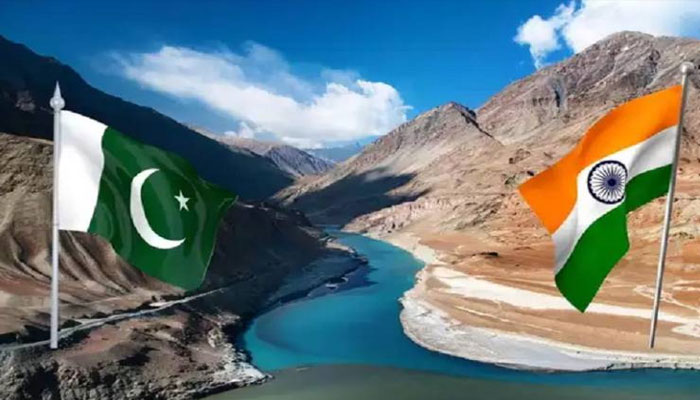
KARACHI, Mar 09 (APP):The Indus Waters Treaty (IWT), a water-sharing agreement between India and Pakistan concerning six rivers, is backed by guarantors such as the World Bank, therefore, the treaty is difficult to violate due to both the international oversight and its specific legal provisions.
These views were expressed by expert on water resources Prof Dr. Syed Imran of NED University of Engineering and Technology’s Urban Engineering department, while talking to APP here.
As per the IWT, India can use three rivers namely Ravi, Satlaj, and Bias while Pakistan have right on other three other rivers i-e Indus, Jhelum and Chenab.
He said that it’s our right on the Indus, Jhelum, and Chenab and our planning also takes place on these three rivers, he added.
He said that the IWT was signed in 1960 and in it many people are guarantors, including the World Bank, and the IWT for all these years ran smoothly but recent rhetoric from Indian Government and decisions, these things have flared up, and it’s also definitely important for Pakistan because we live in the downstream area, so downstream people always look upstream to get water.
He said that India is doing a project on the Ravi, but Pakistan does not expect any water from Ravi, so if the water ever came into the Ravi, before Modi-led Indian government, it was warned two days in advance, and then the water was released.
But if this water ever came so much in Ravi, we should already be prepared for the release of the water without any intimation and that’s important to be careful in the future, he said.
He said that if India stopped the Ravi water discharge to Pakistan, in wake of present situation, in that case Pakistan will not get the extra water and they will release water at their own will. The worst they can do; they can let that water go without any intimation, he added.
He said that we get a certain amount of water from Indus, Jhelum, and Chenab and we plan accordingly. We give the most water to agriculture, which is a lifeline for us, because Pakistan is an agriculture-based country and we have enough water from these three rivers, and they only release extra water to avoid their own problem, they are not helping us.
Prof Dr. Syed Imran said that if we look at history, most of the wars have been fought over water because water is lifeline, and if such things are done in the future and any other development is done specially on our rivers which are Indus, Jhelum and Chenab, then there is a strong scenario that we (Pakistan and India) can fight again.
He stated that if India plans to build any dams on our rivers, it must comply with the Indus Waters Treaty without exception.
He advised the masses that whenever they hear anything from the media related to water, special treaties, the IWT is just a 24-page document. There are so many clauses in it, so perfectly written that any person who can read English and Urdu, can easily go through it, so the people must read the Treat.
He said that it is not that if a dam is built somewhere, then an area that is downstream will be affected and there will be a problem. No one can stop the water completely, its flow can only be managed through the dam and a big river cannot be stopped permanently by building two or three dams, he said.