
The Islamabad Electric Supply Company (IESCO) achieved a 95 percent recovery in cases related to electricity theft during 2025, while Aggregate Technical and Commercial (AT&C) losses were reduced to single digits in line with targets set by National Electric Power Regulatory Authority (NEPRA), Chief Executive Officer Engineer Chaudhry Khalid Mahmood said.
IESCO achieves 95pc recovery in power theft cases during 2025: CEO
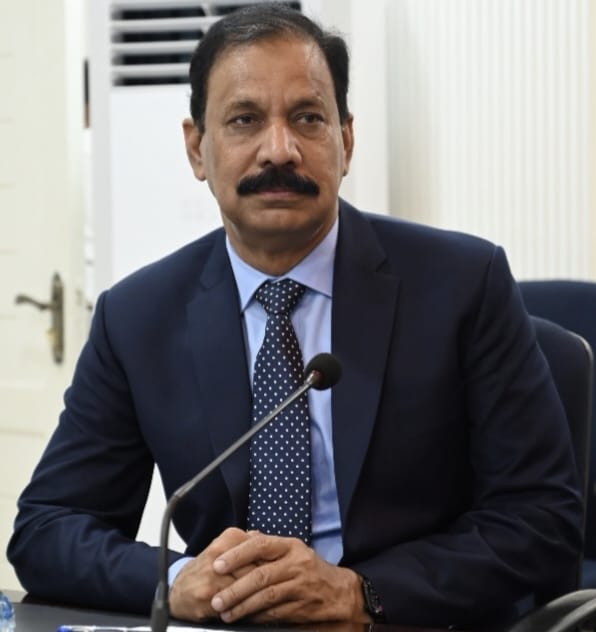
ISLAMABAD, Mar 08 (APP):The Islamabad Electric Supply Company (IESCO) achieved a 95 percent recovery in cases related to electricity theft during 2025, while Aggregate Technical and Commercial (AT&C) losses were reduced to single digits in line with targets set by National Electric Power Regulatory Authority (NEPRA), Chief Executive Officer Engineer Chaudhry Khalid Mahmood said.
In an exclusive interview with APP, the IESCO chief said the company registered 2,092 FIRs against power theft during the year and arrested 785 individuals. A total of 3,402,341 units were charged to offenders, while detection billing amounting to Rs177.88 million was issued, of which Rs168.90 million was recovered, reflecting a 95 percent recovery rate. He said the company had also successfully completed the installation target of 1.2 million state-of-the-art Advanced Metering Infrastructure (AMI) meters in the Rawalpindi region, a major step towards improving transparency and reducing power losses. Mahmood said higher incidents of electricity theft had been reported in areas including Bhara Kahu, Nilore, Tarnol, Golra and Rawal Road. To curb illegal hooks and direct connections in these localities, the Aerial Bundled Cable (ABC) system had been introduced, which significantly reduced line losses. Providing circle-wise details, he said the highest number of FIRs—818—were registered in Attock Circle, followed by 318 in Rawalpindi City, 303 in Islamabad, 237 in Chakwal, 283 in Rawalpindi Cantt and 133 in Jhelum. Rawalpindi Cantt achieved a 100 percent recovery rate. He said most cases of electricity theft involved direct supply or loop connections, accounting for 1,900 incidents, while 192 cases involved meter tampering, tilting or shunt methods. The IESCO chief said joint operations by the company’s operations teams and Meter and Testing (M&T) surveillance units had been intensified across domestic, commercial, industrial and agricultural sectors. Alongside enforcement actions, the company was also running awareness campaigns, including on social media, to discourage power theft. Consumers have been urged to report electricity theft through the helpline 118, assuring that the identity of informants would remain confidential. Mahmood said the strengthening of the system had significantly reduced line losses, while AT&C performance had improved to single digits in accordance with NEPRA’s prescribed targets, reflecting effective monitoring and operational measures. He also appreciated the performance of Project Director AMI Syed Mohsin Raza Gilani, saying that under his leadership nearly 1.2 million smart meters had been installed in the Rawalpindi region so far. The installation of AMI meters had not only improved recovery rates but also ensured accurate billing, automated meter reading, better control over electricity theft, reduced system overloading and fewer incidents of transformer and meter burnouts. He said scanning meters had also been installed on transformers to enhance monitoring and transparency in the power distribution system. Highlighting consumer facilitation initiatives, the IESCO chief said that in line with the vision of Prime Minister Shehbaz Sharif and Federal Minister for Energy (Power Division) Sardar Awais Ahmad Khan Leghari, customer facilitation centres had been established at various locations including the IESCO Head Office, G-9 and Mander Chowk. These centres provide services such as installment facilities for electricity bills, extension of due dates, bill corrections, change of name and address, complaint registration, reporting of power faults and submission of applications for new electricity connections, he added. Mahmood said modern technology had been introduced at the centres to ensure quick and efficient services to consumers and to further promote transparency in the electricity distribution system.