
The Ministry of National Food Security and Research (MNFSR) has proposed a Rs 6,598 million nationwide project to establish commercial olive orchards on 40,000 acres as part of efforts to strengthen and uplift Pakistan’s olive value chain.
40,000 acres of commercial olive orchards planned under new Rs 6.6bn project
ISLAMABAD, Mar 07 (APP):The Ministry of National Food Security and Research (MNFSR) has proposed a Rs 6,598 million nationwide project to establish commercial olive orchards on 40,000 acres as part of efforts to strengthen and uplift Pakistan’s olive value chain.
According to an official document available with Wealth Pakistan, the three-year initiative titled “Strengthening/Uplifting of Olive Value Chain in Pakistan – Phase III” will run from July 2026 to June 2029 and will be implemented across the country through the Pakistan Oilseed Development Board in collaboration with national and provincial institutions.
The project is planned for implementation across Islamabad Capital Territory, Punjab, Khyber Pakhtunkhwa, Sindh, Balochistan, Azad Jammu and Kashmir and Gilgit-Baltistan.
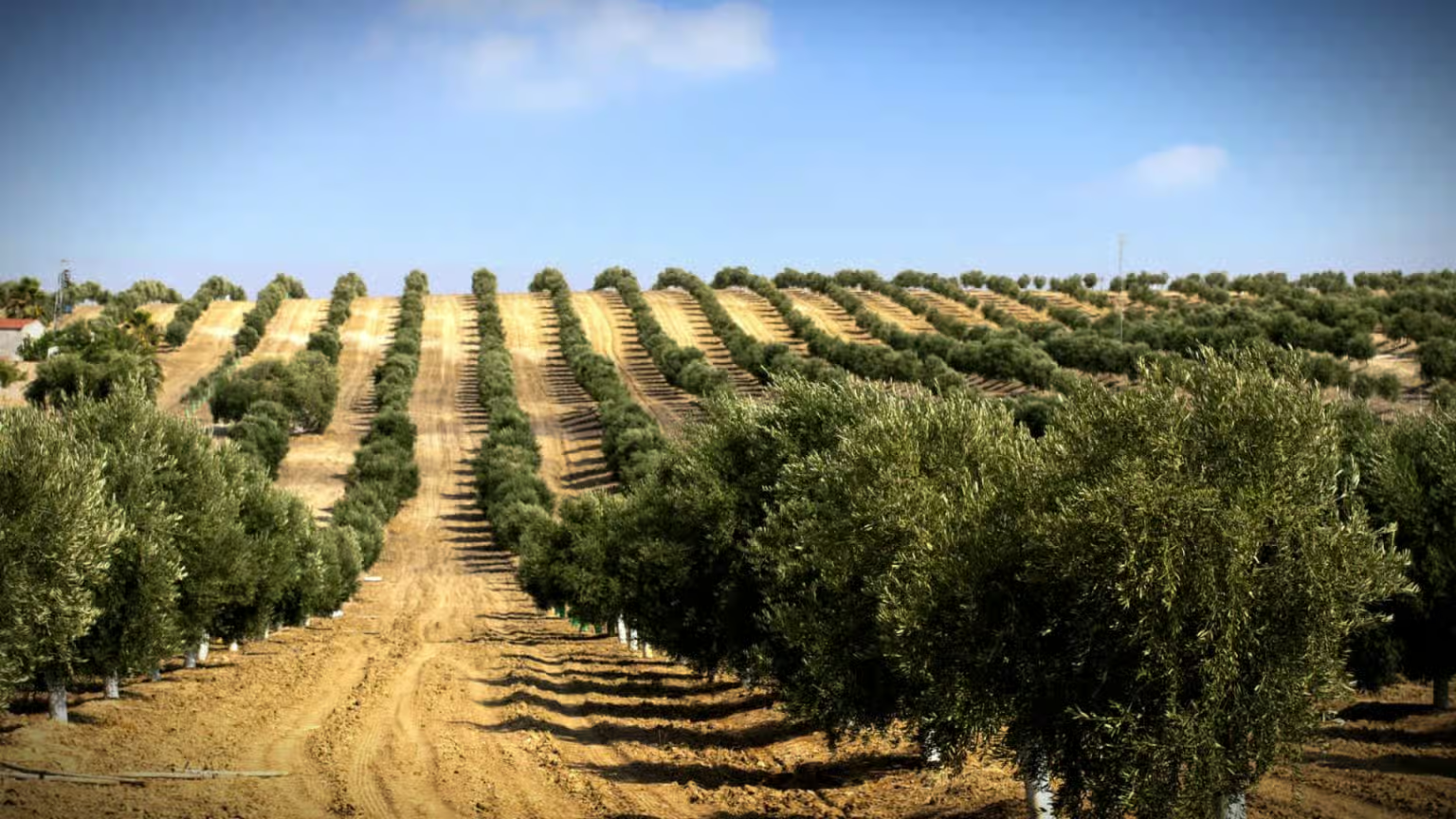
A key component of the initiative is the establishment of commercial, cluster-based olive orchards on 40,000 acres of farmer and public land in identified agro-ecological zones. The project aims to organize olive cultivation on a larger scale to support the development of the country’s olive industry.
To improve water-use efficiency and climate resilience in olive cultivation, drip irrigation systems will be installed on 10,000 acres of olive orchards. The project also plans to rehabilitate around 0.3 million wild olive trees through community-managed grafting in identified areas.
The initiative also focuses on strengthening value addition and commercialization within the olive value chain. Pilot-scale public-private partnership interventions are planned for pomace oil production, improvement in olive oil quality, modern storage practices and utilization of pomace for pellets.
Institutional strengthening is another major component of the project. The plan includes establishing and operationalizing a national olive company or council to improve governance, sustainability and regulatory arrangements with participation from the private sector.
The project also emphasizes human resource development across the olive value chain. Stakeholders will be trained in good agricultural practices, good manufacturing practices, hazard analysis and critical control points, processing techniques and marketing practices.
The training programs will ensure participation of women and youth involved in olive cultivation, processing and marketing to support the development of a skilled workforce for the sector.
Among the key deliverables of the project are the establishment of cluster-based commercial olive plantations,
rehabilitation of wild olive trees through grafting, installation of drip irrigation systems and development of skilled human resources across the olive value chain.
The initiative will also introduce pilot projects for value addition and by-product utilization to improve commercialization in the sector. In addition, a digital geospatial mapping and monitoring system will be implemented to support the tracking and management of olive cultivation activities.
The proposed activities are aligned with the 13th Five-Year Plan, the United Nations Sustainable Development Goals and the National Agriculture Innovation Growth Action Plan, focusing on exports, technological advancement, mechanization, financial support, infrastructure development, environmental sustainability, and equity and empowerment.