
ISLAMABAD, Jan 16 (APP): Pakistan’s $13 billion defence export pipeline can transform the country from a marginal arms exporter into a meaningful global defence supplier with major macroeconomic benefits. Pakistan is confidently emerging as a credible global defence exporter, underpinned by an estimated $13 billion defence export pipeline that reflects strengthened geopolitical standing, proven indigenous defence platforms and expanding state-to-state partnerships across the Middle East, Africa and Central Asia. This …
Pakistan’s $13 billion defence exports signal structural shift in economy, industry
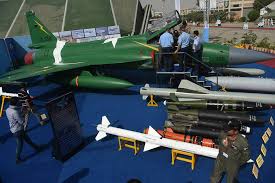
ISLAMABAD, Jan 16 (APP): Pakistan’s $13 billion defence export pipeline can transform the country from a marginal arms exporter into a meaningful global defence supplier with major macroeconomic benefits.
Pakistan is confidently emerging as a credible global defence exporter, underpinned by an estimated $13 billion defence export pipeline that reflects strengthened geopolitical standing, proven indigenous defence platforms and expanding state-to-state partnerships across the Middle East, Africa and Central Asia. This diversified pipeline spanning fighter aircraft, trainer jets, drones, armoured vehicles, naval platforms and ammunition has the potential to equal over 80% of Pakistan’s current foreign exchange reserves and approximately 3.7% of Gross Domestic Product (GDP), signalling a transformative opportunity for the national economy.
The momentum marks a decisive break from the past, when defence exports stood at $22.38 million in 2024, according to the United Nations (UN) COMTRADE database. Anchored by strong state-owned institutions such as Pakistan Aeronautical Complex (PAC), Heavy Industries Taxila (HIT), Pakistan Ordnance Factories (POF) and Karachi Shipyard & Engineering Works (KSEW), the expanding defence sector is well-positioned to diversify Pakistan’s $37 billion export base, strengthen external accounts and generate sustainable long-term revenues through maintenance, repair and overhaul (MRO), innovation and technology spillovers.
According to reports, Pakistan has identified a potential $13 billion defence export pipeline covering aircraft, drones, armoured vehicles, naval platforms and ammunition, marking a step-change from historically modest exports.
The defence industry is expected to evolve from a purely state-led model toward a mixed public–private structure, with private firms and universities gradually entering the value chain alongside entities such as Pakistan Aeronautical Complex, Heavy Industries Taxila, Pakistan Ordnance Factories and Karachi Shipyard & Engineering Works.
The security experts believe that the expansion of defence exports would diversify Pakistan’s $37 billion export base beyond textiles and agriculture, reducing reliance on commodity-linked sectors.
They say that realisation of defence exports equivalent to over 80% of current foreign exchange reserves could strengthen the balance of payments and ease external financing pressures.
The growth of the defence manufacturing ecosystem is likely to create spillovers into advanced civilian technologies, including avionics, robotics, artificial intelligence and high-end manufacturing.
According to data, Pakistan Aeronautical Complex (PAC) will expand high-value aircraft exports such as the JF-17 Thunder Block III and Super Mushshak, strengthening foreign exchange earnings and aerospace capabilities. Also, the Heavy Industries Taxila (HIT) will scale production and export of armoured vehicles, supporting industrial upgrading and skilled employment generation. Pakistan Ordnance Factories (POF) is expected to increase ammunition exports, creating steady dollar inflows and deepening defence manufacturing depth.
Moreover, Karachi Shipyard & Engineering Works (KSEW) will enhance naval platform exports, improving Pakistan’s footprint in maritime defence markets.
According to security experts, Pakistan’s Defence Export Ecosystem will attract private sector participation and university-led research and development (R&D), fostering innovation, technology spillovers and long-term maintenance, repair and overhaul (MRO) revenues.