Pakistan, WHO mark World Health Day
Pakistan, WHO mark World Health Day
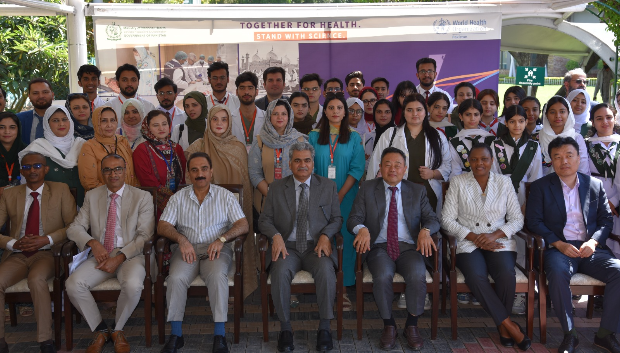
ISLAMABAD, Apr 06 (APP): The World Health Organization (WHO) and Ministry of Health on Monday marked World Health Day by highlighting the transformative role of medical science in saving millions of lives and strengthening public health over the past decades.
Secretary Health Muhammad Aslam Ghauri said that trusting medical science is essential for a safer future, noting that Pakistan has made significant progress in combating diseases and improving healthcare outcomes since becoming a founding member of WHO 78 years ago.
“Trusting and following medical science is not an option—our future and the future of our families depend on it,” he said, reaffirming Pakistan’s continued commitment to global health cooperation.
He noted that scientific advancements have enabled the prevention and treatment of once-deadly diseases, including tuberculosis, malaria, hepatitis C, and cancer, while also supporting efforts to eradicate polio and tackle malnutrition.
Highlighting a broader perspective, Ghauri emphasized the importance of the One Health approach, which recognizes the interconnection between human, animal, and environmental health.
WHO Representative in Pakistan Dr. Luo Dapeng underscored the impact of medical science with key statistics, stating that vaccines have saved over 150 million lives globally in the past 50 years.
In Pakistan alone, around seven million children and 5.5 million women of childbearing age are reached annually with life-saving immunization services.
He added that polio vaccination efforts have reduced cases in Pakistan by 99.8% over the past three decades, while tuberculosis treatment has saved more than 83 million lives globally and benefited over five million people in Pakistan in the last decade.
Dr. Luo also highlighted ongoing collaboration between WHO and the government, including life-saving treatment for approximately 70,000 children suffering from severe acute malnutrition each year.
Reaffirming WHO’s long-standing partnership with Pakistan, he encouraged young people to support science and contribute to building a healthier future.
The event served as a reminder of the critical role of science, innovation, and international collaboration in advancing public health and saving lives.