
Prime Minister Muhammad Shehbaz Sharif said the government considered access to clean water as a basic human right and was determined to ensure women’s representation in water management and decision-making processes.
Govt considers access to clean water basic human right: PM
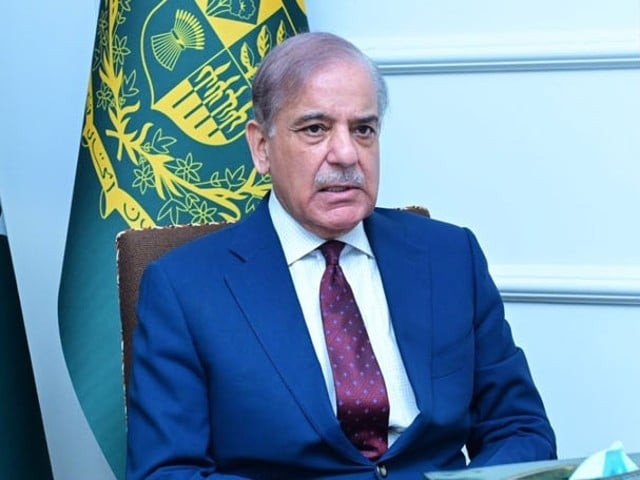
ISLAMABAD, Mar 21 (APP): Prime Minister Muhammad Shehbaz Sharif said the government considered access to clean water as a basic human right and was determined to ensure women’s representation in water management and decision-making processes.
In a message on the World Water Day, he said, “Today, International Water Day is being observed in Pakistan and around the world. This year, the day is being observed under the theme Water and Gender Equality: Where Water Flows, Equality Grows. This theme highlights that water conservation is not just a technical issue but also has importance for social justice and gender equality.”
“Pakistan is facing the challenge of water scarcity and per capita water availability has decreased from 5,260 cubic meters to less than 1,000 cubic meters since the formation of Pakistan. Unpredictable rainfall patterns and changes in glacier systems as a result of climate change have further exacerbated these risks of water scarcity,” he added.
He said, “Water scarcity also affects the daily lives, livelihoods and social diversity of all segments of society. The gender aspect is very important at the household level because our women generally bear more responsibility for managing water for domestic use. Difficulty in water availability causes waste of their valuable time. Water management is a time-consuming task, especially in villages. This affects educational and economic activities.”
“The government is taking several important reform measures under the National Water Policy to secure water resources for the future. Under the Public Sector Development Program to increase water storage, the federal government is working on the construction of 18 small, medium and large dams,” he continued.
He said, “These include major projects like Diamer-Bhasha Dam and Mohmand Dam, which will help in increasing water storage capacity as well as providing drinking water. The Naulong Dam and the Nai Gaj Dam will improve agricultural irrigation, while the Greater Karachi Water Supply Scheme (K-IV) is important for improving water supply in Karachi.
Furthermore, the Chiniot Dam will provide water to Faisalabad, while the Kachhi Canal and the Chashma Right Bank Canal will provide irrigation and drinking water to the plains of Kachhi and Dera Ismail Khan.”
“All these projects will play a significant role in increasing overall water availability, addressing the impacts of climate change, and sustainable economic development,” he said adding, “In addition to the dams, the government aims to reduce water wastage by 33 percent and increase water efficiency by 30 percent by improving the efficiency of the canal system to achieve more production with less water.”
The prime minister said, “Using modern technology, IRSA is installing a telemetry system across the country to ensure transparency in the water system, which will be completed by 2027. This will enable timely monitoring of river flows and help in resolving inter-provincial water distribution issues.
“Pakistan is committed to protecting its national water rights in a bold manner at the global level and strongly condemns any form of water aggression,” he remarked.
He said, “Today, on World Water Day, I appeal to all relevant institutions, development partners, civil society and every citizen to ensure the protection of water, considering it a precious gift. I reiterate my commitment at the government level that we will promote inclusive, sustainable and gender-sensitive water resources management.”