
The Kashmir freedom movement represents a multidimensional struggle in which political insight, ideological conviction, social awareness, and spiritual resilience are deeply intertwined.
Asiya Andrabi: The Iron Lady of Kashmir’s Resistance — A Coherent Narrative of Resolve, Faith, Consciousness and Resistance
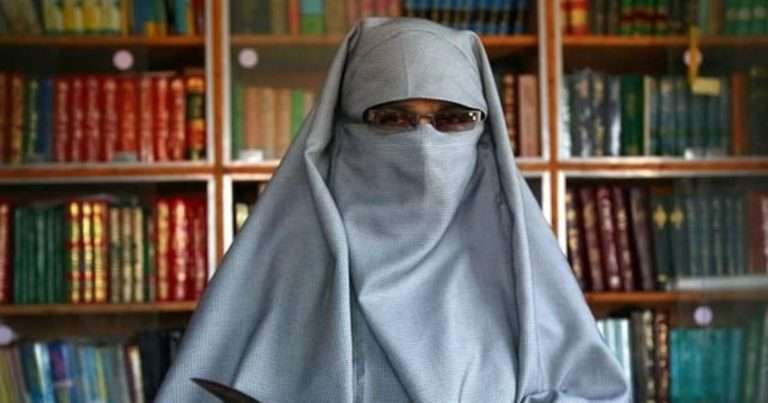
ISLAMABAD, Mar 27 (APP):The Kashmir freedom movement represents a multidimensional struggle in which political insight, ideological conviction, social awareness, and spiritual resilience are deeply intertwined.
Within this movement, certain individuals transcend conventional roles and emerge as enduring symbols of resistance. Asiya Andrabi stands among these distinguished figures—aptly referred to as the “Iron Lady” for her extraordinary steadfastness, intellectual clarity, and fearless articulation of her beliefs, said a press release.
To perceive Asiya Andrabi merely as a political activist would be to underestimate the breadth and depth of her influence. She embodies multiple roles simultaneously: an ideological leader, a social reformer, a proponent of religious consciousness, and the founder of an organized movement. Her struggle reflects a coherent and integrated worldview in which faith, identity, and the aspiration for freedom are inseparably linked.
With a profound understanding of the realities in the Kashmir Valley, Andrabi has consistently maintained that the Kashmir issue is not merely a political dispute, but a matter deeply rooted in civilizational identity, religious conviction, and fundamental human rights. Guided by this perspective, she has fearlessly raised her voice against Indian control over Kashmir, framing the resistance as principled, sustained, and ideologically grounded. Central to her political thought is the assertion that the State of Jammu and Kashmir is, by natural, historical, and ideological dimensions, aligned with Pakistan—a stance that has provided clear direction and consistency to her struggle.
A significant dimension of Asiya Andrabi’s work lies in her role as a religious scholar and social mobilizer among women. She has played a pivotal role in fostering Islamic awareness, moral consciousness, and a sense of collective responsibility among Kashmiri women. Her efforts have strengthened the understanding of Islamic principles, identity, and societal obligations, emphasizing that a truly empowered society is shaped not only by political liberation but also by intellectual and spiritual development.
Recognizing the need for an organized platform, she founded Dukhtaran-e-Millat, a movement aimed at promoting religious awareness, preserving Islamic values, and mobilizing women within the broader framework of the Kashmir freedom struggle. Under her leadership, the organization transformed women into a cohesive and active force—demonstrating that women are not merely supporters in any movement, but are fully capable of assuming leadership roles and shaping its direction.
One of the defining features of Andrabi’s leadership is her unwavering adherence to principle. She has consistently refused to yield under pressure, despite repeated arrests, prolonged detentions, and the hardships of imprisonment. This unflinching resilience is precisely what justifies her recognition as the “Iron Lady.”
Her personal life further reinforces the depth of her commitment. Her husband, Muhammad Qasim Faktoo, has spent decades in Indian prisons, serving a life sentence in connection with the struggle for the right to self-determination. The sustained sacrifices of both individuals within the same family underscore that this movement is not merely political rhetoric, but a profound expression of ideological commitment and personal sacrifice.
At the international level, Asiya Andrabi’s struggle carries significant relevance. She frames the Kashmir issue within the universally recognized principle of the right to self-determination, consistently reminding the global community of its own declared standards and obligations. Her narrative is grounded in moral and legal arguments, appealing directly to the conscience of the international community.
A comprehensive analysis of her personality reveals several defining elements: unwavering ideological commitment, fearless leadership, religious and social reform, organizational acumen, and persistent resistance. These attributes collectively position her as a remarkable and historically significant figure.
Asiya Andrabi’s life represents a luminous chapter in the Kashmir freedom movement—where faith, determination, resilience, and sacrifice converge. She is not merely a political leader, but a representative of a broader ideological and spiritual struggle. Her legacy conveys a powerful message for future generations:
When conviction is clear, faith is strong, and the cause is just, no force can break the resolve of a determined people.