
Pakistan urges ‘effective’ non-discriminatory approach to stop non-state actors from acquiring WMD
Pakistan urges ‘effective’ non-discriminatory approach to stop non-state actors from acquiring WMD
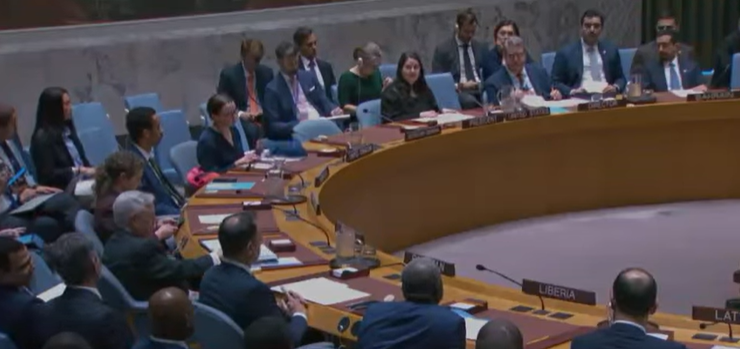
UNITED NATIONS, Mar 18 (APP): Pakistan has called for an “effective” non-discriminatory, objective and criteria-based approach to prevent non-State actors from gaining access to weapons of mass destruction (WMD).
“In the current complex global environment characterized by several conflicts, simmering tensions, and security challenges, the promotion of non-proliferation efforts is more crucial than ever,” Ambassador Usman Jadoon, deputy permanent representative of Pakistan to the United Nations, told the UN Security Council during a briefing on the 15-member body’s panel known as “1540 Committee”.
The Committee is designed to monitor and support states in implementing Resolution 1540 (2004), which legally binds all UN Member States to prevent non-state actors from acquiring, developing, or using nuclear, chemical, or biological weapons and their delivery systems.
Pointing out that the potential for non-state actors to acquire and use WMDs threatens the national security of member states and international peace and security, the Pakistani envoy said, “The changing nature of non-state actors and terrorist activities underscores the importance of strengthening voluntary international cooperation and collaborative efforts to achieve the common goal of effectively implementing the resolution 1540.”
Furthermore, member states must stay abreast of these developments, Ambassador Jadoon said, adding that the 1540 Committee can play an important role in promoting international understanding of these threats and their collective response.
Noting that multilateral export control regimes can play a crucial role in strengthening global non-proliferation efforts, the Pakistani envoy said that to maintain those regimes must avoid becoming exclusive syndicates prioritizing political and commercial interests.
“Selective exceptions diminish the credibility of the global non-proliferation framework and risk further destabilizing regional and global peace and security,” Ambassador Jadoon added.
Moreover, non-proliferation efforts, he said, must not impede international cooperation in the peaceful uses of dual-use technologies, which is vital for the economic development of all member states, particularly the Global South.
“All countries must be able to exercise their inalienable right to utilize nuclear energy and technologies for peaceful purposes, consistent with their respective non-proliferation and international legal obligations,” he said, emphasizing that further work in this respect, including within the 1540 Committee, must ensure equitable and unimpeded access to technologies while promoting the goals of global non-proliferation.
“Non-proliferation and peaceful technological development reinforce – not undermine – each other when approached through cooperative mechanisms, on a non-discriminatory basis.”
Pakistan, he said, will continue its active contribution to the work of the 1540 Committee, including in the ongoing comprehensive review, which is a vital exercise in the implementation of the resolution.
At the outset, Panama’s Ambassador Eloy Alfaro de Alba reported on the progress made within the Committee in the last few months.