
BEIJING, Jan. 9 (APP):For years, Balochistan's vast, arid landscape and long coastline have held economic promise that has yet to be fully realised. With large livestock herds and marine resources, the Pakistani province has significant potential. However, the gap between potential and productivity remains wide - a challenge now being tackled by a new generation of local scholars armed with international expertise. One such scholar is Dr. Saif Ullah. He …
Bridging continents with knowledge: A Baloch scholar’s quest to unlock a region’s potential
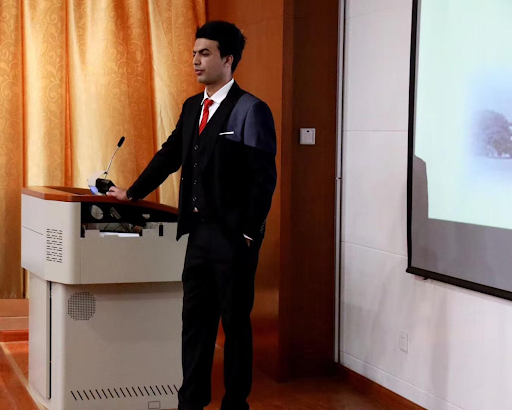
BEIJING, Jan. 9 (APP):For years, Balochistan’s vast, arid landscape and long coastline have held economic promise that has yet to be fully realised. With large livestock herds and marine resources, the Pakistani province has significant potential. However, the gap between potential and productivity remains wide – a challenge now being tackled by a new generation of local scholars armed with international expertise.
One such scholar is Dr. Saif Ullah. He is a faculty member in the Department of Veterinary and Animal Sciences and manager of the Business Incubation Center at Lasbela University of Agriculture, Water and Marine Sciences (LUAWMS) in Balochistan, Pakistan. His journey to this role began more than 5,000 kilometres away, in the lecture halls and research laboratories of Nanjing Agricultural University in China.
“My first priority was to get the degree, the knowledge,” Dr. Saif said. That knowledge was built through a master’s degree and a Ph.D. in animal genetics, breeding and reproduction. His academic dedication was recognised in 2017 with the International Student Leader Award.
“I gained a strong foundation in research and was exposed to advanced agricultural technologies,” he said. For him, though, it was never just an academic exercise. “We are the sons of this soil. I saw this field as the way to bring sustainable solutions to my hometown.” The need is clear. Balochistan’s economy relies heavily on livestock – goats, sheep and camels – a sector that contributes more than half of the province’s agricultural GDP.
“We have great potential, but very low productivity,” Dr. Saif said, outlining the challenge he aims to address. “The goal is to convert our natural resources into economic growth through science. The technologies I learned in Nanjing, in areas like genetic improvement, are one of the keys.”
Now back in southeast Balochistan, Dr. Saif is focused on implementation. He is incorporating modern teaching methods into his classes and guiding students in hands-on research aimed at building long-term local capacity. He also hopes to develop joint research projects with his former university and other Chinese institutions, viewing such collaboration as a catalyst for progress, CEN reported.
His six years in China, however, were about more than academics. While based in Nanjing – a historic city often described as an education centre in eastern China’s Jiangsu province – he also travelled widely, from Zhengzhou in central China to the tropical coastal city of Sanya.
“These travels opened my mind,” he said. “Seeing different approaches to architecture and development in China changed my perspective. If you stay in one place, your thinking can be limited. My time in China made me more open-minded and confident.”
He also shared his own heritage through community engagement. At international campus and community festivals, he showcased Balochi culture, wearing traditional clothing and performing folk dances. His community involvement was recognised when he received an “Outstanding Volunteer” award for participating in a 2018 charity event in Jiangsu.
Through his academic work and cultural exchanges, Dr. Saif Ullah has become a bridge of knowledge and mutual respect – bringing home not only technical expertise, but also a broader vision for sustainable development in Balochistan.