ISLAMABAD, Apr 01 (APP):Experts at a policy seminar have called for the creation of a cross-border Indo-Gangetic Airshed Management Forum and stronger regional data sharing mechanisms between Pakistan and India to address worsening air pollution, warning that isolated national responses cannot effectively tackle transboundary smog affecting major cities across the region. The policy seminar on “Outlook of Air Quality in Pakistan: Challenges and the Way Forward” was organized by Sustainable …
Call to establish cross-border airshed forum with India to combat smog crisis
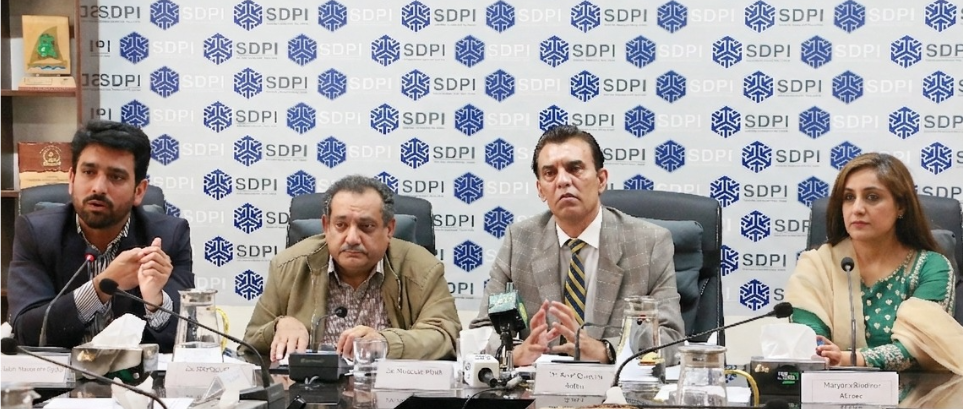
ISLAMABAD, Apr 01 (APP):Experts at a policy seminar have called for the creation of a cross-border Indo-Gangetic Airshed Management Forum and stronger regional data sharing mechanisms between Pakistan and India to address worsening air pollution, warning that isolated national responses cannot effectively tackle transboundary smog affecting major cities across the region.
The policy seminar on “Outlook of Air Quality in Pakistan: Challenges and the Way Forward” was organized by Sustainable Development Policy Institute (SDPI) here on Wednesday.
The speakers further said that worsening air pollution is reducing life expectancy, damaging the economy, and placing Pakistan among the most polluted countries globally.
They also sought stronger governance reforms, regional airshed cooperation, expansion of monitoring systems, and clean transport interventions to address the crisis.
Dr. Abid Qaiyum Suleri, SDPI Executive Director, said air pollution has reduced the average life expectancy of Pakistanis by approximately four years, while residents of Lahore have lost nearly seven years of expected life due to deteriorating air quality.
He recalled that the COVID-19 pandemic demonstrated how critical are oxygen availability and respiratory protection for human survival.
Dr. Suleri went on to say that transport emissions contribute approximately 35 per cent of air pollution in Lahore, followed by heavy industry at around 28 per cent and brick kilns at about 17 per cent while in Karachi maritime and industrial emissions are major contributors and in Rawalpindi and Islamabad congestion, dust and stone crushing activity in nearby areas such as Taxila significantly worsen air quality.
He emphasized that crop residue burning is not the primary cause of year-round pollution and that transport and industry remain continuous contributors throughout the year.
He further noted that Bangladesh has demonstrated rapid improvements in air quality through targeted interventions and said Pakistan could learn from regional examples alongside China’s progress.
Dr. Shafqat Munir, SDPI Deputy Executive Director, while presenting his policy paper on Track-II-Transboundary Air Pollution and Joint Airshed Management, said air pollution is emerging as Pakistan’s “fifth season,” lasting from October to January each year and causing widespread respiratory illness and silent health impacts across major cities.
He noted that pollution-related diseases have longer-term consequences than disasters such as floods, which occur over shorter periods.
He said estimates indicate that air pollution contributes to economic losses equivalent to approximately 2.5 percent of GDP in India and around 1.5 to 2.5 percent in Pakistan through increased healthcare expenditure, reduced productivity and declining agricultural output.
Dr. Munir called for preparation of joint airshed management plans both within provinces and across borders, promotion of solar and wind energy, expansion of air quality monitoring networks, strengthening public awareness campaigns and adoption of sustainable agricultural practices including crop diversification and improved crop residue management.
He suggested scaling up regulatory and technological interventions in other sectors and emphasized that crop residue burning should be addressed through incentives and alternative uses such as bioenergy and industrial inputs rather than punitive enforcement alone.
He proposed that synchronized monitoring systems, joint airshed action plans, and institutionalized scientific cooperation are essential to reduce pollution levels in shared atmospheric corridors such as the Lahore–Delhi belt, noting that coordinated regional strategies, supported by expanded air-quality monitoring networks and transparent exchange of emissions data, could significantly improve policymaking, protect public health, and reduce economic losses linked to deteriorating air quality.
Dr. Jabir Hussain Syed, Associate Professor at COMSATS University Islamabad, stressed the need to strengthen collaboration between academia and policymakers and improve monitoring infrastructure to support evidence-based policymaking.
He said China has reduced air pollution levels by approximately 65 percent since 2012 through coordinated governance and deployment of more than 2,000 monitoring stations and suggested Pakistan could adapt similar institutional approaches.
He highlighted concerns about unregulated industrial practices including burning of electronic waste materials such as printed circuit boards for metal extraction and continued use of tyres, shoes and textile waste as fuel in some brick kilns.
He highlighted the importance of expanding certified monitoring networks rather than relying primarily on low-cost sensors and called for stronger coordination between ministries, universities and environmental protection agencies to address data gaps.
Maryam Shabbir Abbasi, Associate Research Fellow at SDPI, presented regional and global air quality comparisons and said Pakistan ranks among the most polluted countries in the region with an annual average PM2.5 concentration of 67.3 micrograms per cubic meter, far exceeding World Health Organization guideline levels.
She noted that several Pakistani cities ranked among the most polluted globally, including Faisalabad with PM2.5 levels of 98.8 micrograms per cubic meter, Peshawar with 81 micrograms per cubic meter, Multan with 71 micrograms per cubic meter and Islamabad ranked among the top 100 polluted cities worldwide despite being widely perceived as relatively cleaner.
She further said that available air quality data in Pakistan remains scattered and incomplete, as many cities including Taxila are still not fully represented in national monitoring datasets.
She emphasized that government interventions often focus on visible seasonal sources such as crop residue burning and brick kilns, whereas transport emissions remain the largest contributor to pollution followed by industrial activity. She called for strengthening environmental governance mechanisms, improving monitoring systems, regulating industrial emissions more effectively and ensuring adoption and oversight of cleaner technologies in key sectors.