ISLAMABAD, Jan 18 (APP):While reviewing the draft National Health and Population Policy, experts have warned that rapid population growth, chronic underfunding of health services and inequitable financing could severely undermine Pakistan’s development agenda. The warning was floated at a high-level policy dialogue, titled: “The National Health and Population Policy (2026-35) – Plugging the Gaps”, organized by Sustainable Development Policy Institute (SDPI), said a press release issued on Sunday. Opening the …
Population growth & weak financing threaten Pakistan’s development agenda: experts
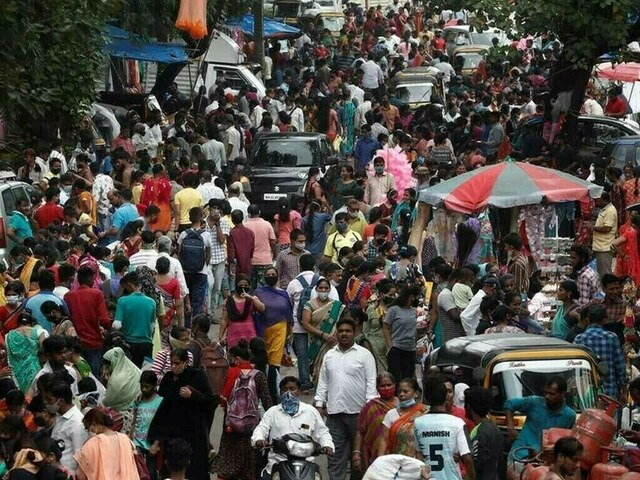
ISLAMABAD, Jan 18 (APP):While reviewing the draft National Health and Population Policy, experts have warned that rapid population growth, chronic underfunding of health services and inequitable financing could severely undermine Pakistan’s development agenda.
The warning was floated at a high-level policy dialogue, titled: “The National Health and Population Policy (2026-35) – Plugging the Gaps”, organized by Sustainable Development Policy Institute (SDPI), said a press release issued on Sunday.
Opening the session, Dr Abid Q. Suleri, SDPI Executive Director, while referring to the latest Household Integrated Economic Survey (HIES) released last week, painted a stark picture of Pakistan’s priorities. He noted that nearly 57 per cent of household expenditure is consumed by food, housing and utilities, while spending on health and education remains below three per cent each. “If a household earning 100 rupees spends only two on health, it tells you how neglected this sector is,” he said.
Dr. Suleri while comparing household data with federal and provincial budgets, criticised public spending patterns that prioritise infrastructure over service delivery. He argued that whether viewed through the lens of the Sustainable Development Goals, human development indices or Pakistan’s 2.6 per cent population growth, the country remains at the lower rungs globally. Such consultations, he stressed, were essential to bring health back onto policymakers’ radar by highlighting its economic and social dividends, especially as Pakistan enters what he described as the Fourth Industrial Revolution. SDPI, he added, stood ready to work with all stakeholders to keep the debate alive.
Dan Fang, Public Health Specialist at the World Health Organization (WHO) Pakistan, amid focusing on universal health coverage (UHC), acknowledged Pakistan’s commitments to UHC. She pointed to persistent gaps in equity, quality and financial protection, noting that access to essential health services remains uneven across districts, genders and income groups, with out-of-pocket spending still alarmingly high.
Ms. Fang cautioned that while innovative and alternative financing mechanisms could supplement public resources, they must align with equity goals and fiscal sustainability, and avoid fragmenting the health system or reinforcing hospital-centric care. An inclusive health system, she said, was not just about geography but about identifying who is left behind and why, particularly women, adolescents, persons with disabilities, older people and climate-vulnerable communities.
Fang also underscored the importance of gender-responsive health systems and integrated data systems, arguing that fragmented data undermines accountability and effective resource allocation.
Dr Razia Safdar, Senior Policy Advisor and Head of the Centre for Health Policy Innovation, SDPI, introduced the draft policy prepared by the Ministry of National Health Services, Regulation and Coordination (MNHSR&C) and shared for consultation in December 2025. She explained that unlike the previous National Health Vision 2016–2025, which rested on fewer pillars, the new draft identifies 11 priority pillars, ranging from governance and financing to population stabilization, health security and data digitization.
Samina A. Hasan, Executive Director of the National Institute of Population Studies (NIPS), presented findings from recent surveys and projections. She described NIPS’ ongoing work under the Performance Monitoring for Action (PMA) framework, which tracks family planning trends through household surveys, client exit interviews and assessments of both public and private health facilities across provinces.
Samina Hasan revealed that NIPS, in collaboration with the Planning Commission and MNHSR&C, has completed a population projection exercise from 2023 to 2050, though the report is yet to be made public. Based on two scenarios, a slow decline under current policies and a rapid decline with stronger interventions, Pakistan’s population could reach 389 million or 371 million respectively by 2050. With a population growth rate of 2.5 per cent and a total fertility rate of 3.6, she warned that growth had become unmanageable.
She argued that the National Finance Commission (NFC) Award, which currently assigns 82 per cent weightage to population, must be revisited. She proposed adding indicators such as population management, human development, women’s empowerment and tax collection, and reducing the overwhelming emphasis on population size alone.
Meanwhile, SDPI also inked a memorandum of understanding (MoU) with the Akhter Hameed Khan Foundation (AHKF) to promote collaborative initiatives on waste management and the circular economy, with a particular focus on Sahiwal.
The MoU was signed by SDPI Executive Director Dr Abid Qaiyum Suleri and AHKF Chief Executive Officer Dr Ayesha Khan. The MoU set a framework for cooperation between the two organizations in research, policy innovation, pilot demonstrations and capacity building, aimed at developing inclusive and sustainable waste management systems.
A key objective of the partnership is to integrate informal waste pickers into the formal economy while promoting household-level waste segregation.
Dr Abid Qaiyum Suleri said the collaboration would create a win-win situation by translating research into actionable policy recommendations alongside tangible community development outcomes. He noted that improved waste management systems, supported by evidence-based policymaking and local engagement, would benefit both communities and the broader economy.
Dr. Ayesha Khan, highlighted the Foundation’s work in urban poverty reduction, focusing on health, women’s economic empowerment, waste management, and sustainable urbanization. She also highlighted the synergy between SDPI’s innovative research and the Foundation’s community-based initiatives, pointing to opportunities for collaboration in climate action, gender, health, and technology-driven solutions.
Under the agreement, SDPI and AHKF will jointly work on circular economy and waste systems strengthening, building on AHKF’s Integrated Resource Recovery Centre (IRRC) framework and aligning initiatives with emerging national policies covering plastics, organics, construction waste, agriculture, solar photovoltaic waste and textiles. The partnership will also support research and diagnostics, including value-chain analyses, informal-sector mapping, stakeholder consultations and baseline studies, particularly in Sahiwal.