By Faheem Chandio KARACHI, Mar 31 (APP):As artificial intelligence (AI) continues to expand beyond technical domains into everyday applications, experts emphasize that its real value lies not only in innovation but in reliability, security, and practical usability. AI is now widely visible in fields such as medical imaging, weather forecasting, and digital services, where it helps identify patterns faster and more efficiently than humans. However, specialists note that AI systems …
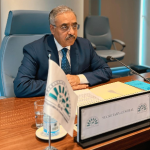
Dr. Shakil Ahmed bridging AI, cybersecurity for real-world impact

By Faheem Chandio
KARACHI, Mar 31 (APP):As artificial intelligence (AI) continues to expand beyond technical domains into everyday applications, experts emphasize that its real value lies not only in innovation but in reliability, security, and practical usability.
AI is now widely visible in fields such as medical imaging, weather forecasting, and digital services, where it helps identify patterns faster and more efficiently than humans.
However, specialists note that AI systems handling sensitive data or supporting critical decisions must also be secure and dependable, especially when deployed in real-world environments.
In this evolving landscape, Dr. Shakil Ahmed, an AI and Information Security expert and Associate Professor at FAST–NUCES in Karachi, is working at the intersection of research and application.
His work focuses on translating AI and cybersecurity research into practical solutions for healthcare, climate analytics, and secure digital systems. Experts say such integration is essential as modern technologies face increasing demands for both performance and protection.
In healthcare, Dr. Shakil has contributed to applied research using deep learning models, including customized Inception V3 and GAN-based architectures, for medical image classification in skin cancer diagnostics. The approach enables AI systems to assist in analyzing complex visual data, improving consistency and supporting clinical decision-making.
Observers note that such research is particularly relevant for countries like Pakistan, where disparities in healthcare access and diagnostic consistency remain significant challenges.
On the cybersecurity front, Dr. Shakil has worked on FPGA-based AES-XTS encryption implementations for secure storage systems and has led funded research in cryptography. These efforts highlight the importance of embedding security within digital systems to ensure data protection and trustworthiness.
Analysts point out that while security mechanisms often remain invisible to end users, they are critical in determining the resilience and reliability of modern technologies.
Beyond his research contributions, Dr. Shakil is actively engaged in teaching and mentoring, covering subjects such as artificial intelligence, machine learning, computer security, and advanced cryptography. His academic journey includes a PhD in computer engineering from Universiti Putra Malaysia.
His work also extends to climate-related research, including forecasting Karachi’s air temperature variations using mobile and multimedia datasets, reflecting a broader engagement with interdisciplinary challenges.
Experts say Dr. Shakil’s career reflects a growing trend in Pakistan’s technology sector, where the emphasis is shifting from theoretical research to building systems that can perform reliably under real-world conditions.
His approach underscores a key principle in modern technology development: effective innovation must not only advance models but also address practical problems with secure and sustainable solutions.