
Every spring,wheat harvesting in South Punjab once drew caravans of seasonal laborers moving from village to village,creating temporary communities around farmland.
Centuries-old manual wheat harvest tradition disappearing
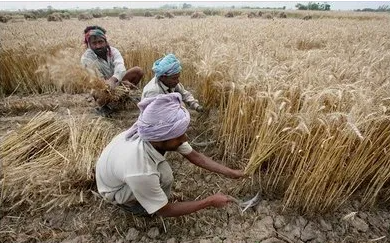
MULTAN, Mar 31 (APP):Every spring,wheat harvesting in South Punjab once drew caravans of seasonal laborers moving from village to village,creating temporary communities around farmland.
That tradition was now fading as combine harvesters increasingly replace manual labour.
In areas including Dunyapur and Kehrorpaka,farmers have shifted to mechanized harvesting over the past decade,citing efficiency and climate risks.
The machines,which cut,thresh and clean crops simultaneously can complete harvesting within hours work that previously took days.
Muhammad Yaqoob,a seasonal farm worker from Dunyapur said the wheat harvesting used to provide his family with year-long food security.“Farmers paid us in wheat instead of cash.The grain we earned fed our family for most of the year,”he said.
Under the traditional system,a labouring family could harvest up to two acres a day,earning around two maunds of wheat per acre.
For landless households,the arrangement functioned as an informal support system.
Farmers also recall the harvest season as a period of intense activity.
“It felt like a festival.Fields were full of people, and families worked together,”said Chaudhry Amir Shahzad, a local grower.
However,growers say changing weather patterns have accelerated the shift toward mechanization.
“Unpredictable rain or heat can damage crops quickly.Using a harvester allows us to finish in a day and prepare land for the next crop,”said Muhammad Afzal,another farmer from the area.
While the use of machinery has improved efficiency and reduced crop risk, it has also displaced a large number of seasonal workers.
Shabana Bibi,who previously organized women laborers for harvesting,said her family has moved to urban employment.
“Harvest season once ensured food security.Now we rely on daily wages in the city,”she said,adding that her husband works at a flour mill in Multan while her son is employed in a textile factory.
Local residents estimate that many laborers have shifted to jobs in construction, transport and small industries in nearby cities.
Experts say the transition reflects broader structural changes in agriculture,where mechanization was increasing productivity while reducing reliance on manual labour.
Farmer Farhat Hussain said that the change has altered the rural landscape.
“Farming is faster now, but the human element of harvest season is missing,” he said.
The shift marks a significant transformation in South Punjab’s agricultural practices, with traditional labour systems gradually giving way to mechanized methods.