The government on Thursday told the National Assembly that foreign direct investment (FDI) into Pakistan had increased overall, while acknowledging short-term pressures linked to regional tensions and profit outflows by foreign firms.
Minister sees FDI growth despite concerns over recent slowdown
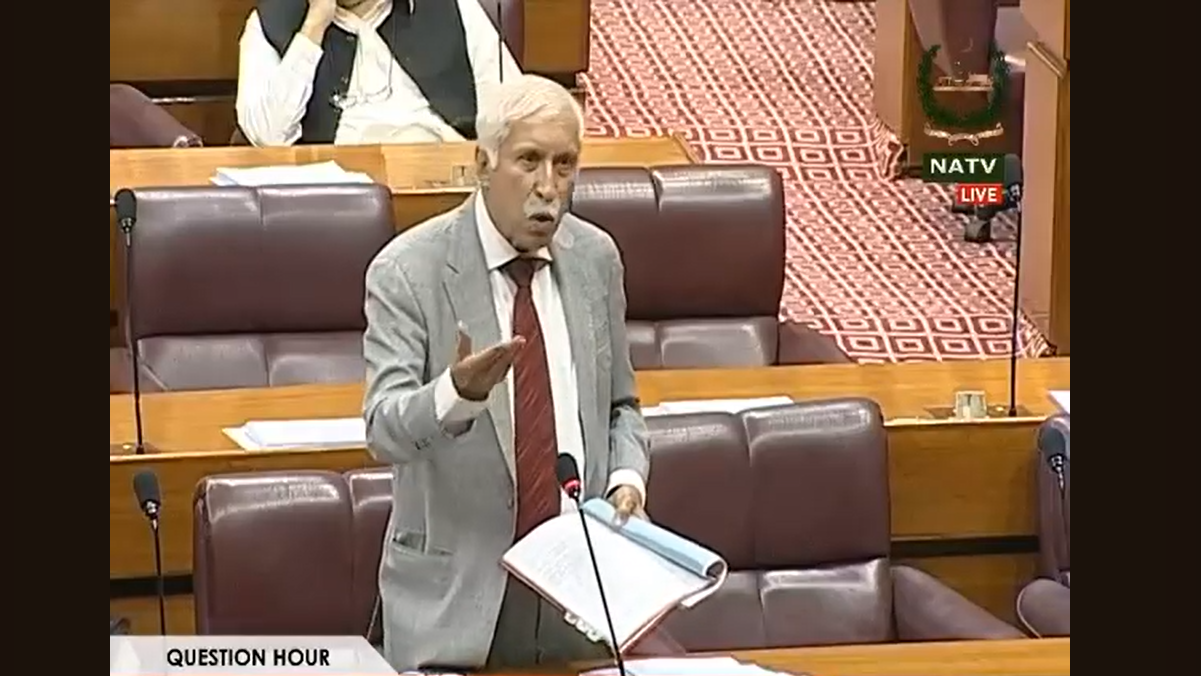
ISLAMABAD, Apr 02 (APP):The government on Thursday told the National Assembly that foreign direct investment (FDI) into Pakistan had increased overall, while acknowledging short-term pressures linked to regional tensions and profit outflows by foreign firms.
Responding to supplementary questions during the question hour, Federal Minister for Board of Investment Qaiser Ahmed Sheikh said that FDI figures showed an upward trend, rising from $3.166 billion last year to $4.280bn.
He maintained that Pakistan’s improving economic stability and regional role would support further investment inflows in the coming months.
The minister, however, conceded that a significant portion of profits earned by foreign companies was being repatriated abroad. “It is a positive sign that Pakistan is now allowing companies to take their profits out freely through the State Bank,” he said, noting that restrictions on profit repatriation had eased compared to previous years.
Sheikh also pointed to changing dynamics in informal investment channels, saying that funds previously entering Pakistan from Gulf countries through hundi and hawala routes had slowed due to evolving regional conditions.
He added that the after-effects of ongoing geopolitical tensions — including Pakistan-India border strains and conflicts in the wider region — were contributing to short-term economic challenges, including inflationary pressures.
Despite these constraints, the minister expressed optimism about Pakistan’s medium-term prospects, arguing that the country had emerged as a relatively stable player in the region.
He said the government was working to attract more investment, particularly from overseas Pakistanis, by offering incentives under its ongoing economic reform programme supported by the International Monetary Fund (IMF).
Earlier, lawmakers raised concerns over what they described as inconsistencies in the government’s assessment of foreign investment trends.
MNA Naeema Kishwer Khan noted that while the official response referred to improvements over the past few years, recent geopolitical developments — including heightened tensions in the region — had contributed to renewed inflationary pressures and a slowdown in investment.
She suggested that Pakistan’s diplomatic engagement and perceived global standing could be leveraged more effectively to attract foreign capital.
“If Pakistan is in a better position internationally, this should translate into increased foreign investment,” she said, urging the government to utilise diplomatic gains for economic benefit.
Another lawmaker, Mubeen Arif, questioned the data presented by the government, arguing that the figures cited did not fully reflect the current situation.
He pointed out that the official data covered the period from July to February, while recent regional developments occurred toward the end of that timeframe.
Arif claimed that foreign investment had declined more sharply than indicated, suggesting a drop of up to 55 per cent when broader measures were considered.
He also referred to a reported 22pc decline in inflows during the current fiscal year period under review, and asked the minister to clarify the discrepancy.
In response, Sheikh reiterated that the figures presented pertained specifically to direct foreign investment inflows, which he said had increased on an annual basis.
He maintained that while short-term fluctuations were evident, the overall trajectory remained positive.