Experts at a consultative workshop have demanded of the government to develop indigenous capacities for implementing a strong carbon trading mechanism in the country ensuring inclusive participation by public-private entities in the process.
Govt help sought to develop indigenous capacities to enforce strong carbon trading mechanisms
ISLAMABAD, Apr 02 (APP):Experts at a consultative workshop have demanded of the government to develop indigenous capacities for implementing a strong carbon trading mechanism in the country ensuring inclusive participation by public-private entities in the process.
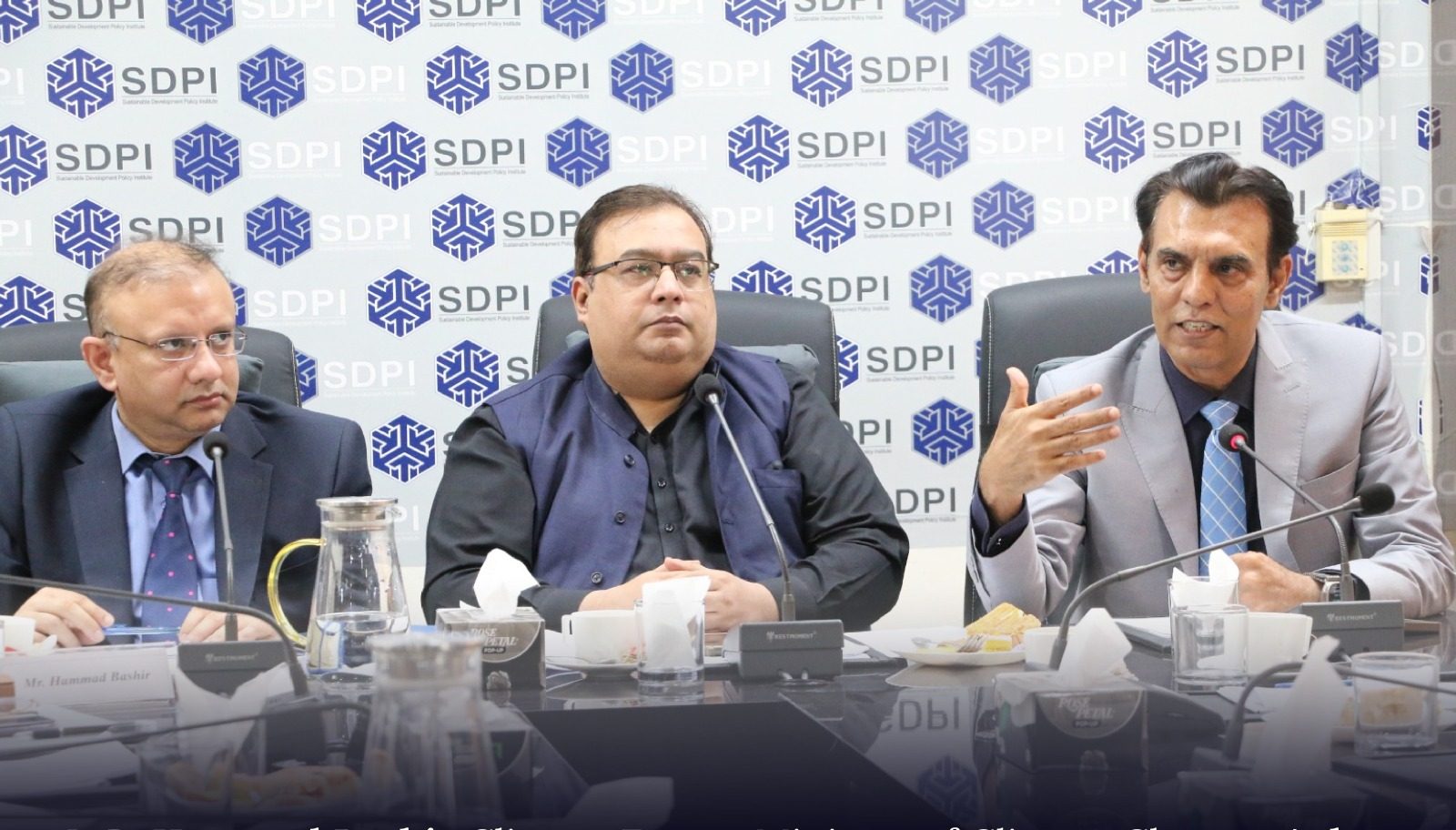
The workshop, titled: ‘Enhancing Article 6 Preparedness for Private Sector Participation in Carbon Markets’, was organized by Sustainable Development Policy Institute (SDPI) in collaboration with Pakistan German Climate and Energy Partnership, said a press release issued on Thursday.
Highlighting emerging opportunities for Pakistan under international carbon markets and Article 6 of the Paris Agreement, the experts also sought private-sector engagement, institutional preparedness, and climate-aligned development pathways.
Speaking on the occasion, Dr. Abid Qaiyum Suleri, the Executive Director of SDPI, said Pakistan’s carbon market policy framework is now evolving and feedback from stakeholder engagements will help refine implementation strategies and address operational gaps in the policy architecture.
Referring to global geopolitical developments and the Middle East energy crisis, Dr Suleri said temporary shifts by some countries towards fossil fuels could slow carbon market momentum in the short-term but may provide developing countries like Pakistan additional time to strengthen accounting systems, improve MRV frameworks, and prepare high-quality mitigation projects. “This transition period should be used to enhance preparedness, refine reporting systems, and strengthen project pipelines,” he said.
He emphasized that such dialogue platforms are essential to keep stakeholders informed about global climate-policy developments and ensure that Pakistan remains positioned to benefit from emerging carbon-market opportunities.
Ayhan Mustafa Bhutto, Special Secretary, Environment Climate Change and Coastal Development Department, Government of Sindh, said that Sindh has already initiated several carbon-mitigation projects, including mangrove restoration benefiting around 5,000 households.
The provincial government has also supported wind-energy installations, shrimp farming initiatives, riverine afforestation projects, methane generation from cattle dung, and improved cookstove programmes submitted to the federal climate ministry for consideration under carbon-credit frameworks, he added.
“Pakistan needs to develop indigenous third-party monitoring and verification capabilities to reduce project development costs,” he said, and suggested stronger coordination between the Ministry of Climate Change and the private sector to ensure practical and implementable legislation.
Zainab Naeem, Associate Research Fellow and Head of the Sustainability and Circularity Unit at SDPI, said environmental integrity remains central to Article 6 carbon market mechanisms, especially in voluntary carbon markets where concerns around greenwashing persist. She suggested that strong accounting frameworks and transparent authorization systems are essential to maintain credibility and ensure equitable benefits for developing countries.
She added that carbon markets can reduce mitigation costs, support local small and medium enterprises (SMEs), and help mobilize private-sector investment in climate-friendly technologies.
Hammad Bashir, Carbon Markets Expert at the Ministry of Climate Change and Environmental Coordination, said carbon credit projects typically support environmentally beneficial initiatives that are otherwise financially unviable. He cited waste-heat recovery in cement plants as a key example where carbon financing improves project feasibility.
Discussing Pakistan’s Policy Guidelines for Trading in Carbon Markets, he added that forestry and waste-management sectors are being prioritized owing to their high mitigation potential and indicated that carbon trading efforts will focus on 50 per cent of the conditional targets in Pakistan’s NDCs.
He said the government does not directly regulate voluntary carbon markets whereas compliance markets operate under specific conditions. He also noted that global trends are expected to push carbon credit prices upward in compliance markets.
Ahsan Kamran, Senior Technical Consultant, said that Article 6.2 allows countries to directly adjust carbon reductions in their national accounts without necessarily issuing tradable carbon credits whereas Article 6.4 establishes a UN-supervised global crediting mechanism where projects can be registered and credits traded internationally.
He said more than 100 bilateral agreements between countries are already underway, with European states, Singapore, and South Korea among the leading carbon-credit buyers. He added that Singapore currently allows companies to offset up to five per cent of taxable emissions through international carbon credits, creating potential opportunities for Pakistan as a supplier country.
Mr. Kamran further emphasized that transport electrification, battery-integrated rooftop solar deployment, waste-to-energy systems, and improved cookstove distribution projects present strong carbon-credit opportunities for Pakistan. However, he cautioned that electric-vehicle charging powered by fossil-fuel-based electricity reduces net mitigation benefits unless supported by solarized charging infrastructure.
He said improved cookstove programmes already piloted in South Punjab demonstrate strong climate and social co-benefits, including reduced deforestation, improved health outcomes, lower household fuel costs, and local employment generation.