Parliamentary Secretary for Information and Broadcasting Barrister Danyal Chaudhry on Wednesday outlined a sweeping set of education reforms in his constituency NA-57, as policymakers and development partners gathered in the federal capital for a roundtable on reducing school dropouts through creative and inclusive strategies.
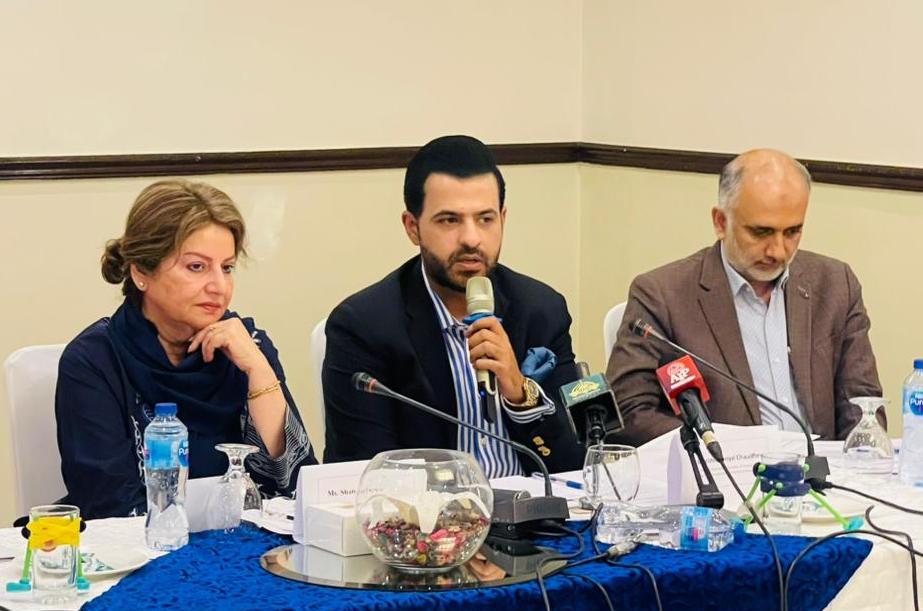
ISLAMABAD, Apr 01 (APP):Parliamentary Secretary for Information and Broadcasting Barrister Danyal Chaudhry on Wednesday outlined a sweeping set of education reforms in his constituency NA-57, as policymakers and development partners gathered in the federal capital for a roundtable on reducing school dropouts through creative and inclusive strategies.
Speaking as chief guest at the event titled “Inspired Education: Investing in Creative Strategies to Reduce Dropout,” hosted by Cities for Children with support from the Malala Fund, Danyal Chaudhry, alongside MNA Shaista Pervez Malik and Parliamentary Secretary for Education Rabia Naseem Farooqi explained how the government is tackling access, retention and quality gaps through targeted interventions.
The discussion brought together representatives from government, the non formal education sector, BISP and JICA to examine reasons children leave school, and to take practical steps which can keep them enrolled and learning.
Mr Chaudhry said a major enrolment campaign in NA-57 aims to bring 39,000 out of school children into classrooms during FY2026, with 5,000 already enrolled within weeks.
He added that Rs205 million has been allocated for upgrading school infrastructure, while technology integration has accelerated with the establishment of 33 Matric Tech schools, 29 computer labs, and the upgradation of science and IT labs in hundreds of institutions.
Highlighting efforts to improve learning outcomes, he pointed to teacher capacity building under the Easte English training initiative and noted Rawalpindi division’s strong showing in a provincial STEAM competition as evidence of progress in hands on, skills based education.
The parliamentary secretary said inclusion remained central to the reform agenda, citing the establishment of two dedicated schools for transgender students with 100 enrolments, as well as early morning schooling options for children engaged in agricultural work.
He added that 100 schools are being solarised, while 20 have been digitalised in partnership with the DIL Foundation.
A government girls’ higher secondary school in Dheri Hassanabad has also been upgraded into a model facility.
Participants at the roundtable stressed that expanding access must be matched with improving the quality of the classroom experience, including playful learning methods, socio emotional development and positive discipline.
They also called for gender responsive approaches to ensure girls remain confident and engaged in school.
Mr Chaudhry linked these initiatives to the broader education reforms being pursued under Punjab Chief Minister Maryam Nawaz Sharif, including mobile “School on Wheels” and “Library on Wheels” programmes, the Honhaar Scholarship scheme, expansion of IT infrastructure, school nutrition initiatives, transport facilities for women’s colleges, and specialised centres for children with additional needs.