
The Supreme Court of Pakistan hosted a high-level consultative session on Thursday, led by the Chief Justice of Pakistan in his capacity as Chairman of the Law and Justice Commission of Pakistan, to advance the Gender-Responsive Justice Initiative (GRJI) 2026–27.
CJP leads consultation on national design competition for women facilitation centers
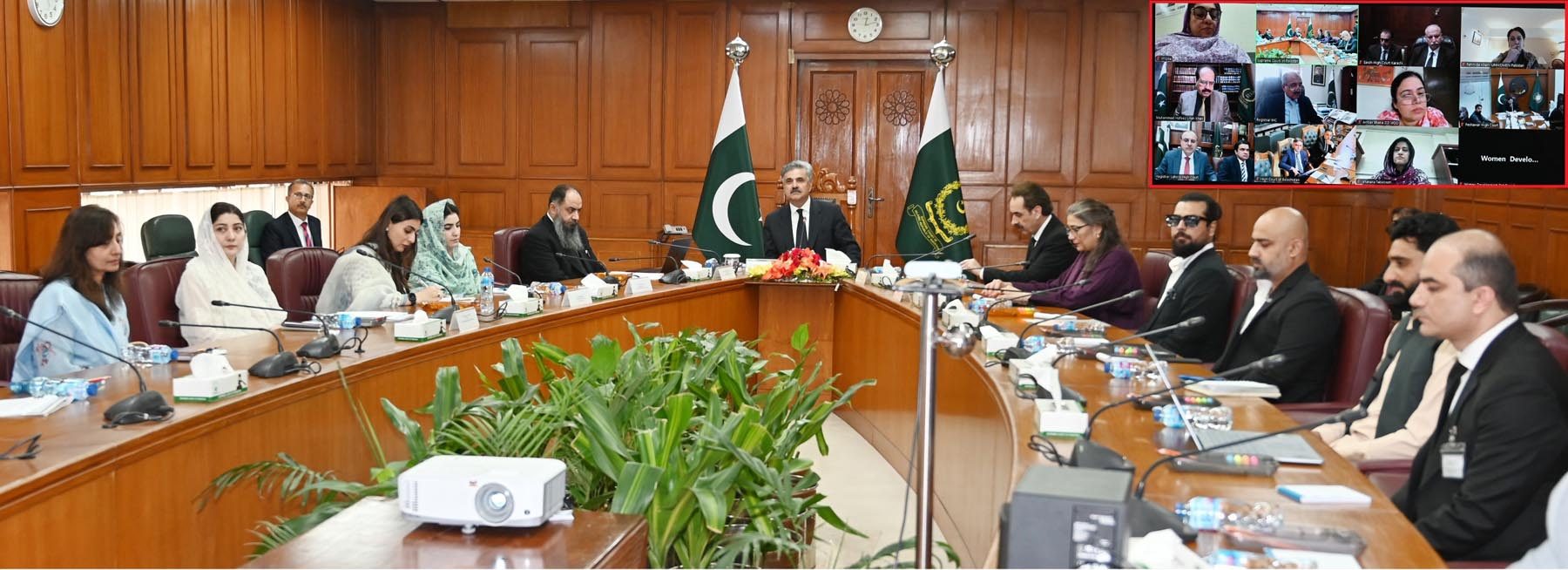
ISLAMABAD, Apr 02 (APP): The Supreme Court of Pakistan hosted a high-level consultative session on Thursday, led by the Chief Justice of Pakistan in his capacity as Chairman of the Law and Justice Commission of Pakistan, to advance the Gender-Responsive Justice Initiative (GRJI) 2026–27.
The session focused on the proposed National Design Competition for Women Facilitation Centers (WFCs), bringing together senior judicial leadership, institutional representatives, development partners, gender experts, and members of the architectural community.
Among the participants were officials from the Supreme Court and LJCP, representatives of the National Commission on the Status of Women, UN Women Pakistan, and the Institute of Architects Pakistan, along with representatives from provincial women development departments.
Registrars of the Federal Constitutional Court and all high courts also joined the meeting virtually.
Welcoming the participants, the Chief Justice noted that the National Judicial (Policy Making) Committee has identified gender-responsive justice as a priority reform area for the fiscal year 2026–27. He highlighted that the initiative envisages establishing Women Facilitation Centers within judicial complexes across the country to provide safe, structured, and accessible support services to women litigants.
The proposed centers will function as integrated platforms offering legal facilitation, court-annexed mediation, supervised family visitation arrangements, and support services for gender-based violence cases in a secure and dignified environment.
Participants were informed that a concept note and Business Requirement Document outlining the functional, architectural, and operational framework of the centers had already been shared with stakeholders. The session focused on finalizing the framework for the national design competition, aimed at developing a standardized and adaptable architectural model through nationwide participation.
The discussion reflected broad support for shifting from an adjudication-centric approach to a more user-centric model of justice delivery, emphasizing accessibility, inclusivity, and institutional responsiveness.
During deliberations, participants stressed that the design of the centers must ensure privacy, safety, accessibility, cultural sensitivity, and sustainability, while also addressing acoustic considerations in mediation and counselling spaces to maintain confidentiality and a calm environment.
The meeting also proposed integrated service delivery within the centers, enabling women litigants to access multiple support services under one roof. Registrars of the Supreme Court and high courts were tasked with mapping infrastructure requirements to facilitate effective implementation across jurisdictions.
Following incorporation of stakeholder input, the Institute of Architects Pakistan will formally launch the national design competition.
Concluding the session, the Chief Justice emphasized inter-institutional coordination, transparency, and merit-based evaluation, stating that the selected design would serve as a model for Women Facilitation Centers, reinforcing the judiciary’s commitment to inclusive and gender-responsive justice.