
Prime Minister Muhammad Shehbaz Sharif said on Sunday that, in view of the current international situation, the timely implementation of measures to ensure economic stability in the country is essential.
All necessary measures to be taken to maintain stability of national economy: PM
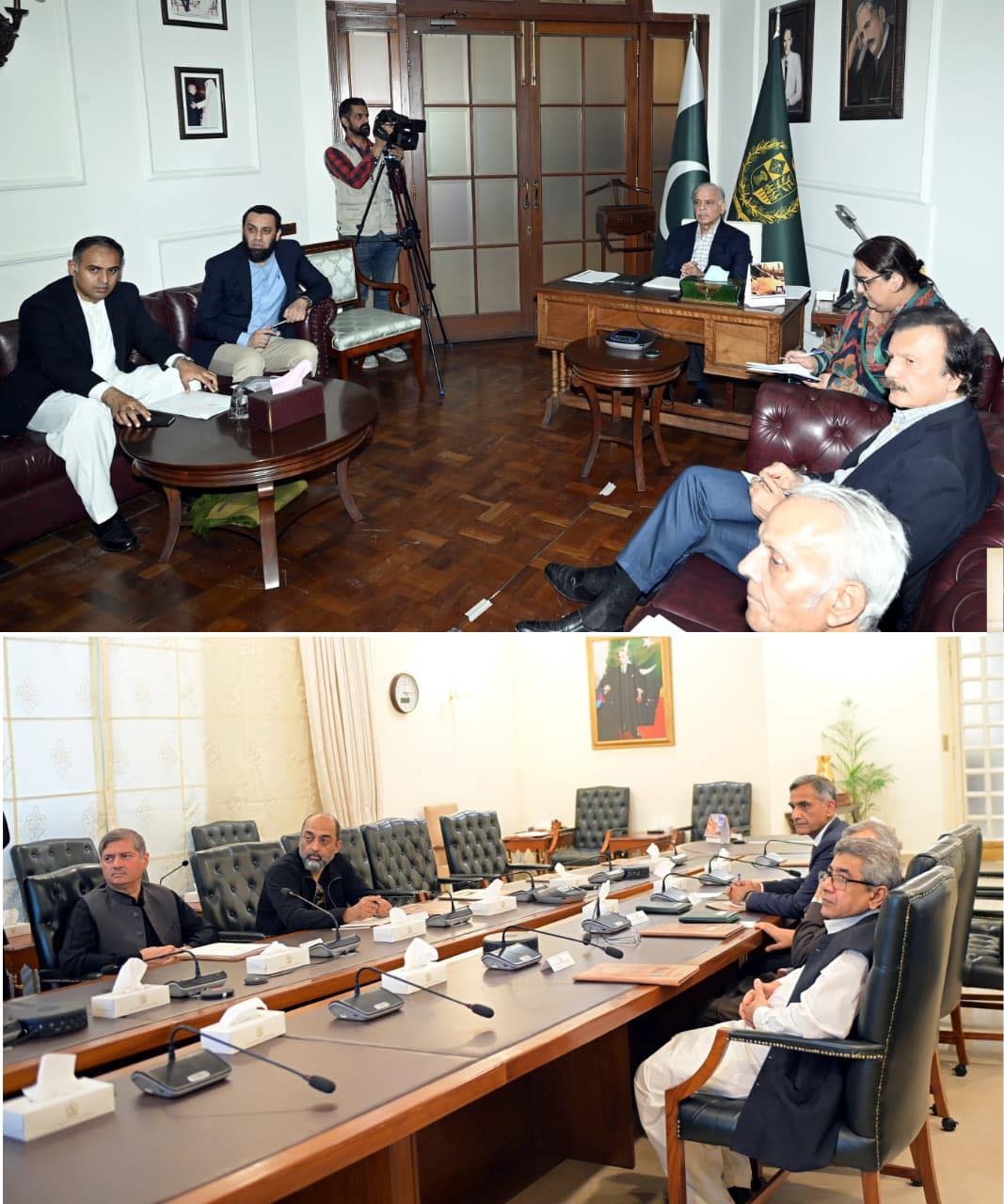
LAHORE, Mar 08 (APP):Prime Minister Muhammad Shehbaz Sharif said on Sunday that, in view of the current international situation, the timely implementation of measures to ensure economic stability in the country is essential.
He said this while presiding over a meeting held to discuss measures to maintain the stability of the national economy in light of the recent rising international tensions.
He said that the government is continuously monitoring the situation and will make all necessary decisions to maintain the stability of the national economy.
The premier was given a detailed briefing on the recent global tensions and their potential economic impacts.
During the briefing, it was informed that the current regional situation could affect Pakistan’s economy, particularly the supply of energy and price fluctuations in global markets.
In view of this, the government was taking precautionary measures in advance.
The Prime Minister reaffirmed that all possible steps would be taken to deal with the current situation, ensuring full protection of public interests and safeguarding economic stability.
He directed the federal cabinet, all elected representatives at the federal and provincial levels, and senior government officials to play their full role in providing relief to the public and ensuring the efficient use of resources.
The premier also made it clear that all government employees and ministers must adopt simplicity and austerity.
He further said that in the current challenging times it was essential to ensure the wise use of national resources.
Shehbaz Sharif said, “Once the difficult phase passes and the economy becomes stronger, the government will provide maximum possible relief to the public.”
The meeting also emphasized that the directives regarding austerity, simplicity and savings would not apply to the industrial and agricultural sectors so that national production, exports, and food security are not affected.
The PM said that the burden of savings and austerity should be shared fairly by everyone.
Muhammad Shehbaz Sharif particularly emphasized that the privileged and elite classes of society should set an example by voluntarily bearing necessary adjustments.
In accordance with the Prime Minister’s directives, several proposals and recommendations based on austerity and simplicity to stabilize the national economy were presented and reviewed in detail during the meeting.
It was informed in the meeting that the final austerity and savings plan will be formally announced tomorrow.
It was told during the briefing that adequate reserves of diesel, petrol, and other petroleum products are available in the country and the government has already made arrangements to deal with any emergency situation.
At the same time, the need for prudent energy management and careful use of fuel was emphasized.
The briefing further told that the Ministry of IT will provide a system for continuous monitoring of demand and supply to ensure savings in government resources and efficient energy usage so that relevant institutions can make timely decisions.
The chief secretaries of all four provinces also briefed the Prime Minister on economic activities, energy consumption and administrative preparedness in their respective provinces in view of the recent global tensions.
The meeting was attended by Deputy Prime Minister and Foreign Minister Ishaq Dar, Federal Minister for Finance Muhammad Aurangzeb, Federal Minister for Planning and Development Ahsan Iqbal, Federal Minister for Power Sardar Awais Leghari, Federal Minister for Petroleum Ali Pervaiz Malik, Federal Minister for Information and Broadcasting Attaullah Tarar, Federal Minister for Environment Musadik Masood Malik, Special Assistant Haroon Akhtar Khan and senior officials from relevant departments