
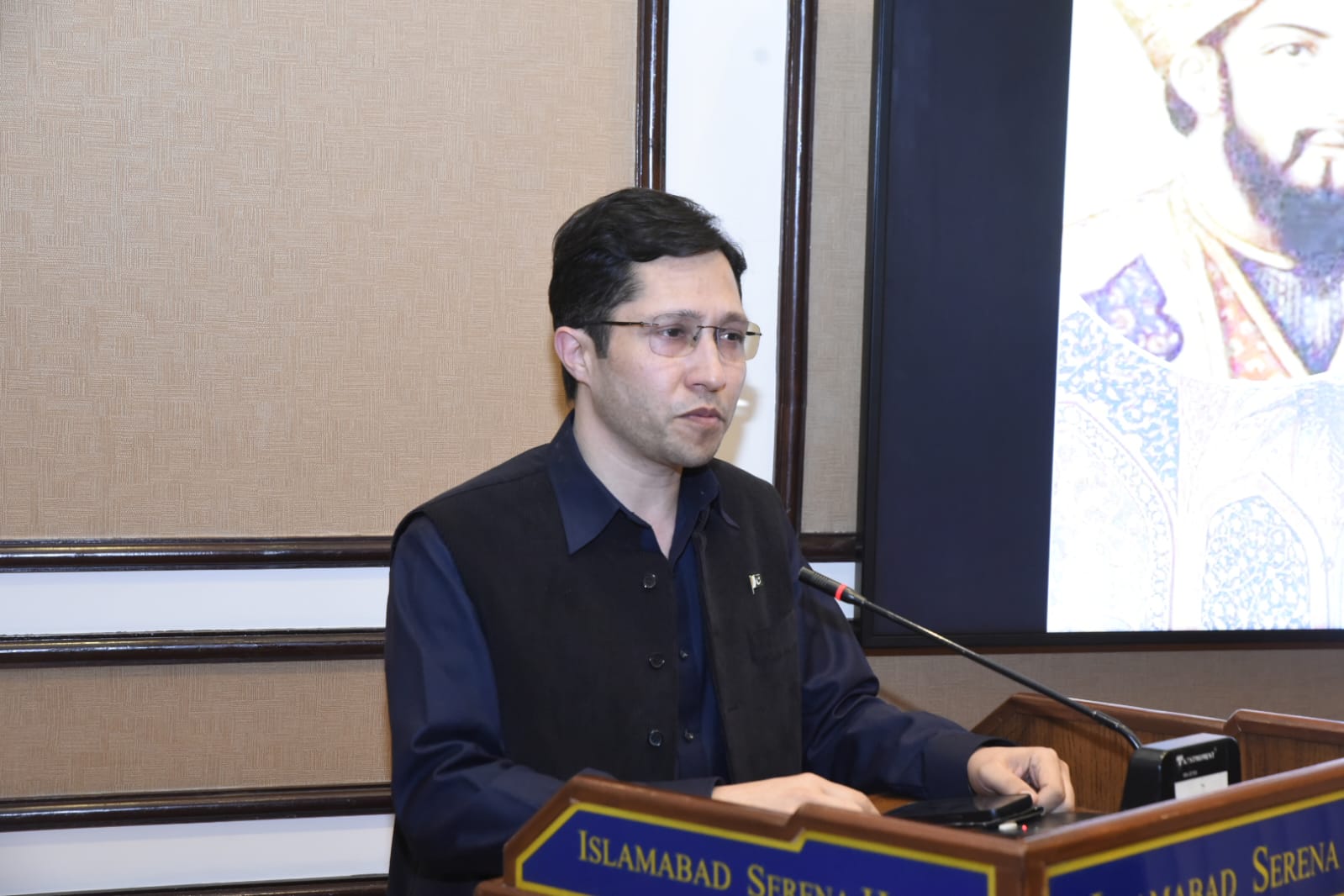
By Rehan Khan ISLAMABAD, Feb 15 (APP): The Baburi Forum Islamabad, in collaboration with the Embassy of Uzbekistan, organized the Baburi Conference 2025 to commemorate the 542nd birth anniversary of Zahiruddin Muhammad Babur, the founder of Mughal Empire, here on the other day. The conference brought together distinguished academics, scholars, historians and diplomats to pay tributes to Babur for his military conquests, governance, and literary contributions. The speakers said with …
By Rehan Khan
ISLAMABAD, Feb 15 (APP): The Baburi Forum Islamabad, in collaboration with the Embassy of Uzbekistan, organized the Baburi Conference 2025 to commemorate the 542nd birth anniversary of Zahiruddin Muhammad Babur, the founder of Mughal Empire, here on the other day.

The conference brought together distinguished academics, scholars, historians and diplomats to pay tributes to Babur for his military conquests, governance, and literary contributions.
The speakers said with deep historical ties to both Pakistan and Uzbekistan, Babur’s legacy continues to shape cultural and historical narratives in South and Central Asia. “Today, Pakistan honors Babur through historical sites, including his passage through the Khyber Pass and the Babur Gardens in Peshawar,” they noted.
Dr Zia-ur-Rehman, Head of the Department of Leadership and Management Studies at the National Defence University (NDU), highlighted that beyond his military conquests, Babur laid the foundations for a robust administrative system.
He introduced efficient revenue collection methods, emphasizing agrarian development and fair taxation. His sense of justice and commitment earned him respect. Unlike many conquerors, he was keen on cultural assimilation, respecting local traditions while introducing Persian influences in governance and courtly culture.
Dr Zia said Babur was not only a warrior but also a refined intellectual and poet. His most significant literary contribution, the Baburnama, is an autobiographical account written in Chagatai Turkish, later translated into Persian. It provides a detailed chronicle of his life, battles, and reflections, offering invaluable historical insights into the socio-political landscape of his time. His love for nature is evident in his descriptions of flora, fauna, and landscapes, particularly in regions that now comprise modern Pakistan. Babur’s aesthetic sensibilities influenced Mughal architecture and garden design, with the famed Shalimar Gardens in Lahore carrying forward his legacy.
Ramzan Mughal, President of the Baburi Forum Islamabad, reiterated the importance of preserving Babur’s historical contributions. “This conference serves as a bridge between the past and present, reminding us of the leadership, resilience, and cultural richness Babur brought to our region,” he remarked.
Oybek Kambarov, Third Secretary at the Embassy of Uzbekistan, emphasized the shared heritage and cultural ties between Uzbekistan and Pakistan, highlighting the importance of strengthening bilateral relations.
The event concluded with a cake-cutting ceremony marking Babur’s birth anniversary, followed by certificate distributions and shield presentations in recognition of the distinguished guests’ contributions.
The participants praised the initiative for fostering intellectual discourse and cultural exchange between Pakistan and Uzbekistan. The conference successfully reinforced the legacy of Babur, reaffirming the historic bond between the two nations.
Born in 1483 in Andijan, present-day Uzbekistan, Babur was a descendant of two legendary rulers – Tamerlane (on his father’s side) and Genghis Khan, also known as Chinggis Khan (through his mother).
Though Babur passed away in 1530, his vision laid the foundation for one of the most influential empires in history. The Mughal Empire flourished for over three centuries, shaping South Asian culture, governance, and artistic expression. His legacy remains visible in modern-day Pakistan and Uzbekistan, making him a historical bridge between the two regions.
As scholars and historians continue to explore Babur’s contributions, his life stands as a testament to resilience, intellect, and statesmanship. His story is not merely one of conquest but of cultural synthesis and enduring influence, reminding the historical connections that bind nations and civilizations together.