
ISLAMABAD, Feb 12 (APP):Former President of Azad Jammu and Kashmir and former Ambassador of Pakistan to the United States, China, and the United Nations, Masood Khan said here Thursday that Kashmir’s right to self-determination was firmly anchored in international law, moral legitimacy, and historical justice. “Pakistan will continue to advocate this cause with full conviction and strategic restraint,” Khan said while addressing students and faculty members at the National University …
Kashmir’s right to self-determination anchored in international law, moral legitimacy: Masood Khan
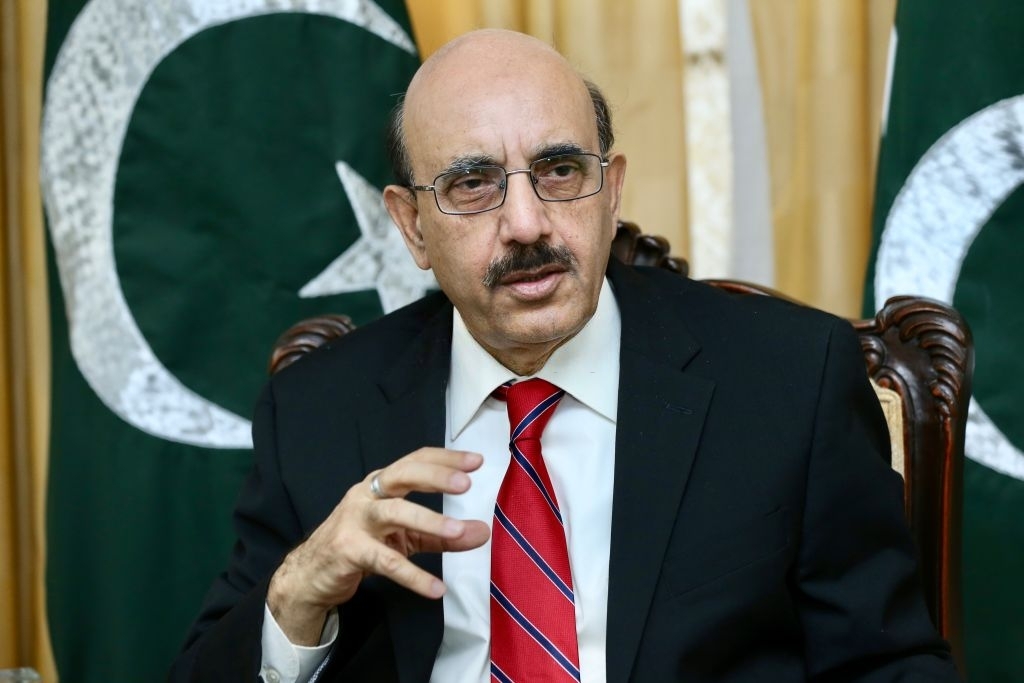
ISLAMABAD, Feb 12 (APP):Former President of Azad Jammu and Kashmir and former Ambassador of Pakistan to the United States, China, and the United Nations, Masood Khan said here Thursday that Kashmir’s right to self-determination was firmly anchored in international law, moral legitimacy, and historical justice.
“Pakistan will continue to advocate this cause with full conviction and strategic restraint,” Khan said while addressing students and faculty members at the National University of Computer and Emerging Sciences (FAST).
Speaking on the theme “Kashmir in International Law and Pakistan’s Strategic Narrative,” Khan stated that the Kashmir freedom movement predates 1947 and has historical roots extending over two centuries.
He traced the origins of Kashmiri resistance to oppressive regimes beginning in the mid-eighteenth century and elaborated on successive phases of political repression, economic exploitation, and denial of fundamental rights faced by the people of Jammu and Kashmir.
Khan emphasized that the people of Jammu and Kashmir possess an inherent and inalienable right to self-determination, rooted in both modern international law and universal principles of justice.
He explained that the Indian Independence Act of 1947 provided princely states with the legal basis to determine their future based on geographical contiguity and demographic composition, both of which supported Jammu and Kashmir’s natural alignment with Pakistan.
Highlighting the legal dimension, Ambassador Khan noted that multiple United Nations Security Council resolutions reaffirm the Kashmiri people’s right to determine their political future through a free and impartial plebiscite. He described this right as a peremptory norm of international law that cannot be overridden unilaterally.
Ambassador Khan underscored that Pakistan’s constitutional and diplomatic stance consistently prioritizes the will of the Kashmiri people before determining any future political arrangement. He added that Pakistan’s strategic narrative is based on international legality, moral consistency, and advocacy for human rights, including opposition to demographic and political changes imposed in Indian Illegally Occupied Jammu and Kashmir after August 5, 2019.
Reaffirming Pakistan’s commitment to peace, Ambassador Khan said that Pakistan remains a nuclear state committed to strategic restraint and peaceful resolution of disputes through dialogue and diplomacy.
He warned that failure to resolve the Kashmir dispute poses serious regional and global security risks, including the possibility of catastrophic conflict between two nuclear-armed states.
Khan congratulated the university leadership for building one of Pakistan’s leading academic institutions and underscored the pivotal role of youth in shaping Pakistan’s future.
Referring to United Nations Development Programme statistics, he noted that nearly 64 percent of Pakistan’s population was under the age of 30, making the youth not only the majority but also the principal decision-makers of tomorrow.
Ambassador Khan also called upon universities and academic institutions to play an active role in shaping informed national narratives.
He urged students to study international law, critically examine competing narratives, and advocate the Kashmiri cause with intellectual clarity and confidence. He emphasised that the Kashmir issue is not merely a territorial dispute but fundamentally a struggle for human dignity, justice, and the democratic right of self-determination.