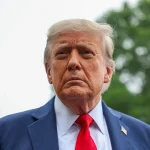
“Diplomacy is a gradual process. It takes a lot of patient politics that has to morph into deft diplomacy,” Ambassador said discussing the US-Iran talks process.
Pakistan facilitating “complicated” US-Iran talks; ceasefire to be a good start: Ambassador
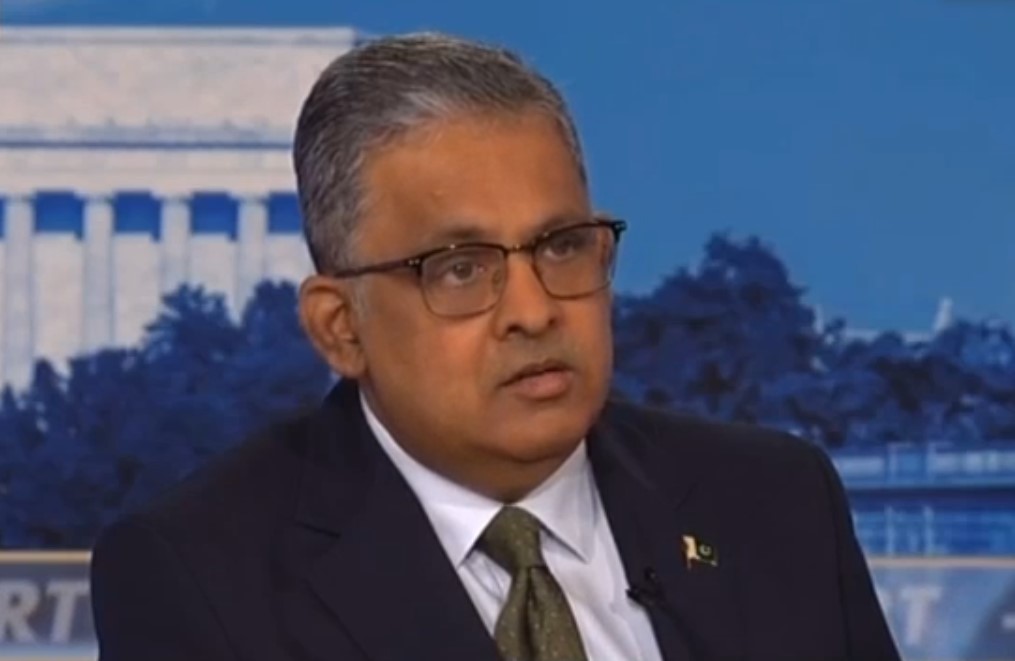
WASHINGTON, Mar 31 (APP): Ambassador of Pakistan to Washington Rizwan Saeed Sheikh on Tuesday highlighting Pakistan’s active role in facilitating dialogue between the United States and Iran, acknowledged that that process was complicated with too many moving pieces and noting that a ceasefire would be a good starting point if conflicting parties reach an understanding.
“We are mindful that it is not an easy process. It is a very complicated matter with too many moving pieces — economic, political and security-related… I think in any negotiation process that (ceasefire) would be a good thing to start with, but it is of course upon the conflicting parties to reach an understanding there,” the ambassador said in an interview with a US news broadcaster.
He said that Pakistan was actively working to facilitate dialogue between the United States and Iran amid ongoing regional tensions, including the closure of the Strait of Hormuz.
He expressed gratitude for the confidence placed in Pakistan by both sides and regional countries to help mediate the conflict.
Highlighting Pakistan’s diplomatic tradition, the ambassador recalled Islamabad’s historic role in brokering the rapprochement between China and the United States in the past.
He said recent high-level engagements, including the visit of three foreign ministers to Pakistan and telephone calls by Prime Minister Shehbaz Sharif with global leaders, were aimed at creating a conducive environment for dialogue.
Asked about the parties involved in the negotiations, Ambassador Sheikh said that multiple channels of communication were active at different levels, with the prime minister and Deputy Prime Minister and Foreign Minister Ishaq Dar personally engaged.
He pointed to the recent movement of ships through the Strait of Hormuz — first a few and another 20 in the second instance — as a “proof of concept” that demonstrated confidence-building measures.
Regarding the US President Donald Trump’s public deadlines, the ambassador noted that Iran was a war-torn country with disrupted communication channels, making swift responses difficult. As the previous deadlines had been extended, Pakistan was working within the current timeframe, he added.
“Diplomacy is a gradual process. It takes a lot of patient politics that has to morph into deft diplomacy. But we should get things moving in the interest of the broader region faster, we hope, and we are optimistic.”
On the tension between Pakistan and Afghanistan, the ambassador said that Islamabad had exercised maximum restraint for over four years and that despite sharing information on terrorist hideouts repeatedly, no action was taken from the Afghan side.
“Pakistan is now the largest victim country of terrorism in the world, with an average of almost three incidents per day,” he said.
“We could not sit back and wait for the next terrorist attack… The dialogue and diplomacy have been afforded more than four years. And now we are only targeting those areas for which coordinates were repeatedly shared.”
He also reiterated that India was sponsoring terrorism against Pakistan, as “clear fingerprints” of such involvement were available.