
The Tokyo Metropolitan Edo-Tokyo Museum, one of the capital’s leading cultural attractions, was shown to the media on Wednesday ahead of its official reopening on March 31 following a four-year renovation project.
Edo-Tokyo Museum nears long-awaited reopening with revamped exhibits, language support
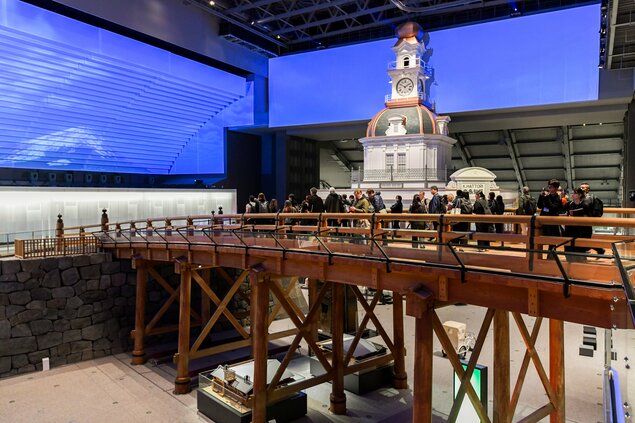
TOKYO, Mar 26 (APP): The Tokyo Metropolitan Edo-Tokyo Museum, one of the capital’s leading cultural attractions, was shown to the media on Wednesday ahead of its official reopening on March 31 following a four-year renovation project.
The museum, in Tokyo’s Sumida Ward, has been closed since April 2022 for its first major renovation since it opened in 1993.
During the media preview, updates to the museum’s permanent exhibition — including new, large-scale models of period buildings — were unveiled as highlights of the renovated facility, which showcases the history and culture of Tokyo from the Edo period (1603–1868) to the present.
The museum, which is popular with foreign tourists, enhanced language support for the exhibition with audio guides in 13 languages which visitors can access via their smartphones.
The centerpiece of the updated exhibition is a large-scale model of the Hattori Clock Shop — an icon of Tokyo’s Ginza district in the Meiji period (1868–1912). Around 26 meters in height, it replaces the museum’s replica of the Choya Newspaper Company building, as the actual shop did in the late 19th century.
The Hattori Clock Shop is a gateway to the exhibition’s Tokyo Zone, which showcases the revival and development of the capital from the Meiji period.
Among the zone’s new exhibits is a model of the gate to Asakusa Hanayashiki, a popular amusement park near Sensoji Temple. The walk-through model recreates the gate from the early 20th century, when Asakusa Hanayashiki was popular for its animal exhibits.
Updates to the exhibition’s Edo Zone include a walkway installed inside the full-scale model of the Nakamura-za Kabuki Theater facade, offering a more immersive experience of the playhouse in response to visitor feedback.
Galleries housing the permanent exhibition cover around 9,000 square meters across two floors.
As part of the renovation, the museum installed screens along the upper walls of the sixth-floor gallery on which it projects images reflecting the skies above Edo — as Tokyo was formerly known — and the modern-day capital.
Renovation work on the museum building and its infrastructure included enhanced barrier-free access and improvements to insulation and waterproofing. The museum’s distinctive exterior remains unchanged.
“This was a major renovation project that involved not only upgrading facilities but also reorganizing the layout and exhibits to present the two eras — Edo and Tokyo — in a clearer, more engaging way,” Seito Inomata, deputy director of the museum, said.
Admission to the permanent exhibition will be 800 yen ($5) for adults and 400 yen for visitors aged 65 and over.