
Pakistan’s transport transforms with Chinese partnership
Pakistan’s transport transforms with Chinese partnership
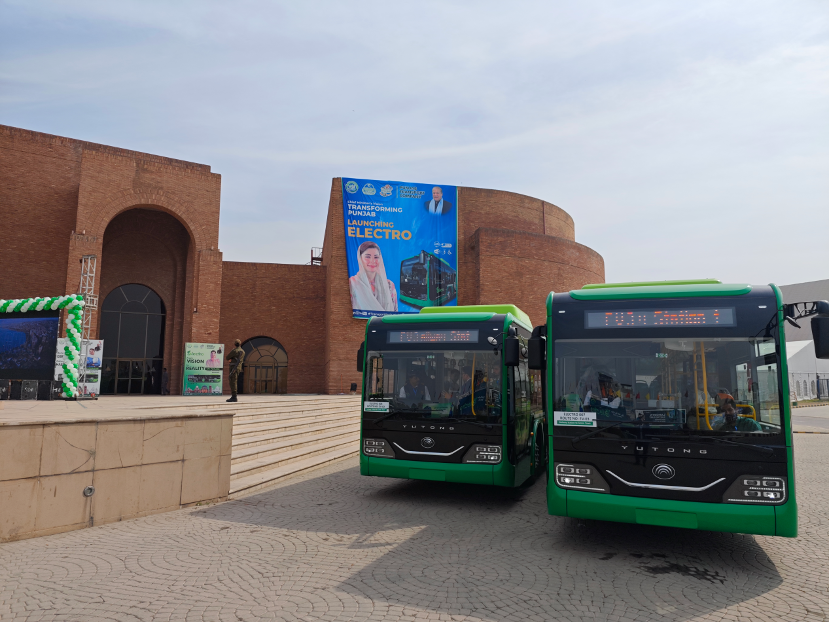
BEIJING, Jan 25 (APP): Over the past decade, Pakistan’s transport sector has entered a period of quiet transformation — one powered largely by Chinese investment, engineering and long-term vision. What began as a set of infrastructure projects under the China-Pakistan Economic Corridor (CPEC) has evolved into a nationwide effort to modernize mobility, boost trade efficiency, and improve daily life for millions. From motorways cutting through rugged mountains to metro systems gliding across dense urban skylines, China’s influence is helping Pakistan rethink how it moves — and how it plans for the future.
The Karakoram Highway, often described as the “Friendship Highway,” stands as a striking example of this cooperation. Once a perilous mountain route, it has been rebuilt with Chinese expertise into a modern transport corridor linking Pakistan’s north with China’s Xinjiang region. Further south, the Peshawar-Karachi Motorway has become the backbone of Pakistan’s domestic logistics network, reducing travel times between provinces and opening new routes for trade and tourism. Together, these projects have not only strengthened Pakistan’s physical connectivity but also highlighted how infrastructure can drive integration and growth when backed by strategic partnerships.
China’s involvement has also changed the face of Pakistan’s cities. In Lahore, the Orange Line Metro Train — Pakistan’s first mass transit rail system — has redefined urban commuting. Developed with Chinese technology and funding, the project has offered a glimpse of what modern, efficient public transport can look like in a developing economy. Its success has prompted similar interest in other cities, including Karachi, Islamabad, and Rawalpindi, where officials are studying how Chinese cities such as Beijing and Shenzhen have built interconnected, smart, and sustainable transport systems.
For Pakistan, China’s own journey offers valuable lessons. The first is integration — in China, road, rail, air, and maritime networks operate as part of a single, coordinated system designed to serve national development goals. The second is innovation — Chinese cities have embraced electric buses, automated ticketing, and AI-based traffic management, reducing congestion and pollution. The third is localisation — by investing in domestic manufacturing and technical training, China ensured that infrastructure development created jobs and long-term expertise at home.
However, perhaps the most significant takeaway from China’s model is its long-term consistency. Decades of steady policy, planning, and investment have allowed China to build one of the world’s most advanced transport networks. For Pakistan, achieving similar results will require sustained commitment, stable governance, and a willingness to view infrastructure not as a short-term project but as a long-term national strategy.
While challenges remain — from financing and urban planning to environmental management — the road ahead is promising. The partnership with China has already laid the foundation for a more connected Pakistan. If Islamabad continues to adopt lessons from its neighbour’s experience, the next decade could see a transport system that not only links cities and regions, but also powers economic opportunity, regional cooperation, and shared progress.