
At UN, Pakistan rejects any maritime domination, calls for peaceful seas
At UN, Pakistan rejects any maritime domination, calls for peaceful seas
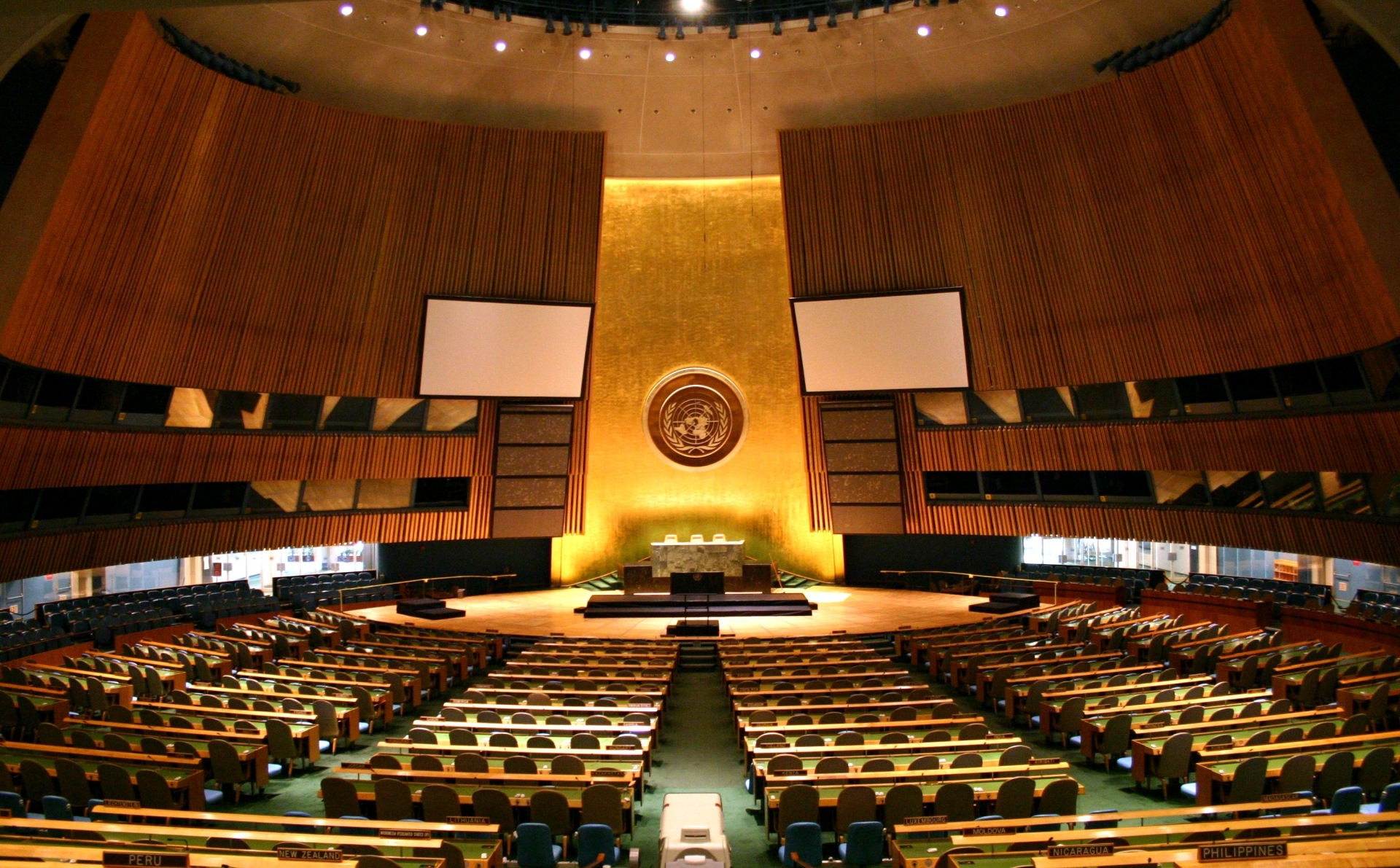
UNITED NATIONS, Dec 09 (APP): Underscoring that world’s oceans must remain zones of cooperation and collaboration, Pakistan Monday told the UN General Assembly that it will reject any attempt to dominate maritime spaces or marginalize coastal States.
“As a coastal State , Pakistan’s security, commerce and trade, and regional connectivity are deeply intertwined with the stability and openness of the maritime domain,” Pakistani delegate Zulfiqar Ali said in a debate on ‘Oceans and the Law of the Sea nd Oceans’
The 1982 UN Convention on Law of Seas (UNCLOS) provided a “robust” legal framework for the regulation of all ocean-related activities, said Zulfiqar Ali, a first secretary at the Pakistan Mission to the UN.
“The imperatives of 21st century call for turning our maritime zones into regions of cooperation and collaboration, not into the spheres
of conflict and competition,” he added.
The Pakistani delegate welcomed the forthcoming entry into force of the UN Agreement under UNCLOS on the Conservation and Sustainable Use of Marine Biological Diversity of Areas Beyond National Jurisdiction on 17 January 2026 that Pakistan signed in July last.
In this regard, he said Pakistan emphasized the need for fair benefit-sharing, capacity-building and technology transfer, in line with the principle of the common heritage of humankind and for assisting the Global South in maritime economic development.
The Pakistani delegate called for developing a comprehensive regime for exploitation, including rules on equitable benefit sharing before mining could commence anywhere in the “Area”, which means the seabed and ocean floor and subsoil thereof, beyond the limits of national jurisdiction.
“Until such time,” he added, “we oppose the approval of any work plan for the commercial exploitation of mineral resources in the ‘Area’.”
Pakistan also underscored the need for overcoming the plethora of challenges facing the world’s oceans, which sustains life on Earth, saying climate change was testing the resilience of coastal communities, disrupting ecological balance, and accelerating habitat loss, food insecurity and changes in weather patterns.
“Deteriorating health of world’s oceans presents an existential threat to planetary life,” Zulfiqar Ali said, while calling for a unified response from the international community.
“As a country with unwavering faith in the multilateralism, Pakistan reaffirms its readiness to work with all peace-loving nations for upholding international law to ensure that our oceans remain zones of peace, shared prosperity, and inclusive development.”
Opening the debate, the President of the General Assembly, Annalena Baerbock, said, “Oceans are not only a natural reAnnalena Baerbock, President of the General Assembly. Some 99 per cent of global internet traffic runs through undersea cables, keeping the world connected.
In addition, more than half of the oceans’ surface lies in areas beyond national jurisdiction, making the Assembly a natural forum to support their governance, she said.
Spotlighting the role played by the 1982 United Nations Convention on the Law of the Sea, the International Seabed Authority and the Commission on the Limits of the Continental Shelf, among other crucial treaties and bodies, she declared: “Only together can we sustainably manage the world’s oceans and seas.”
APP/ift