
At UN, Pakistan calls India ‘the world’s biggest Islamophobic state’ sponsors anti-Muslim hate
At UN, Pakistan calls India ‘the world’s biggest Islamophobic state’ sponsors anti-Muslim hate
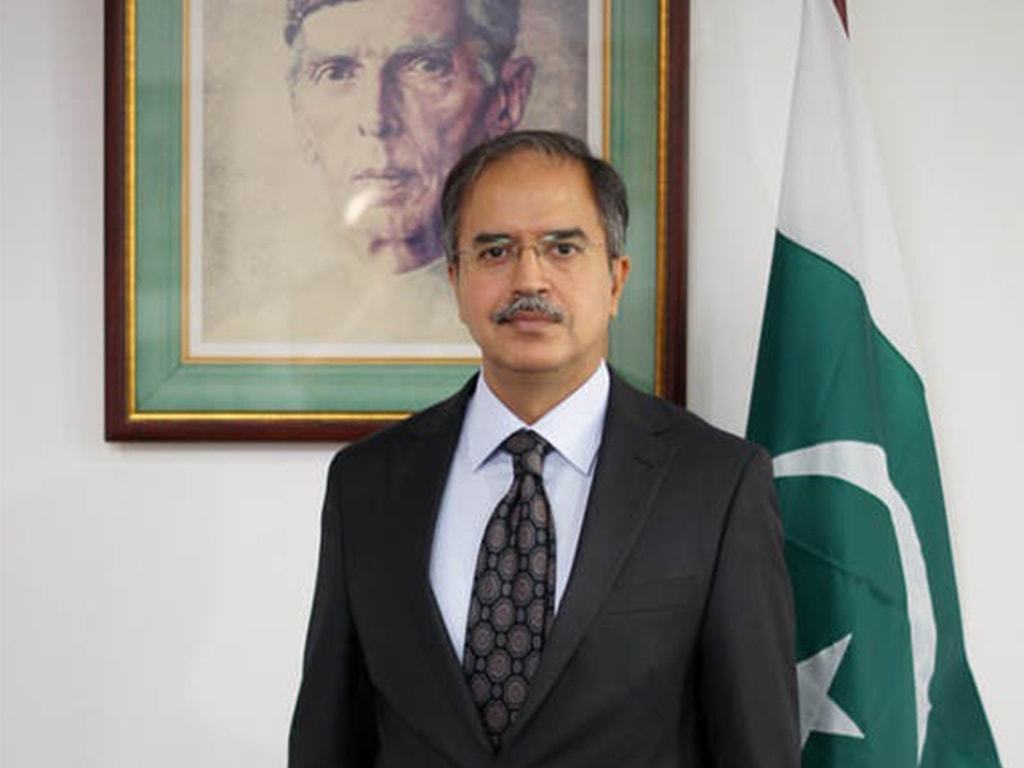
UNITED NATIONS, Mar 17 (APP): Pakistan on Monday chided India for failing to condemn the rising tide of anti-Muslim hatred at a high-level event commemorating the International Day to Combat Islamophobia, and called on New Delhi to punish those involved in committing “abominable acts” such as lynching of Muslims and destruction of mosques.
“The fact remains that India has the distinction of being the world’s biggest Islamophobic state, which has turned against its own minorities including Muslims, Christians and others”, Ambassador Asim Iftikhar Ahmad, permanent representative of Pakistan to the UN, told the General Assembly where the event took place.
The high-level event was convened by the United Nations (UN) Alliance of Civilizations and the Organization of Islamic Cooperation (OIC) Mission to the UN in New York. Among those who spoke were UN Secretary General Antonio Guterres, President of General Assembly Annalena Baerbock, Under-Secretary-General and Special Envoy of the Secretary-General on Combatting Islamophobia Miguel Ángel Moratinos, OIC Secretary General Hissein Ibrahim Taha and Ambassador of Turkiye Ahmet Yildiz.
Earlier, Indian Ambassador Parvathaneni Harish made a general statement condemning violence in the name of religion, not specifically Islam, and accused Pakistan of maltreating its minorities and fabricating tales of Islamophobia as well as weaponizing the OIC against India.
The Pakistani envoy hit back, saying India finds it difficult to hide its guilt and culpability when it comes to Islamophobia, and slammed it for disrespecting the OIC.
“It was expected that India would join us today in condemning Islamophobia and would also brief the participants about the steps it will take to alleviate the plight of millions of Muslims and other religious minorities suffering from the hate-filled extremist Hindutva ideology in its country,” Ambassador Asif Ahmad said.
“India, however, chose to deflect this question and tried to politicize today’s debate,” he said, adding, “This is a disservice to the victims of Islamophobia and undermines efforts being taken by responsible states of the world to combat this hate-spewing ideology.”
“What stands India apart is that Islamophobia in India is not perpetrated by some fringe elements but under the direct patronage of the Indian state and government,” the Pakistan envoy said.
According to OIC’s Report on Islamophobia, he said, India represents most significant concentration of Islamophobic incidents globally. Only a couple of days ago, Muslims of Srinagar in the Indian Illegally Occupied Jammu and Kashmir were barred from offering Friday prayers in the holy month of Ramazan, the 7th year that such restriction has been imposed.
“Public lynching of Muslims, state sponsored destruction of centuries old mosques to be illegally replaced by the Hindu temple, are but a few examples of Islamophobia in India, so well known to the world,” the Pakistani envoy told delegates.
“While Muslims constitute the largest minority group suffering from hate crimes, other religious minorities are not spared either,” he said.
Ambassador Asim Ahmad called on Indian government to distance itself from the Islamophobic incidents and discourse and punish those who commit such abominable acts. “India’s progress on this subject, should be judged by its visible action, not the hollow rhetoric and lies its representatives peddle in the international forums.”
Speaking as Chairman of the OIC Core Group on Combating Islamophobia during the closing session of the High-Level Event, he underscored the solemn significance of the day, and said no individual should be feared, discriminated against, marginalized, or persecuted because of their faith. He said that the day also marks the anniversary of the Christchurch mosque attacks of 15 March 2019, when fifty-one worshippers were killed in a brutal act of religious hatred.
Islamophobia, Ambassador Ahmad noted, has deep historical roots, often arising from ignorance, prejudice, and distorted narratives about Islam and Muslim societies. Geopolitical tensions, long-running conflicts, economic inequalities, foreign occupation, and the rapid spread of disinformation online have exacerbated the problem, he pointed out.
In recent years, he added, Islamophobia has taken pernicious forms, including desecration of the holy Quran, demolition of mosques, hate speech, bans on religious attire, and attacks on the lives and livelihoods of Muslims and other minorities.
The Pakistani envoy stressed that combating Islamophobia is not merely a defense of Muslims but part of humanity’s broader struggle against racism, bigotry, xenophobia, intolerance, and hatred. He asked Member States to strengthen domestic legal frameworks, dismantle structures that perpetuate exclusion, raise awareness, regulate digital platforms, and safeguard freedom of religion and belief as universal rights.
Ambassador Asim acknowledged and appreciated the role of the United Nations in leading global efforts to combat discrimination and religious intolerance, including Islamophobia.
Intolerance often begins with words, not violence, and warned that silence or indifference only allows hatred to grow, he said, underscoring the need for collective action through education, dialogue, responsible leadership, and principled measures to ensure that faith is never a cause for fear and that diversity remains a source of strength.
“Dialogue, mutual understanding, tolerance, compassion, solidarity and international cooperation must continue to guide our collective efforts and global partnerships to effectively address this global menace,” he added.
In his speech, UN Secretary-General Guterres urged countries to “work together” and eradicate a rising tide of anti-Muslim hate, calling for a rejection of “the narratives of fear and exclusion”.
As conflict and instability rage, “millions of Muslims around the world carry that pain with them,” the UN chief said. “Let us recommit to equality, human rights and dignity of every person, everywhere.”
The Secretary-General warned that for far too many Muslims living as minorities, their daily lives suffer being shaped by exclusion, institutional discrimination, socioeconomic marginalization, unwarranted surveillance and profiling.
As the world’s two billion Muslims approach the end of the holy month of Ramazan, Guterres called on governments to take responsibility and introduce measures that “safeguard equality, not entrench prejudice.”
APP/ift