
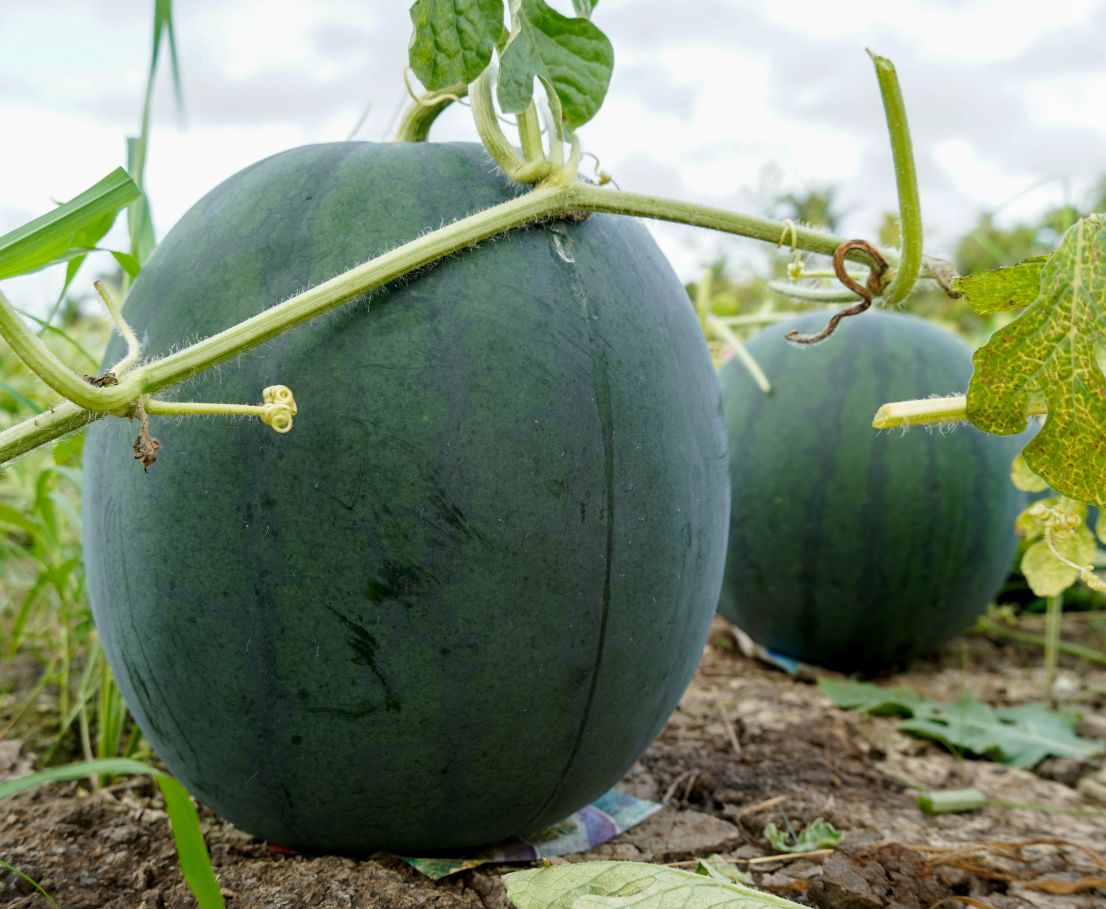
In the soft light of early morning in Swabi district, 45-year-old farmer Naseer Khan walks along the narrow ridges of his field, carefully guiding water toward rows of ripening watermelons.
Watermelon farmers fear thirsty harvest amid IWT violations by India
By Fakhar-e-Alam
PESHAWAR, Mar 26 (APP): In the soft light of early morning in Swabi district, 45-year-old farmer Naseer Khan walks along the narrow ridges of his field, carefully guiding water toward rows of ripening watermelons.
Spread across five acres in Sheikh Jana village along the Swabi–Swat motorway, the striped fruit is nearly ready for harvest.
Yet, instead of anticipation, a sense of unease lingers among Naseer and other farmers, driven by concerns over water shortages amid IWT violations by India.
Pausing with a spade on his shoulder, Naseer watches the flow of water, uncertain how long it will continue reaching his fields from canal.
“Without a steady water supply, this crop cannot survive,” he says quietly, referring to growing fears over disruptions in river flows. “Watermelon is essential in summer as it helps control hypertension, blood pressure, and heatstroke but it is also highly water-dependent.”
For Naseer, watermelon farming is more than a seasonal business but it is a family legacy. His father cultivated the same land, and today his brother and son work alongside him, irrigating the fields before sunset. Their future depends on precise timing, care, and uninterrupted water supply.
Agricultural experts warned that watermelon is a water-intensive crop, requiring between 400 to 600 millimeters of water over a roughly 100-day growing cycle.
“Even short water disruptions can have lasting effects,” said Dr. Muhammad Khan, former additional director general of plant protection in the Khyber Pakhtunkhwa agriculture department.
“Water stress during flowering can significantly reduce yield. The fruit becomes smaller, misshapen, and less sweet, making it difficult to market.”
He said Pakistan ranks 30th globally in watermelon production, contributing around 0.3 percent to global output. The crop thrives in sandy or silt loam soils at temperatures between 18°C and 35°C. In Khyber Pakhtunkhwa and central Punjab, the ideal sowing periods are February, March, and July.
Health experts also emphasized the fruit’s nutritional value. Dr. Malik Riaz, principal medical officer at a government hospital in Pabbi, Nowshera, noted that watermelon consists of about 92 percent water and is rich in vitamins A, B6, and C, as well as antioxidants and amino acids.
“It is fat-free, low in sodium, and contains only about 40 calories per cup,” he said. “Regular consumption can help reduce hypertension and protect against heatstroke.”
Economists and policy analysts, however, warned that reduced water availability could have far-reaching consequences.
Dr. Naeem Khattak of the University of Peshawar cautioned that significant drops in river flows could threaten agriculture, livestock, and food security across the country.
Recent reports of reduced water flow in the Chenab River have heightened concerns among farmers of watermen, wheat and rice in Azad Kashmir and Punjab. Officials cited satellite imagery from December 2025 indicating upstream water retention near the Baglihar Dam at IIOJK, which reportedly reduced downstream flows at Marala Headworks.
Experts warned that prolonged shortages could impact up to 40 percent of Pakistan’s agricultural output, including staple crops such as wheat and rice, along with seasonal produce like watermelon and melons.
Legal and international relations experts stressed that water-sharing agreements are critical for regional stability. They argued that any disruption in river flows could affect irrigation systems, hydropower generation, and millions of livelihoods dependent on the Indus Basin.
The basin supports nearly 300 million people across the region, making consistent water flow essential for food security and economic stability.
Across Khyber Pakhtunkhwa, Punjab, and Sindh, thousands of families relied on seasonal fruit cultivation. A weak harvest could ripple through local economies, affecting farm laborers, transporters, and market vendors.
Back in Swabi, however, the watermelon fields remain green for now. Naseer completes his irrigation turn, watching the water soak into the soil as harvest season approaches in April. There is still hope for a good yield, but it is cautious dependent not only on weather, but on forces far beyond his village.
As he prepares to leave, he glances back at his fields. “All we need,” he says, “is for the water to keep flowing.”