
Digitizing Peaks: The key to unlocking Pakistan’s tourism goldmine
Digitizing Peaks: The key to unlocking Pakistan’s tourism goldmine
By Fakhar-e-Alam
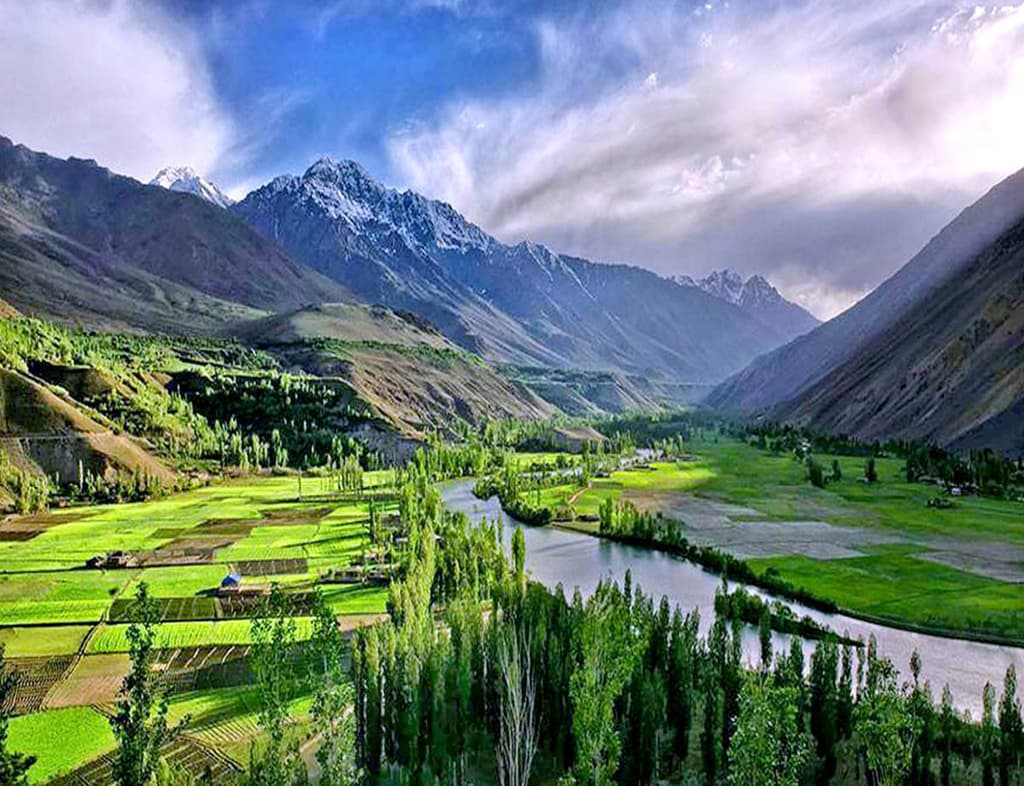
CHITRAL, Mar 28 (APP): As spring winds descend from the snow-clad mighty Tirich Mir, a renewed sense of excitement and thrill ripples amid hide and seek between sunshine and clouds over the remote valleys of Chitral.
Towering at 7,708 meters, the highest peak of Trichmir outside Gilgit-Baltistan stands as both a natural marvel and an untapped economic opportunity that experts said can only be fully realized through digital transformation.
With blossoms carpeting the valleys and birds heralding the change of season, Tirichmir offers an irresistible draw for mountaineers and adventure seekers.
Despite its grandeur and majesty, the peak remains largely under-promoted on global platforms, limiting its potential to contribute meaningfully to Pakistan’s tourism economy.
First summited in 1950 by a Norwegian expedition, Tirichmir has long been cloaked in mystique—its snow-clad ridges, dense pine forests, and cascading waterfalls forming a landscape that rivals some of the world’s most celebrated mountains destinations.
Now, it is at the center of a renewed promotion push by the Khyber Pakhtunkhwa Culture and Tourism Authority (KPCTA) to position the province as a global hub for mountaineering and adventure tourism.
This vision began taking tangible shape on July 13, 2025, when the base camp of Tirichmir welcomed its first group of national and international trekkers under an organized initiative.
For many locals, the event symbolized more than tourism but it marked the revival of livelihoods, preservation of culture, and renewed hope for economic uplift through mountains wealth.
“I have traveled to mountain ranges around the world, but nothing matches the awe Tirichmir inspires,” said Abu Zafar, President of the Alpine Adventure Sports Club of Pakistan. “Its unexplored potential is unmatched, but it urgently needs a digital spotlight.”
Manzoorul Haq, former Ambassador said that Pakistan can earned substantial revenue by promoting mountains tourism.
He said KP Govt needs to hire specialist bloggers and reputable firms to properly showcase its mountainous treasure before world.
Manzoor emphasized that the integration of technology from digital marketing campaigns to smart tourism infrastructure is essential for attracting global audiences.
According to General Manager KP Tourism and Culture Authority (KPTCA) Muhammad Ali Syed, a series of climbing events is being planned at Trichmir from July through August in phases, ensuring active participation of local guides and porters so that economic benefits reach grassroots communities.
Beyond Tirichmir, other high peaks such as Falak Sar and Malika Parbat are also being promoted to establish Khyber Pakhtunkhwa as an emerging hotspot for adventure tourism.
The province is simultaneously investing in infrastructure, including integrated tourism zones (ITZs), eco-friendly camping pods, and training facilities.
These initiatives aim to convert scenic but underutilized landscapes into sustainable tourism hubs.
At a time when rural areas in Khyber Pakhtunkhwa grapple with unemployment and poverty, mountain tourism presents a viable pathway to inclusive growth and jobs creations.
Experts argued that Pakistan’s geographic advantage of being home to five of the world’s highest peaks above 8,000 meters, including the iconic K2 remains significantly underleveraged and needs digital spotlight.
“The economic potential of mountains tourism in Pakistan is enormous,” said Dr. Zilakat Malik, former Chairman of the Economics Department at the University of Peshawar.
He remarked tyatespite our natural assets, we earn only a fraction of what regional competitors generate due to weak marketing and limited digital outreach.
Data from the World Travel & Tourism Council (WTTC) underscored this disparity and uninclisive plans. Pakistan’s tourism sector contributed only $15 billion to the economy in 2019 before declining to $11.6 billion in the wake of the COVID-19 pandemic. In contrast, countries like China generated over $800 billion from tourism in 2022, highlighting the gap in strategy and execution.
To bridge this significant divide, KPCTA is planning transformative projects, including a 16-kilometer Madaklasht–Kumrat cable car system, expected to be among the highest in the world.
With an estimated cost of $200 million, the project aims to improve accessibility, reduce travel time, and attract over a million visitors annually.
“We envision Chitral as a hub of high-altitude tourism,” said Omair Khattak, General Manager Investment at KPCTA.
Additionally, Integrated Tourism Zones in Mankiyal (Swat) and Ganol (Mansehra) are being developed with eco-friendly infrastructure across 90 acres. Affordable camping pods—introduced to counter rising hotel costs in destinations like Naran and Kaghan—are already operational in several scenic locations, offering budget-friendly accommodation for domestic and international tourists.
Visitors to Tirichmir are also drawn to the rich cultural tapestry of the Kalash people, whose vibrant festivals, traditional attire, and unique heritage add a compelling dimension to the region’s natural allure.
In a bid to further encourage international expeditions, the provincial government has announced a complete waiver of royalty fees for climbers in 2026.
Meanwhile, a collaboration with Italian mountaineering expert Professor Pinelli aims to establish an adventure training school in Chitral, promoting skill development for both men and women.
For the people of Chitral, the ascent of Tirichmir represents more than a physical challenge but it symbolizes identity, pride, and economic promise. Yet, as stakeholders agree, the true breakthrough lies not just in scaling peaks, but in digitizing them.
Without a strong digital presence—through global campaigns, online booking systems, virtual storytelling, and social media engagement—Pakistan’s towering landscapes risk remaining hidden treasures in an increasingly connected world.
The path to Tirichmir may be steep, but with the right digital push, it could lead Pakistan toward a summit of sustainable tourism growth and global recognition.