
By Fakhar-e-Alam PESHAWAR, Mar 29 (APP):From the rugged mountains of Khyber to the lush valleys of Kohistan, and from Chitral to Dera Ismail Khan, a province-wide spring plantation drive is quietly taking root across Khyber Pakhtunkhwa, offering not just greenery, but hope in the face of climate change, soil erosion and creeping desertification. As dawn breaks over the plains of Nowshera district, the golden light reveals farmers already at work …
Spring afforestation: A green shield against climate change, soil erosion
By Fakhar-e-Alam
PESHAWAR, Mar 29 (APP):From the rugged mountains of Khyber to the lush valleys of Kohistan, and from Chitral to Dera Ismail Khan, a province-wide spring plantation drive is quietly taking root across Khyber Pakhtunkhwa, offering not just greenery, but hope in the face of climate change, soil erosion and creeping desertification.
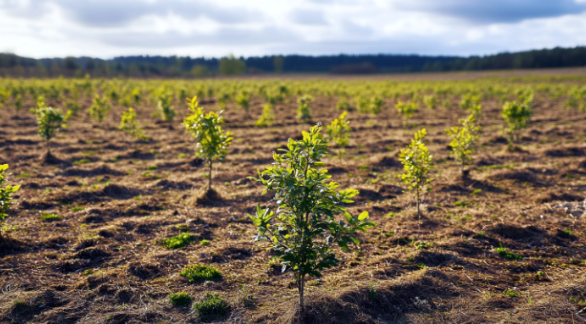
As dawn breaks over the plains of Nowshera district, the golden light reveals farmers already at work of afforestration of native species near River Kabul.
With spades in hand, they plant rows of poplar and shisham saplings across barren lands in village Mohib Banda and Dheri Ishaq, transforming dry soil into a promise of life.
In the village of Mohib Banda, progressive farmer Malyar Khan pauses briefly from his work, wiping sweat from his brow before pressing another sapling into the earth.
“River Kabul is a constant threat to our lands,” he said. “Plantation is the only way to protect our agriculture land from being swallowed.”
For Malyar, this is not just an environmental effort but a fight for survival. Each sapling he plants on his five acres is a shield against soil erosion, rising temperatures, and desertification.
The Kabul River, once a source of life and prosperity, has increasingly become a source of fear for local communities in Nowshera. During the summer, its swelling waters have devoured precious farmland, forcing authorities to construct protective walls along its southern bank to safeguard nearby villages.
Yet, the challenges extend far beyond riverbanks amid fast melting of glaciers and erratic rainfalls. Across Khyber Pakhtunkhwa, the signs of climate change are becoming harder to ignore due to deforestation and heatwaves.
Experts pointed to shrinking glaciers in Chitral and Swat, falling groundwater levels dur to over pumping of car stations, and erratic rainfall patterns that are leaving visible scars on the land around Rivers Kabul, Punjkora and Swat.
These significant changes, driven by global warming and intensified by human activities such as deforestation, industrial emissions, and fossil fuel consumption, are steadily disrupting the region’s ecological balance.
For many villages, these changes are deeply personal. Standing along the thinning flow of the Kabul River, Umar Khan, a fisherman reflected on a childhood that now feels like a distant memory.
“When I was a school boy, mahseer fish were found in abundance in River Kabul when came for hunting with grandfather,” he recalls. “Now, they are disappearing fast due to water pollution. The fish are moving to colder waters, and fishermen like us are left struggling.”
His voice carries the weight of a shared loss which one felt across countless communities that depend on natural resources for their livelihoods.
As temperatures rise, fish migrate, wildlife moves to cooler highlands, and water sources shrink. Farmers face unpredictable growing seasons, while fishermen return home with empty nets.
For many families, these environmental shifts are pushing them closer to poverty and unemployment.
Dr. Mumtaz Malik, former Wildlife Chief, warned that the climate challenges run deeper than what meets the eye in KP.
“Warmer waters are altering aquatic ecosystems, forcing species out of their natural habitats,” he explained.
“At the same time, wildlife is moving to higher altitudes in search of cooler climates. This disrupts the entire food chain and threatens biodiversity.”
Amid these growing environmental concerns, a collective response by all sectors is emerging that needed prompt actions.
To combate climate change and desertification, the provincial government launched an ambitious plantation campaign under the banner Ehsaas-e-Shajar on Pakistan Day and claimed to have planted one million saplings in a single day.
What could have been a symbolic gesture turned into a powerful movement of public participation on the province wise afforestration campaign.
“It was more than just planting trees,” said Latifur Rehman, spokesperson for the KP Environment and Forest Department. “It was a shared responsibility in KP where people from all walks of life coming together for a greener future.”
From schools and universities to remote villages, citizens mobilized across 285 plantation sites. Students, volunteers, and families worked side by side, planting saplings with hope and determination as each one representing resilience against a warming world.
Ahmad Jalil, Chief of the KP Forest Department, confirmed that the ambitious target of one million saplings was successfully achieved on Pakistan Day.
The initiative was designed not only to reduce rising temperatures but also to combat desertification, drought, soil erosion and ecological degradation.
What makes this campaign particularly noteworthy is its blend of community spirit and modern technology. With the support of the Khyber Pakhtunkhwa Information Technology Board, plantation activities were geo-tagged and monitored in real time through a dedicated mobile application. A virtual control room tracked progress, ensuring transparency and accountability.
Ahmad Jalil said the effort has also received independent validation from the World Wide Fund for Nature (WWF), reinforcing its credibility and environmental impact.
Yet, beyond the numbers and milestones lies a sobering reality that planting trees is only the first step. Their survival depends on consistent care, watering, and long-term commitment something that requires continued community involvement long after the excitement of plantation day fades.
The whopping plantations illuminated more than rows of newly planted saplings in KP but It revealed a province united by purpose where shared effort and quiet determination offered a powerful response to a global challenges.
In a region increasingly vulnerable to climate change, the message from Khyber Pakhtunkhwa is clear that while the climate threats are real and growing, so too is the resolve of its Govt and people.
Each sapling planted is more than just a tree but it is a promise. A promise that even in the face of rising temperatures and uncertain seasons, communities can come together to protect their land, restore balance, and build a greener, more resilient and prosperous future for generations to come.