Pakistan and Tajikistan have negotiated to address the progress on proposed Preferential Trade Agreement (PTA) in third meeting of Pakistan-Tajikistan Joint Working Group meeting.
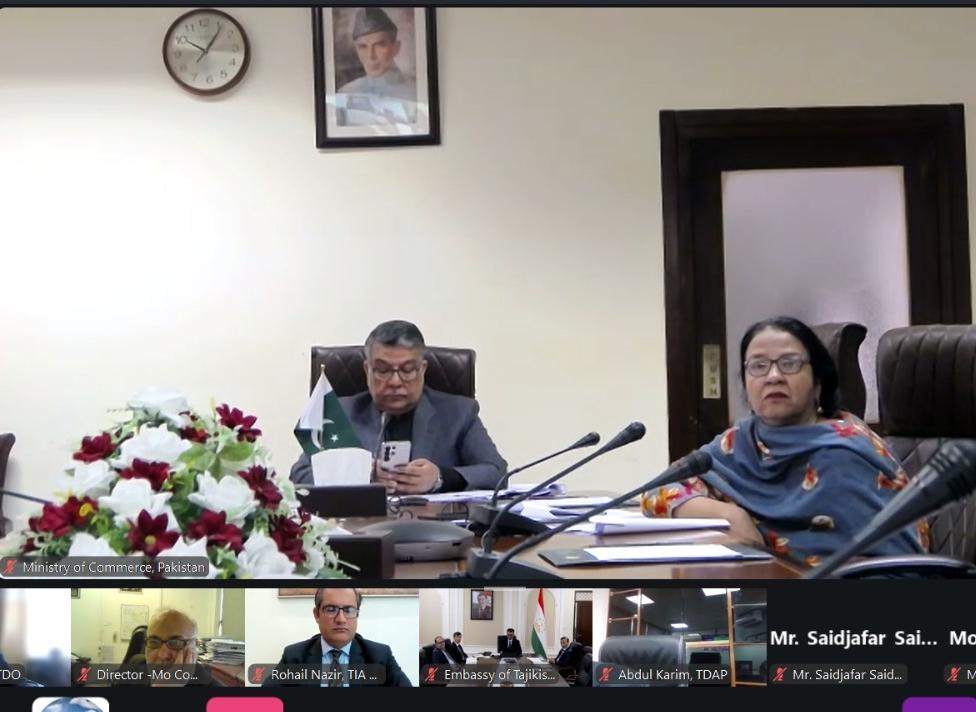
ISLAMABAD, Mar 27 (APP): Pakistan and Tajikistan have negotiated to address the progress on proposed Preferential Trade Agreement (PTA) in third meeting of Pakistan-Tajikistan Joint Working Group meeting.
The Pakistan side highlighted that draft texts had been shared following previous high-level meetings in Dushanbe and Islamabad, though no formal response had been received.
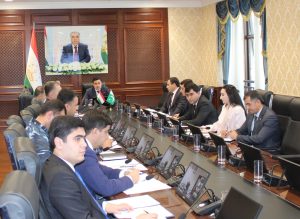
The third session of the Pakistan-Tajikistan Joint Working Group on Trade, Investment, and Transport was convened in a virtual format, said a release issued here on Friday.
The meeting, held after a four-year hiatus, was co-chaired by Nasir Hamid, Additional Secretary of the Ministry of Commerce of Pakistan, and Nuriddinzoda Ahliddin Nuriddin, Deputy Minister of Economic Development and Trade of Tajikistan.
The Tajik delegation stated that it is currently unable to sign the PTA due to fiscal constraints and potential revenue losses, suggesting instead the development of a mid-term Roadmap on Trade and Economic Cooperation.
This roadmap, which may eventually include PTA negotiations, will be modeled after existing agreements Pakistan has signed with Kazakhstan and Uzbekistan and will include quantifiable, time-bound objectives.
Regarding regional connectivity, the two sides discussed the importance of operationalizing the Pakistan-China-Tajikistan Road Transport Corridor.
Pakistan noted that Tajikistan had yet to convey its final position on joining the Quadrilateral Agreement on Transit Transport (QTTA) despite prior principle agreements.
The Tajik Ministry of Transport indicated that while it considers accession an important step, it requires further clarification on the implementation of unified customs procedures under Article 7 of the QTTA.
Both nations agreed to prioritize Tajikistan’s accession to the existing QTTA over the proposal for a new trilateral agreement with China, which was deemed a long-term project.
During the session, both delegations conducted a comprehensive review of bilateral trade volumes and noted a significant discrepancy in customs data.
While the Pakistan side reported a trade volume of $29 million for FY 2024-25, the Tajik side recorded $43.02 million for the 2025 calendar year, representing a decline of $15 million from the previous year.
To resolve these inconsistencies, both parties emphasized the necessity of establishing a quarterly data-sharing mechanism.
The working group further explored industrial cooperation, specifically the establishment of joint ventures in the pharmaceutical and textile sectors. Tajikistan agreed to share information regarding special incentives for Pakistani firms to establish manufacturing or distribution facilities within the Panj Poyn Free Economic Zone. Additionally, interest was expressed in creating a Joint Agro-Logistics Center in the Murghab or Panj Poyn regions. Both sides committed to facilitating the trade of agricultural products, such as honey, dried fruits, cotton, and vegetables, by providing business leads and market information through their respective trade attachés.
To solidify these economic ties, the delegations worked toward finalizing several Memoranda of Understanding (MoUs) between the Trade Development Authority of Pakistan and the Agency for Exports of Tajikistan, as well as between the Trading Corporation of Pakistan and the Agency for State Material Reserves. These agreements are expected to be signed during an upcoming high-level visit. Furthermore, both sides reaffirmed their commitment to digital cooperation, including the development of an electronic data exchange gateway between the Pakistan Single Window and the Tajik Customs Service.
Both sides expressed their resolve to hold JWG meetings regularly to increase bilateral trade and implement the decisions taken thereof.