Pakistan and Indonesia are steadily advancing towards deeper economic integration, with ongoing efforts to upgrade their existing trade framework into a Comprehensive Economic Partnership Agreement (CEPA) by 2027 and a strong focus on diversifying bilateral trade.
Pakistan, Indonesia advancing towards deeper economic integration, through CEPA
By Shams Abbasi
ISLAMABAD, Apr 1 (APP): Pakistan and Indonesia are steadily advancing towards deeper economic integration, with ongoing efforts to upgrade their existing trade framework into a Comprehensive Economic Partnership Agreement (CEPA) by 2027 and a strong focus on diversifying bilateral trade.
As two major Muslim-majority economies in Asian continent, Pakistan and Indonesia have maintained strong diplomatic and economic ties for decades.
Their economic relationship is currently anchored in the Indonesia–Pakistan Preferential Trade Agreement (IP-PTA), which came into force in 2013 and significantly boosted bilateral commerce by reducing tariffs on hundreds of goods.
Currently, bilateral trade stands at around $4.7 billion. However, Indonesia enjoys a significant trade surplus, largely driven by palm oil exports to Pakistan, which account for over 90 percent of the imports.
While this imbalance remains a concern for Islamabad, both sides have expressed a firm commitment to diversifying trade by increasing Pakistan’s exports in high-potential sectors such as agriculture, textiles, ,Information Technology (IT) and blue economy.
A major development in their economic relationship is the ongoing effort to upgrade the existing PTA into a CEPA by 2027.
This strategic move aims to deepen trade liberalization, enhance investment flows, and remove non-tariff barriers. The proposed CEPA is expected to unlock new opportunities in manufacturing, the digital economy, and infrastructure development.
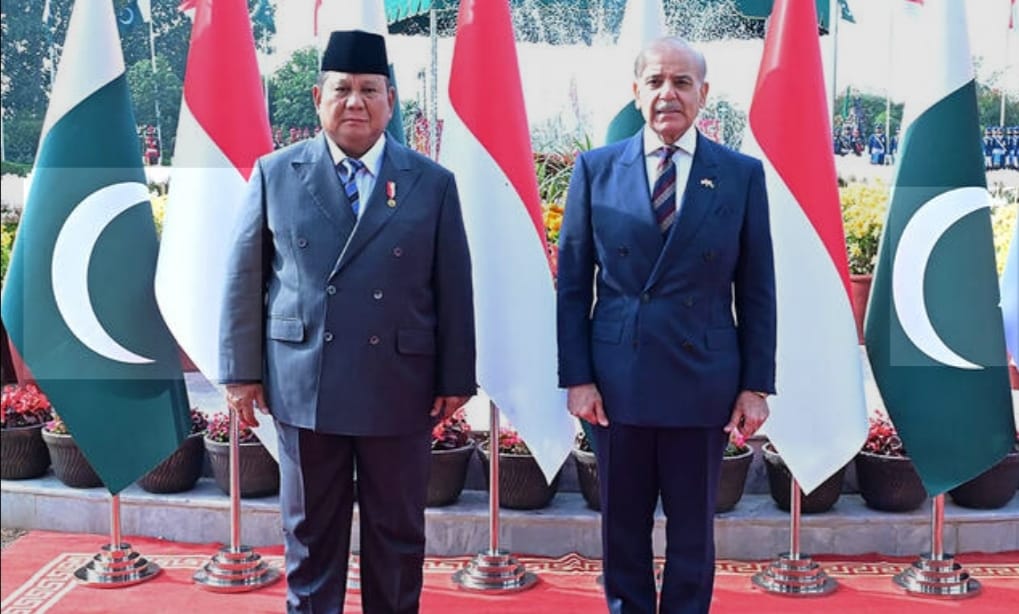
High-level visits and bilateral agreements have further strengthened this cooperation. During Indonesian President Prabowo Subianto’s visit to Pakistan in December 2025, both countries signed multiple Memorandums of Understanding (MoUs) covering sectors such as halal trade, education, health, and Small and Medium Enterprises (SMEs).
Additionally, a Joint Trade Committee has been established to address trade barriers and facilitate business-to-business collaboration.
Beyond trade, Islamabad and Jakarta are expanding cooperation in defense, climate resilience, and technology. Both countries also coordinate closely on regional and global issues, reinforcing their broader strategic partnership.
Talking to APP here on Wednesday, President of the Federation of Pakistan Chambers of Commerce and Industry (FPCCI) Atif Ikram Sheikh highlighted that Pakistan and Indonesia are two vital trade partners with huge potential to expand bilateral economic ties.
He noted that enhanced cooperation would help both nations connect with global supply chains and foster broader regional connectivity with the ASEAN and Central Asian regions.
“Both sides need to revisit and diversify bilateral trade items from traditional sectors to achieve the true potential of our economic ties,” the FPCCI President said. He emphasized that e-commerce and the new creative economy will play a major role in mobilizing the youth of both countries to strengthen global supply chain connectivity.
Echoing these sentiments, President of the Rawalpindi Chamber of Commerce and Industry (RCCI) Usman Shaukat pointed out that Indonesia and other ASEAN nations currently enjoy a trade surplus with Pakistan, underscoring the urgent need to diversify export avenues.
The RCCI President proposed bringing innovation to bilateral commerce by introducing new trade items. He urged the chambers of commerce from both countries to actively engage in emerging and innovative sectors, particularly IT, tech trade, and the blue economy.
Looking ahead, the future of Pakistan–Indonesia economic relations appears highly promising. The planned CEPA, combined with growing political will, is likely to significantly increase trade volume and encourage investment in emerging sectors such as renewable energy and digital services.
With sustained cooperation, policy reforms, and the mitigation of logistical and market access challenges, the Pakistan-Indonesia partnership is well on its way to evolving into a key economic axis in the Muslim world and the broader Asian region.