
Minister for Planning, Development and Special Initiatives Professor Ahsan Iqbal on Friday said strengthening governance is vital to restoring public trust, improving service delivery and enabling Pakistan to transition from economic stability to sustainable growth and transformation.
Governance reform key to public trust, economic transformation: Ahsan Iqbal
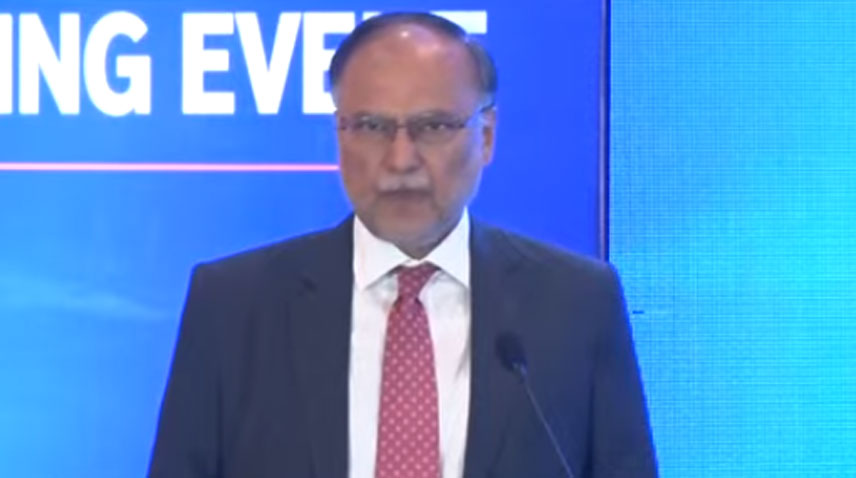
ISLAMABAD, Mar 27 (APP): Minister for Planning, Development and Special Initiatives Professor Ahsan Iqbal on Friday said strengthening governance is vital to restoring public trust, improving service delivery and enabling Pakistan to transition from economic stability to sustainable growth and transformation.
Speaking at a launch of the SDPI’s Endline Evaluation Report of the Sub-National Governance Programme, he said citizens’ growing trust deficit stems from weak governance, as people assess the state through everyday services such as functioning schools, healthcare facilities, infrastructure and responsive local administration.
He emphasized that governance was the most visible face of the state, experienced directly at provincial, district, tehsil and union council levels rather than through constitutional structures.
He noted that persistent gaps in service delivery had contributed to a growing trust deficit, as citizens increasingly judge the state by its ability to meet everyday needs.
Ahsan said governance is not an abstract concept for ordinary citizens but a practical reality reflected in functioning schools, accessible healthcare, reliable infrastructure and responsive local administration.
He said citizens experience the state through service delivery at provincial, district, tehsil and union council levels, underscoring that sub-national governance is where the state ultimately succeeds or fails.
The minister observed that Pakistan currently stands at a critical juncture after navigating economic turbulence and achieving relative macroeconomic stability.
However, he cautioned that stability alone was insufficient, describing it as merely a “runway” that must be utilized for economic take-off through improved governance, investment and export growth under the “Uraan Pakistan” initiative.
He stressed that governance was the defining factor distinguishing stagnation from transformation, adding that the gap between policy ambition and citizen impact, as well as between announcements and delivery, could only be bridged up through effective governance systems. Without modern institutions, efficient procedures and strong local frameworks, he said, the country cannot realize its vision of becoming a $1 trillion economy by 2035.
Ahsan Iqbal said the traditional model of governance is no longer viable, warning that silo-based approaches, weak coordination, excessive centralization and inconsistent reforms would continue to impede progress. He reiterated that Pakistan’s primary challenge was lying in converting its potential into performance through institutional strength, accountability and continuity.
Discussing structural reforms, he termed the 18th Amendment a landmark achievement that enhanced provincial autonomy but acknowledged that its promise remains incomplete due to inadequate devolution to local governments. As a result, he said, key sectors such as education, health and municipal services have become overly centralized at the provincial level, limiting their responsiveness to local needs.
He emphasized that effective governance required decision-making authority to be closer to citizens, noting that issues in districts and remote areas cannot be efficiently addressed through centralized systems. He called for empowered local governments with clear administrative authority, adequate fiscal resources and accountability mechanisms to ensure citizen-centric service delivery.
Outlining reform priorities, the minister highlighted the need for evidence-based and outcome-oriented planning, performance-driven budgeting, transparent public financial management and enhanced resource mobilization. He cautioned against reducing development spending, stating that such cuts could lead to higher long-term costs and undermine growth prospects.
He also stressed the importance of sustainability in development initiatives, pointing out that many externally funded projects fail to deliver lasting benefits due to lack of integration into government systems. He said the Planning Commission has introduced measures to ensure all projects incorporate sustainability mechanisms.
Ahsan Iqbal underscored that governance reform was a shared responsibility, requiring collaboration among government institutions, think tanks, development partners, civil society and academia. He appreciated the contributions of SDPI, UNDP, FCDO and provincial governments in advancing evidence-based policymaking.
The minister called for a shift from rhetoric to implementation, urging stakeholders to institutionalize reforms and prioritize performance over presentation. He reaffirmed that Pakistan’s progress depends on strong institutions, consistent reforms and a governance system that delivers efficiently and equitably to its citizens.