Federal Minister for Finance and Revenue Senator Muhammad Aurangzeb on Monday highlighted the government’s continued focus on macroeconomic stability, investment facilitation and energy preparedness during a meeting with a delegation of the Rawalpindi Chamber of Commerce and Industry (RCCI) led by Group Leader Sohail Altaf and President Usman Shaukat at the Ministry of Finance.
Finance Minister highlights economic stability, reform agenda, energy preparedness
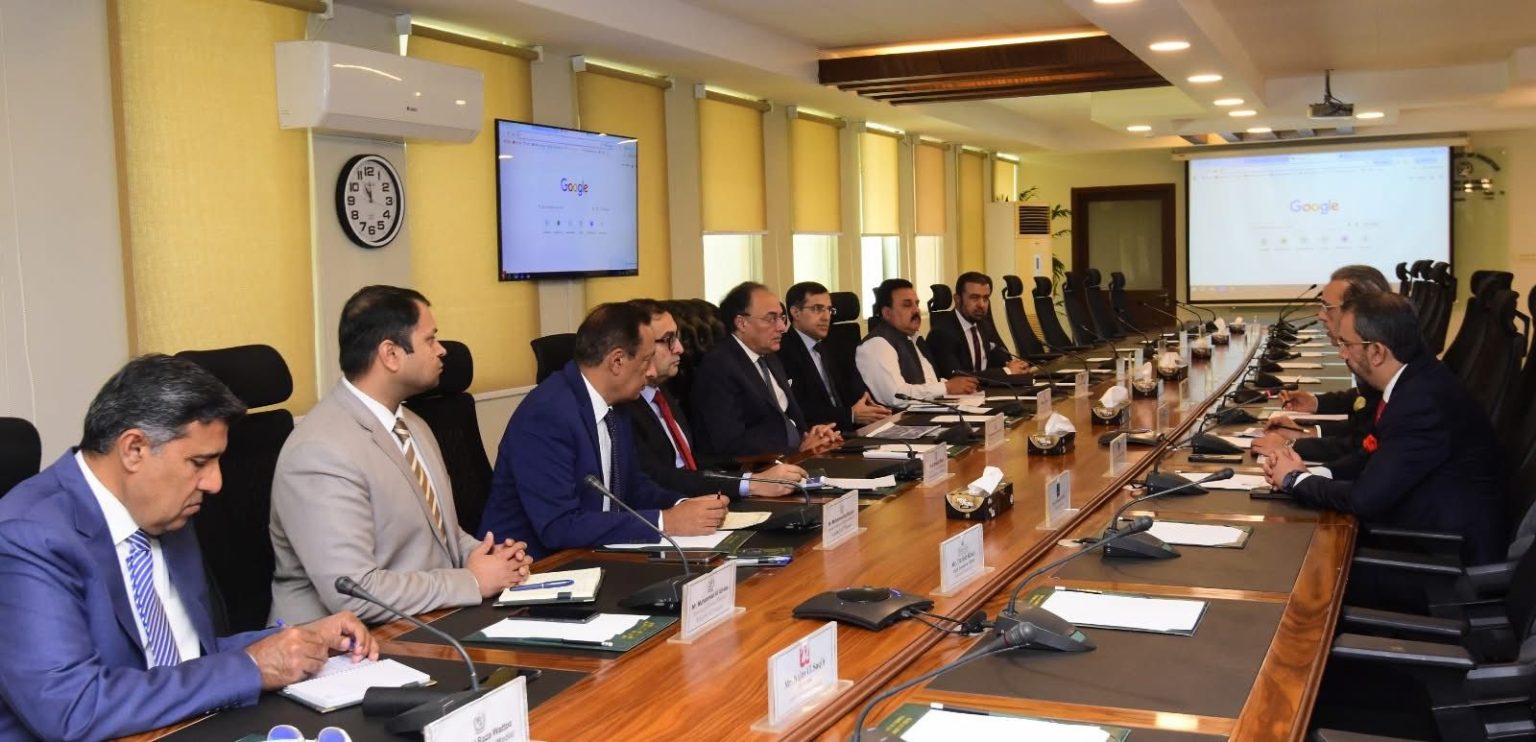
ISLAMABAD, Mar 09 (APP):Federal Minister for Finance and Revenue Senator Muhammad Aurangzeb on Monday highlighted the government’s continued focus on macroeconomic stability, investment facilitation and energy preparedness during a meeting with a delegation of the Rawalpindi Chamber of Commerce and Industry (RCCI) led by Group Leader Sohail Altaf and President Usman Shaukat at the Ministry of Finance.
The meeting provided an opportunity for a constructive exchange of views on Pakistan’s economic outlook, the concerns of the business community and the outcomes of RCCI’s recent business outreach to the United States, said a release issued here.
Welcoming the delegation, the Finance Minister appreciated RCCI’s initiative to engage policymakers, business leaders and economic institutions in the United States. He said such outreach is important for presenting Pakistan’s economic potential and strengthening commercial ties with key international partners.
Senator Aurangzeb stated that the government had undertaken difficult but necessary measures over the past period to restore macroeconomic stability and improve the country’s economic fundamentals.
He said these steps had helped rebuild confidence among investors and international partners while stabilizing key economic indicators. Describing these improvements as essential groundwork for future growth, he stressed that the next phase should focus on converting stability into sustained investment, industrial activity and job creation.
The Finance Minister said the government was committed to improving the overall investment climate and addressing structural issues affecting business confidence. Referring to the work of the Special Investment Facilitation Council (SIFC), he noted that several initiatives had been launched to streamline approvals, improve regulatory coordination and facilitate investment in key sectors.
He acknowledged that investor confidence depends not only on macroeconomic indicators but also on predictability, policy continuity and efficient dispute-resolution mechanisms, adding that the feedback shared by RCCI from its US engagements would be carefully considered.
On taxation and business facilitation, Senator Aurangzeb emphasized the government’s commitment to maintaining close engagement with chambers of commerce and industry representatives.
He said that regular dialogue with the business community was essential to ensure that tax policies reflect economic realities and promote growth while ensuring fairness in the system.
The government, he noted, is working to broaden the tax base, improve compliance through digital systems and enhance transparency in the tax administration while addressing genuine concerns raised by businesses.
The Finance Minister also briefed the delegation on the evolving global oil and energy situation in the context of regional developments.
He said the government’s immediate priority had been to ensure uninterrupted availability of fuel and energy supplies across the country. In this regard, he informed the delegation that the Prime Minister had chaired several high-level meetings and that the federal government was working closely with provincial governments and relevant ministries to monitor fuel stocks, supply chains and market conditions on a continuous basis.
He explained that timely price adjustments had been necessary to maintain market stability and ensure that supply chains continued to function effectively.
The government, he said, was closely monitoring the availability of petrol, diesel, crude oil, LNG and LPG while planning ahead to manage supply pressures arising from global uncertainties.
He added that energy conservation and prudent consumption measures were also being considered to manage demand while safeguarding economic activity.
Earlier, RCCI President Usman Shaukat thanked the Finance Minister for providing the delegation an opportunity to share its views and briefed the meeting on the RCCI delegation’s recent visit to the United States. He said the purpose of the visit was to explore economic opportunities and identify ways to strengthen business connectivity between Pakistan and the United States.
Mr. Shaukat informed the meeting that the delegation held 14 engagements in Washington, DC and New York with US lawmakers, senators, economic development organizations and business chambers.
He described the discussions as positive and encouraging, noting that there was significant interest among US stakeholders in strengthening economic engagement with Pakistan.
According to Mr. Shaukat, the meetings covered potential collaboration in sectors including pharmaceuticals and healthcare, information technology, mining and minerals, steel, construction and automobiles.
He noted that US interlocutors encouraged Pakistani businesses to look beyond exports and explore investment partnerships and joint ventures that could create mutually beneficial economic opportunities.
The RCCI President also highlighted the delegation’s interactions with the US-Pakistan Business Council, the US Department of State, the Department of Commerce, SelectUSA and business organizations in New York and New Jersey. These engagements, he said, pointed to promising prospects for mid-sized investment partnerships and greater private-
sector collaboration between the two countries.
Mr. Shaukat further noted that discussions with Pakistani-origin entrepreneurs and technology professionals in the United States reinforced the potential for cooperation in emerging sectors such as technology, healthcare and innovation.
He added that the visit provided valuable insights into investor expectations, particularly regarding policy consistency, efficient regulatory processes and strong institutional support for foreign investment.
RCCI Group Leader Sohail Altaf and other members of the delegation also shared their perspectives during the meeting.
They emphasized the importance of building on the government’s macroeconomic stabilization efforts through measures that further encourage investment and improve ease of doing business.
Representatives from various sectors including pharmaceuticals, IT, manufacturing, automobiles and mining highlighted the need for stronger export promotion, improved regulatory coordination and reduction of procedural hurdles faced by investors.
The Finance Minister welcomed RCCI’s briefing and outreach efforts and reaffirmed the government’s commitment to economic reforms, investment promotion and business facilitation.
The RCCI delegation, in turn, appreciated the Minister’s detailed briefing on the economy, taxation and the energy situation, expressing confidence that continued engagement would help strengthen investor confidence and support Pakistan’s economic growth.