Peshawar: A home to mouthwatering cuisines attract food lovers on weekend amid pre-spring cold breeze
Peshawar: A home to mouthwatering cuisines attract food lovers on weekend amid pre-spring cold breeze
PESHAWAR, Jan 25 (APP): Besides being a walled city with 2500 years documented history, Peshawar is also a home to mouthwatering cuisines attracting food lovers on weekend amid pre-spring breeze emanating from snowclade Khyber hills.
Peshawar’s Chappli Kabab, Rice Polao, Sripaye, grilled fish, beef nehari and Matton Karahi shops are flooded with food lovers on Sunday.
The visitors can’t resisted the tantalizing aroma, tender texture and soul-warming flavor of Beef Nehari and Chappli Kabab that carved out a special place in Peshawar’s culinary landscape.
Being a cherished staple of the city’s traditional cuisine, beef nehari continues to lure residents and visitors alike to Peshawar’s bustling food streets and historic bazaars.
Affordable yet deeply satisfying, the dish enjoys widespread popularity across all age groups and social classes.
In the famed Qissa Khwani and Namak Mandi bazzars, the heart of the city’s food culture, the air is thick with the enticing aroma of simmering nehari, sizzling seekh kabab and freshly grilled chappli kabab.
Amid the biting cold, these streets come alive as crowds gather to savor flavors passed down through generations.
“Beef nehari and Chappli Kabab are my favorite winter dishes,” says Riaz Khan, a PST teacher from Nowshera, while enjoying a meal at Namak Mandi Peshawar.
“Whenever I come to Peshawar, I visit here at Namak Mandi where these delicious dishes gives me energy during winter.”
Local restaurateur Nisar Khan, who runs a well-known eatery in Namak Mandi, says demand of these mouthwatering food surges every winter.
“People of all age groups order beef and chicken nehari, along with chappli kabab and mutton karahi at winter evenings,” he explains. According to him, the use of meat from young oxen and buffaloes enhances both taste and tenderness.
Nisar proudly traces his family’s culinary journey back 75 years. “After my father’s passing, I continued the business with the dream of passing it on to the next generation,” he shares.
“What started with a single frying pan has now grown into six locations, including one at Melody Food Street in Islamabad.” At his shop, massive frying pans and trays holding up to 60 kilograms of marinated meat are a common sight. With an onset of spring, takeaway orders have increased significantly, with families often purchasing parcels ranging from two to five kilograms for home gatherings.
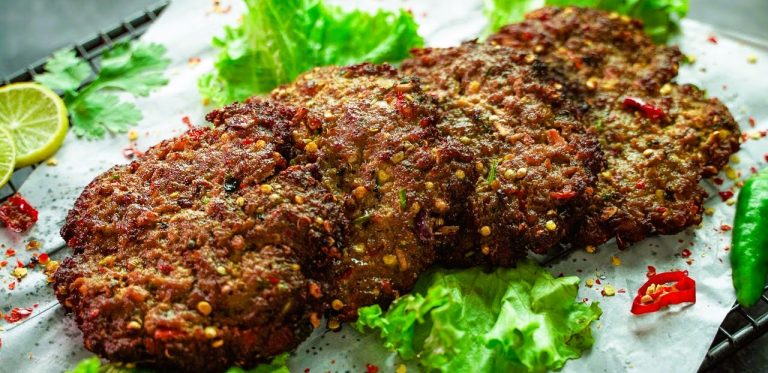
Chappli and seekh kababs frequent companions to nehari are prepared by finely mincing beef and blending it with tomatoes, onions, red chili powder, coriander leaves, eggs, ginger, lemon juice, salt and pomegranate seeds.
After marination, the mixture is cooked for about 10 minutes and served hot with naan, yogurt, chutney and fresh salad which is a timeless combination that keeps diners coming back.
Eminent writer and traveler Qari Javed Iqbal, in his book Saqafat Sarhad Tarikh K Ayeene Me (Frontier Culture in the Mirror of History), traces the origins of beef nehari and chappli kabab to the Mughal era.
He said that invading kings and warriors introduced refined meat-cooking techniques that later became deeply embedded in the region’s culinary traditions.
Today, the fame of Peshawar’s beef nehari and kababs extends far beyond the city, reaching Karachi, Lahore, Quetta, Jalalabad, Kabul, Amritsar, Lucknow and Delhi, turning the dish into a culinary ambassador of the region.
In Peshawar alone, more than 3,500 beef nehari and kabab outlets operate in areas such as Firdus, Bakhshu Bridge, Warsak Road and Ring Road, reflecting the dish’s enduring appeal.
For local resident Suleman Khan, enjoying a plate at Namak Mandi is a ritual. “Beef nehari and Chappli Kabab is my favorite dish,” he says. “No meal feels complete without its aromatic taste.”
Despite its popularity, prices have risen, with a single plate now costing between Rs1,000, up from Rs900 last year—prompting calls for regulatory oversight to maintain affordability.
According to Nisar Khan, demand has even crossed borders. “We receive orders from the UAE and Saudi Arabia for weddings and family celebrations,” he says with pride.
Addressing food safety concerns, a spokesman for the Food Services and Halal Authority acknowledged challenges such as spice adulteration. To tackle the issue, seven mobile food testing laboratories have been deployed across Khyber Pakhtunkhwa, with plans to add ten more. Food training schools and stricter hygiene regulations are also being introduced to preserve traditional flavors while ensuring safety.
As beef nehari and Chappli Kabab continued to tantalize taste buds across generations, its rich history, evolving flavors and deep cultural roots stand as a testament to Peshawar’s vibrant and enduring culinary heritage.