Police arrest two accused in injured condition after separate encounters
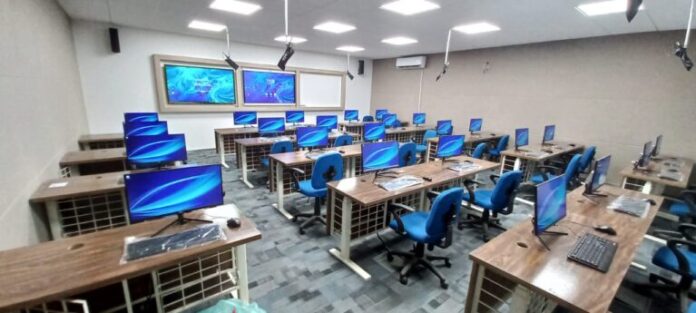
Govt to transform 80 educational institutions of GB, AJK into smart schools
ISLAMABAD, Aug 08 (APP): In a landmark development, as many as 80 schools in Gilgit-Baltistan (GB) and Azad Jammu and Kashmir (AJK) are set to be transformed into state-of-the-art smart schools.
The initiative aims to revolutionize education in GB and AJK by the Federal Government in collaboration with UNESCO.
According to the details, around 40 schools in GB and 40 schools in AJK to be converted into smart schools.
The upgradation including school furniture for equipment and latest technology equipment, and comprehensive training for staff to ensure optimal utilization of resources.
The official sources from the Education Ministry said that this initiative also aims to bridge the digital divide and provide equal access to quality education for students in GB and AJK.
By integrating technology and innovative learning methods, we are committed to enhancing the educational landscape in these regions, they added. “We are grateful for UNESCO’s valuable assistance in this project, which will not only improve educational infrastructure but also build capacity and promote digital literacy”.
“This historic initiative marks a significant milestone in our efforts to modernize education in GB and AJK. We are committed to empowering our youth with the skills and knowledge necessary to succeed in the 21st century” said Mr Khalid Maqbool Siddiqi Federal Minister of Education while commenting on the project.
PMYP intends to cooperate with ADB; Rana Mashhood
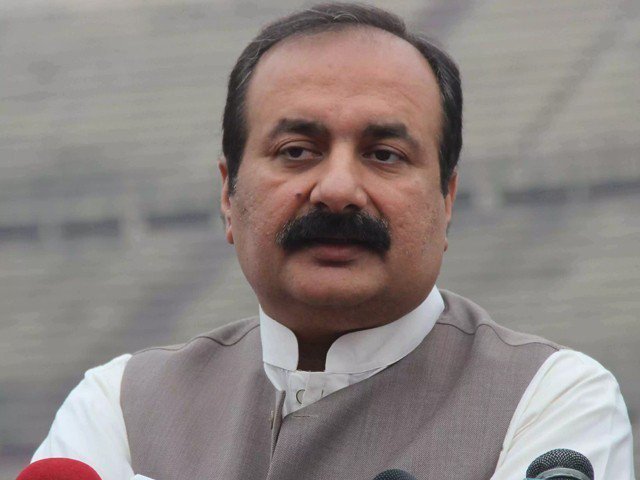
ISLAMABAD, Aug 8 (APP): Chairman of the Prime Minister Youth’s Programme (PMYP) Rana Mashhood Ahmed Khan on Thursday said that PMYP was interested in creating more opportunities for youth with the help of Asian Development Bank (ADB) in various sectors.
Talking to a delegation of ADB, he said that the Government of Pakistan wanted to give more scholarships to youth in skill development programmes. Rana said that youth comprising 65 percent of the population was the hope of Pakistan and empowering youth with required resources and development opportunities was the need of the hour.
On the occasion, the delegation said that the ADB intends to partner with the PMYP’s skills education and women empowerment programmes.
They expressed optimism about the transformative impact of the Prime Minister’s Youth Programme initiatives and pledged to work closely to ensure their continued success.
Punjab outsourcing 5,800 govt schools to boost quality: Minister
CSO Support Group wants measure integrated into KP Universities Act
Man killed, five injured in accident
KASUR, Aug 08 (APP):A person was killed on Thursday while five others sustained critical injuries in a collision between van and truck.
The police said a passenger van collided with a truck near Dhang Shah. Deeased identified as Islam Khan while injured were Fazan, Naveed, Naseem Riaz, Shehnaz and Aslam.
The body and the injured were shifted to a nearby hospital by the police.
The driver escaped from the scene.
The police registered a case.
Govt vows to restore peace in KP after deadly clashes
ISLAMABAD, Aug 08 (APP):In the wake of tragic incidents in Khyber Pakhtunkhwa, Governor Faisal Karim Kundi met with Federal Interior Minister Mohsin Naqvi to discuss the deteriorating law and order situation, agreeing on a joint strategy to tackle future conflicts and prevent external interference.
A high-level meeting between Governor Khyber Pakhtunkhwa Faisal Karim Kundi and Federal Interior Minister Mohsin Naqvi on Thursday focused on addressing the worsening public order situation in the province, particularly in the wake of deadly clashes in Kuram.
Both leaders expressed deep concern over the loss of precious lives due to a land dispute and condemned elements that fueled tensions by giving the conflict a wrong color.
Naqvi assured full cooperation to restore peace in Khyber Pakhtunkhwa, terming it the government’s top priority.
He praised the efforts of local dignitaries, led by MNA Hameed Hussain, and security forces in bringing the situation under control. Naqvi acknowledged that external hands sabotaging peace efforts cannot be ignored.
Governor Kundi thanked Minister Naqvi for his support in establishing peace, as the government intensifies efforts to improve public order in Khyber Pakhtunkhwa, including Karam.
The meeting marked a significant step towards forging a joint strategy to tackle future conflicts and ensure lasting peace in the region
WHO official highlights difficulties in dealing with emergencies amid Mideast escalation
UNITED NATIONS, Aug 08 (APP): Recent developments in Gaza, the wider Middle East, and Sudan, have highlighted the complexities of emergencies in the World Health Organization’s (WHO) vast Eastern Mediterranean region, officials from the UN agency said during a virtual media briefing on Wednesday.
The past two weeks have seen a variant of poliovirus type 2 detected in sewage samples in Gaza, deadly military strikes in several neighbouring countries, and the confirmation of famine in Sudan’s North Darfur state, among other challenges.
WHO Regional Director Dr. Hanan Balkhy voiced grave concern over the ongoing escalation across the region, characterized by deadly strikes against civilians, political entities, and infrastructure which are rapidly raising the risks of a wider war.
She said civilian populations already ravaged by violence, hunger and disease, do not deserve to be further threatened.
Health systems must be rebuilt, not devastated, and further developed so that they can withstand further shocks that could potentially affect us all, like the next pandemic, she said.
In the face of the escalating political tensions, she stressed that all diplomatic efforts must be made to prevent this worrying situation from spiraling further.
Meanwhile, polio in Gaza is of great concern. Dr. Balkhy warned that although no cases have been detected, children are at high risk.
In response, WHO is working with the Ministry of Health in Gaza and the UN Children’s Fund (UNICEF) on a range of measures, including polio vaccination campaigns which will begin very soon.
Let me be clear – we need a ceasefire, even a temporary ceasefire – to successfully undertake these campaigns. Otherwise, wee risk the virus spreading further, including across borders, she said.
Dr. Hamid Jamari, Polio Eradication Director at the WHO Regional Office, said some 500,000 children under eight, will be targeted in two rounds of vaccination campaigns.
He said the WHO Director-General, Tedros Adhanom Ghebreyesus, has already authorized the release of sufficient doses of the novel oral polio vaccine type two from global stocks, which are held in Indonesia.
“Of course, the challenge is when can we get these vaccines through to Gaza”, he said, citing issues such as the current tensions in the region, logistical difficulties and flight cancellations.
“And once the vaccines get there, then we need a massive change in the current environment which is not only ceasefire and peace so that children can be vaccinated, but we also require freedom of movement”.
Dr. Rik Peeperkorn, WHO Representative in the occupied Palestinian territory, added that everything has to be aligned, including the cold chain and cold chain equipment, referring to the correct conditions for storing, transporting and distributing vaccines.
Speaking from Jerusalem, he said that WHO and partners have already started “microplanning” for the vaccination campaigns, describing them as a “massive operation”. This will be followed by the training of health workers and volunteers, and the roll-out of risk communications.
“To carry out these kinds of campaigns, you prefer to have a ceasefire,” he said.”If that’s not possible, then at least there should be what we call “days of tranquility”.
Like his counterpart, Dr. Peeperkorn also underlined the importance of freedom of movement.
He explained that the comprehensive vaccination campaigns would have to be carried out from fixed points, from mobile teams, and, when feasible…as much as possible from door-to-door, Or, in Gaza, it would be from tent-to-tent.
One of the 85 sick and severely injured patients evacuated from Gaza to United Arab Emirates waves from the bus.
Regarding other Gaza developments. Dr. Balkhy reported that WHO supported the largest medical evacuation from the enclave so far in the war, with 85 seriously ill people and their companions taken to the United Arab Emirates (UAE) at the end July.
This “extremely complex operation” involved transporting the group through the Kerem Shalom crossing, and then onto an Israeli airport, before flying to the UAE.
She explained that the easier route would have been through the Rafah crossing with Egypt, which has been closed since 6 May.
In total, nearly over 100 Gazan patients have been evacuated with WHO support, including to Belgium and Spain. However, some 10,000 people there still require medical evacuation.
In the face of regional escalation, WHO is deploying emergency experts and vital supplies to support the Ministry of Health in Lebanon, in addition to providing equipment, technical assistance and staffing for its Emergency Operations Centre.
The agency has also bolstered the capacity of 98 hospitals for mass casualty management and the prepositioning of 20 trauma kits and other lifesaving supplies.
“As we work with health officials in Syria, Iran, Jordan and other countries on emergency contingency plans, we hope and pray that they never need to be activated”, she remarked.
Dr. Balkhy also addressed the situation in Sudan, where war has pushed parts of North Darfur state into famine, notably the Zamzam displacement camp, home to least 500,000 people. Other areas are potentially at risk.
“These entirely avoidable developments raise the stakes for our humanitarian operations. We urgently need access to those in need by all routes possible, including cross-border”, she said.
Turning to other locations in the region, she noted that extreme weather events including floods, deadly heatwaves and storms have disrupted lives and livelihoods.
She said WHO “acted quickly” following recent severe flooding in Afghanistan that killed 58 people and injured 380, which included dispatching 160 metric tonnes of medical supplies, deploying 24 ambulances for referrals, and activating mass casualty management systems.
The floods and heatwaves are occurring in the context of severe climate, and she highlighted the wider impacts on health.
“Climate change is a fundamental threat to people’s health and the time for collective, concrete actions is now,” she said. “We need to understand that this threat knows no borders and leaves no one safe”.
APP/ift