
ISLAMABAD








UNITED NATIONS, Sep 15 (APP): The UN General Assembly has adopted the work programme for its seventy-ninth session, deciding to include items on addressing the legacy of nuclear weapons and on lethal autonomous weapons systems in its agenda, while Russia and Ukraine voiced opposing views on the body’s consideration of an item relating to the war-hit eastern European country.
Acting on the recommendation of its steering committee, the 193-member Assembly decided that the general debate, which will be held from 24 to 30 September, will continue on Saturday, 28 September. [The general debate will not be held on Sunday, 29 September.]
More than 130 heads of state/government, including Pakistan’s Prime Minister Shehbaz Sharif, are expected to attend the high-level debate.
The Assembly President Philémon Yang of Cameroon, highlighted the Committee’s other recommendations on the organization of the session, concerning rationalization of work, closing date of the session, the general debate and the conduct of meetings.
The Assembly also took note of information on the ‘right of reply’ — particularly the organ’s practice that statements delivered in exercise of the right of reply to addresses made by Heads of State be in writing.
It decided to consider the draft agendas titled “Addressing the legacy of nuclear weapons: providing victim assistance and environmental remediation to Member States affected by the use or testing of nuclear weapons” and “Lethal autonomous weapons systems (LAWS)” under the “Disarmament” heading on its agenda. (LAWS are weapons that select and apply force to targets without human intervention).
Under the “Organizational, administrative and other matters” heading, it decided to consider the draft agendas titled “Eightieth anniversary of the end of the Second World War”, “Observer status for the Regional Anticorruption Initiative in the General Assembly” and “Observer status for the International Coffee Organization in the General Assembly”.
During the meeting, Russia disassociated itself from consensus on the decision to include the item titled “The situation in the temporarily occupied territories of Ukraine” in the Assembly’s agenda. Stating that this wording does not reflect reality and intentionally misleads the international community, the Russian representative stressed that it also denies the fundamental principle of self-determination.
“The bloody pro-Nazi coup in Kyiv in 2014 initiated by the West” caused the systematic persecution and physical elimination of ethnic Russian, Russian-speaking and Christian Orthodox residents in Ukraine, the Russian representative said. Meanwhile, she continued, this agenda item only serves to propagate the Kyiv regime’s unsubstantiated accusations and propaganda. Further, because the topic of Ukraine is also discussed in other forums, this agenda item is a clear example of duplication of efforts.
The representative of Ukraine, for her part, thanked the Assembly for the inclusion of this agenda item. “We deeply regret the disrespectful attitude displayed by the Russian delegation towards the General Assembly, the most-representative principal organ of this Organization,” she said. Against the backdrop of the Russian Federation’s full-scale invasion of Ukraine, retaining this item in the agenda is of paramount importance.
“We are convinced that the vigilant attention of the General Assembly as a primary deliberative policy-making and representative body is indispensable in addressing Russia’s heinous acts of terrorism,” she stressed, adding that Member States have shown substantial interest in this year’s debate on the item — which only underscores its significance.
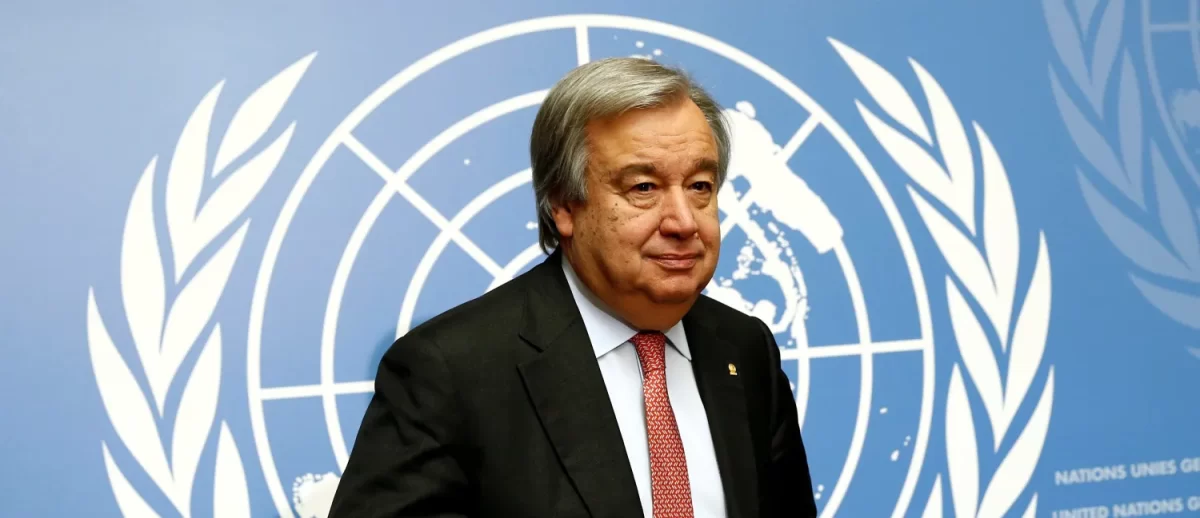
UNITED NATIONS, Sep 15 (APP): UN Secretary-General Antonio Guterres Sunday reaffirmed the importance of upholding free speech, civil liberties and the rule of law, as well as ensuring accountable institutions and protecting human rights, while warning that artificial intelligence (AI) posed a treat to democracy.
“This is especially crucial in a year where more than 50 countries – representing half of the global population – are holding elections,” the UN chief said in a message marking International Day of Democracy.
“Yet, these rights and values are under attack around the world. Freedoms are being eroded. Civic space is diminishing. Polarization is intensifying. And mistrust is growing,” he said.
Pointing out that this year’s Democracy Day focuses on AI, Guterres said, “Left unchecked, the dangers posed by artificial intelligence could have serious implications for democracy, peace, and stability.
“This can start with the proliferation of mis- and disinformation, the spread of hate speech and the use of so-called deepfakes”.
Despite the dangers, artificial intelligence has the potential to play a positive role in strengthening democratic systems, he added, noting that AI can promote full and active public participation, enhance equality and contribute to human development.
“AI can boost education on democratic processes, and shape more inclusive civic spaces where people have a say in decisions and can hold decision-makers to account,” the UN chief said.
By utilizing AI for good governance, countries can create more transparent and accountable systems, that allow citizens to engage more effectively, he said. However, this will require effective governance of AI at all levels, including internationally.
Guterres also highlighted the recent report of the UN’s High-Level Advisory Body on Artificial Intelligence with recommendations on harnessing the benefits of AI while mitigating the risks.
“The message is clear: AI must serve humanity equitably and safely,” he stressed, adding that the upcoming Summit of the Future will be a critical platform for nations to discuss ways to strengthen international cooperation on AI.
“On this International Day of Democracy, let us keep working to build a more inclusive, just, and equal world.”

Serving the nation since 1947 by providing an accurate, objective, uninterrupted flow of news to the people, the national news service is pursuing a comprehensive strategy to transform the existing news operations into a forward-looking service – APP Digital for its diverse subscriber-base and the public.
Contact us: news@app.com.pk
Copyright © Associated Press of Pakistan