Home Blog Page 7714

Welfare of police martyrs’ families, ghazis top priority: CCPO

0
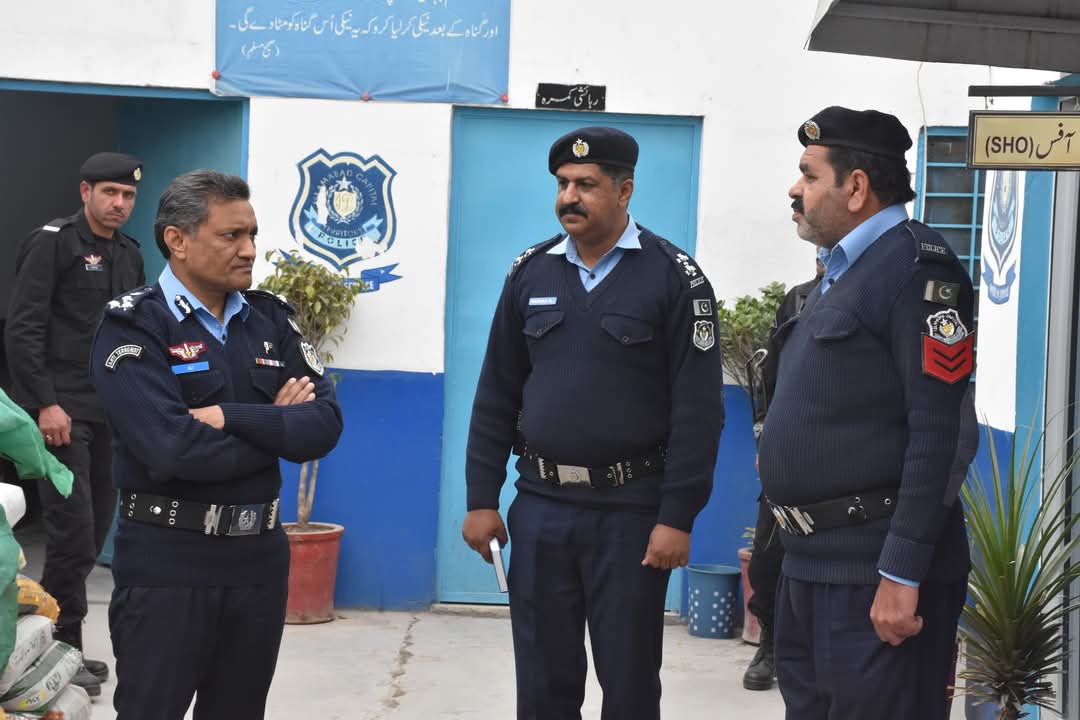
LAHORE, Sep 27 (APP):Under the leadership of CCPO Bilal Siddique Kamyana, Lahore police is actively engaged in the welfare of the families of police martyrs. Since 2017, 50 families of martyrs of police have been provided homes worth over Rs782.5 million through the martyrs’ package.
This was stated by a Lahore police spokesperson in a statement issued on Friday. More than Rs10.7 million in scholarships have been distributed among 48 families of employees’ children, this year. Additionally, Rs2.2 million have been allocated for dowry funds and over Rs1.1 million for maintenance allowances have been distributed among 17 families. Moreover, Rs158,000 has been disbursed to two families as final salary payments.
The CCPO Lahore said that the sacrifices of Lahore police martyrs are a source of pride, 338 officers and personnel have sacrificed their lives in the line of duty. He emphasized that the welfare of martyrs’ families and Ghazis remains a top priority, with ongoing efforts to provide housing, education and healthcare.

Dengue fatalities reach to 5 after one more death reported in Rawalpindi

0
RAWALPINDI, Sep 27 (APP):Dengue fatalities in Rawalpindi reach 5 since January this year in Rawalpindi after one more death has been confirmed by the health department on Friday. All five deaths were reported during the August-September time period showing the dengue risk hike.
According to District Health Authority, a female patient Halya Syed Auuon Abbass aged 45 from Dhoke Gujran, Misrial Road died in Benazir Hospital on 22nd September.
The health authority has also issued an intimation of the possibility of further increase in positive cases due to recent rains.
With higher than normal monsoon rains, the temperature is forecasted to remain falling between 16 to 26 degrees Celsius. The Meteorological Department has issued a dengue outbreak warning for the month of October. According to the MET warning, dengue outbreaks can occur in major cities of the country including Rawalpindi, Islamabad, Lahore, Karachi, Hyderabad, Faisalabad, Multan and Sialkot.
The health authority once again appealed to the citizens to take strict precautionary measures and to cooperate with government agencies.
The updated report issued by the health authority on Friday shows the addition of 65  news cases during the last 24 hours.

Sindh CM, IFC RD agree to boost IT industry

0
KARACHI, Sep 27 (APP):Sindh Chief Minister Syed Murad Ali Shah, during his meeting with the International Finance Corporation (IFC) Regional Director for Pakistan and the Middle East Khawaja Aftab Ahmed decided to collaborate for the promotion and establishment of the IT industry and to the water sector project of the city being launched on PPP mode.
The International Finance Corporation (IFC) Regional Director for Pakistan and the Middle East Khawaja Aftab Ahmed, IFC Manager for Pakistan and Afghanistan Zeeshan Sheikh attended the meeting. Chief Secretary Asif Hyder Shah, Chairman P&D Najam Shah, Secretary to CM Raheem Shaikh, Secretary IT Noor Samo and Secretary Transport Asad Zamin were also present.
The CM said that his government was working to establish IT industry in the province for which measures were being taken to establish IT Parks.

Amir Muqam stresses for welfare of coalmines workers

0
Amir Muqam

QUETTA, Sep 27 (APP): Federal Minister for States and Frontier Regions (SAFRON) Amir Muqam on Friday said that all out efforts would be taken to ensure the protection of coalminers and basic facilities as the workers working in the coal mines are the asset of the country.

The workers are working hard and contributing to the country’s economy and development, Amir Muqam said while addressing a ceremony organized in the honor of coal mines workers.

He said that the people associated with the coal mines would be provided all the facilities and privileges for avoiding tragic incidents in the mining sites. He said on the mines where injustice was done with the workers will be sealed and ban would be also imposed on those mines in the province which lack precautionary measures.

Amir Muqam said that no compromise will be made on the protection and rights of the workers working in the coal mine.
The government was the key priority to provide all possible facilities to the workers, their all legitimate demands would be addressed. He also announced 2 ambulances for the coal mine workers.
Engineer Amir Muqam hailed the approval of 7 billion dollar IMF deal, which will stabilize the economy of the country.

“The political rivals of the PML-N and anti Pakistan elements tried their best to sabotage the financial deal to put the country in the financial crises, however their nefarious designs failed,” Amir Muqam remarked.

Federal Minister said that those who destroy peace cannot be Pakistanis. He called upon on the people of Balochistan to do not be part of the anti-Pakistan campaign to sabotage the development and peace process of the country.
He said everyone has to play their role in maintaining peace, adding that no power can separate Balochistan from Pakistan.

Under the leadership of the Prime Minister of Pakistan Mian Muhammad Shehbaz Sharif and the leader of the Pakistan Muslim League Mian Nawaz Sharif, has put the country on the path of development and strengthen the economy.

Amir Muqam said that the Prime Minister is taking special interest in the development and prosperity of Balochistan.
Amir Muqam said that the development of Balochistan was the top priority of federal government as it has allocated Rs 130 billion development budget in the current PSDP for the uplifting of the province.

He said that Gwadar port will be practically operational which would be linked with Karachi through road.
Federal Minister Amir Maqam said that the Prime Minister has approved the solarization of 28,000 agricultural tube wells of Balochistan , which will bring a green revolution in the province.

He said that by utilizing the mineral resources of the province, Pakistan and Balochistan can be put on the path of development.

Pakistan elected ASOSAI Governing Board member

0
ISLAMABAD, Sep 27 (APP):The Supreme Audit Office of Pakistan’s has been elected member of the Governing Board of the Asian Organization of Supreme Audit Institutions (ASOSAI), one of the regional groups of the International Organisation of Supreme Audit Institutions (INTOSAI).
Pakistan won the seat during the 16th Assembly Session of ASOSAI held in New Delhi, India from September 24 to 27, according to press statement issued by the Office of the Auditor General of Pakistan here Friday.
The statement said that it was a great honour for Pakistan to have been included in the governing body of the organization, adding it was also recognition of the country’s crucial role in enhancing audit standards in the region.
Pakistan’s election to the ASOSAI Governing Board signifies its strong position to play a leadership role in the audit sector at both regional and global levels and offers a valuable opportunity to promote better audit practices in the Asian region

Naqvi calls on INL delegation

0
ISLAMABAD, Sep 27 (APP):Federal Minister for Interior and Narcotics Control, Mohsin Naqvi, met with the delegation of US Bureau of International Narcotics and Law Enforcement Affairs (INL) at the Ministry of Interior on Friday.
The delegation included US Deputy Ambassador Natalie Baker, Country Director INL Lynn Nelson, Police Advisor Ed Preston, and Police Program Specialist Faisal Gill.
Federal Interior Minister appreciated INL’s exceptional cooperation in enhancing the capacity of Pakistan’s police and paramilitary forces, citing several notable projects as praiseworthy. He emphasized for further strengthening this cooperation and making it more sustainable. He underscored the need for prioritizing high-impact projects through a master plan.
Interior Minister said that FIA is one of the most important investigative agencies of Pakistan. He  expressed the desire to make the Federal Investigation Agency (FIA) a dynamic organization, akin to the FBI, with INL’s cooperation. He said that this project will be of pivotal importance in combating organized crimes in Pakistan.
He also stressed the need of restructuring the National Police Academy so that it can be made an international standard institution. He emphasized that it is also need of the hour to modernize the Frontier Constabulary  which serves as a reserve police force across the country. Regarding Anti-narcotics efforts, Naqvi said that all possible measures are being taken.
The US delegation extended their condolences over the loss of precious lives in recent terrorists incidents. US Deputy Ambassador Natalie Baker  said that  INL has been working in close cooperation with the Government of Pakistan for more than 42 years and expressed the desire to make this cooperation stronger and sustainable. She emphasized that Pakistan’s security is integral to US security.

Agriculture machinery worth $17.621 mln imported in 2 months

0
ISLAMABAD, Sep 27 (APP):The imports of agriculture machinery and implements during the first two months of the current financial year grew by 105.59 per cent as compared to the imports of the corresponding period of the last year.
During the period from July-August, 2024 agriculture machinery and other implements valued at $17.621 million were imported as compared to the imports of $8.571 million of the same period of the last year, , according to the data of the Pakistan Bureau of Statistics.
Meanwhile, the imports of agricultural and other chemicals into the country increased by 4.28 per cent as agricultural chemicals valued at $1.500 billion were imported as compared to the imports of $1.439 billion of the same period of the last year.
The imports of fertilizers grew by 621.85 per cent as 262,788 metric tons of fertilizers manufactured costing $150.578  million were imported as compared to the imports of 78,067 metric tons valued at $20.860 million of the same period of the last year, it added.
However, the imports of insecticides into the country decreased by 31.91 per cent and recorded at 4,102 metric tons worth of $22.536 million as against the imports of 6,620 metric tons valued at $33.009 million in the same period of the last year, the data reveled.
Meanwhile, 306,837 metric tons of plastic materials valued at $384.308 million were imported to fulfill the local requirements as compared to the imports of 351,941 metric tons valued at $431.565 million in the same period of the last year, it said.
About 6,686 metric tons of medicinal products worth $196.703 million were imported during the first two months of the current financial year as compared to the imports of 15,901 metric tons valued at $177.151 million in the same period of the last year, it added.

Govt tireless efforts lead to reduction of inflation: Deputy Chairman Senate

0
ISLAMABAD, Sep 27 (APP):Deputy Chairman Senate Syedaal Khan Nasar on Friday said that the incumbent government was working tirelessly in line with the aspirations of the public.
As the results, these efforts were evident in the reduction of inflation, he added.
He said this during a meeting with members of the Balochistan cabinet, including Minister for Revenue Mir Asim Kurd Gello, Minister for Education Raheela Hameed Durrani, and Parliamentary Secretary for S&GAD Mir Liaqat Lehri.
Syedaal Khan assured the cabinet members of his full cooperation and support in addressing the issues faced by the Balochistan province, said a press release issued here.
Deputy Chairman thanked the ministers for their visit and appreciated their ongoing efforts for the development and prosperity in the province.
Raheela Durrani appreciated the efforts of the Deputy Chairman, highlighting, “His doors are always open for everyone.”
“This has strengthened harmony between the province and the federal government,” she emphasized.
The minister also briefed the Deputy Chairman Senate on the challenges faced by the province and expressed the hope that these issues would be raised at the highest forums.
Mir Asim Kurd said, “The federal government is making every possible measure for the development and prosperity of Balochistan.”
He acknowledged that the presence of the Deputy Chairman had helped resolve many issues.
Liaqat Lehri also commended the role of the Deputy Chairman, saying, “Having a leader who has risen from the ranks of a common worker to such a prestigious position has made a noticeable difference.”
He expressed the optimism that the Upper House would continue to highlight and address the issues of the province.

Governor emphasizes heart health awareness

0
Faisal Karim Kundi
PESHAWAR, Sep 27 (APP):Governor Khyber Pakhtunkhwa Faisal Karim Kundi on Friday underscored the essential role of medical professionals in assisting the suffering humanity and emphasized heart health awareness.
Speaking as the chief guest at the Rahman Medical Institute in Hayatabad at the eve of World Heart Day, Governor Kundi highlighted the urgent need to address heart diseases through early diagnosis, prevention, and the enhancement of healthcare infrastructure.
The event featured notable figures from the medical community, including Professor Dr. Muhammad Rehman, Chairman of Rehman Medical Institute, and Dr. Muqdad Khan, Head of the Cardiology Department, alongside various cardiology experts who presented research papers on heart health and shared recommendations for maintaining a healthy heart.
During his address, Governor Faisal Karim Kundi emphasized the necessity of focusing on heart patients in rural areas, where a significant portion of the population lacks access to basic medical facilities.
He urged cardiology experts to prioritize treatment in these regions, asserting that everyone must collaborate to create a healthier and stronger Pakistan.
“We must utilize this day to educate future generations on the importance of heart health,” said Governor Kundi.
Dr. Muqdad Khan expressed gratitude to the Governor for his participation. The event concluded with the distribution of shields to participants, with Kundi also receiving a commemorative shield from Professor Rehman and Dr. Muqdad Khan.

QAU holds conference on ‘Democracy, Devolution, & Plural Structures of Governance in Pakistan and South Asia’

0
ISLAMABAD, Sep 27 (APP):The School of Politics and International Relations (SPIR) at Quaid-i-Azam University (QAU), in collaboration with the Hanns Seidel Foundation (HSF), hosted yesterday a one-day conference titled “Democracy, Devolution, and Plural Structures of Governance in Pakistan and South Asia”.
This conference brought together leading academics from across South Asia to explore the processes of democratization and devolution in the region.
The event began with an inaugural address by Dr. Zafar Nawaz Jaspal, Dean of Social Sciences at QAU, who emphasized the significance of democratization in Pakistan.
He noted that the conference was particularly meaningful as it featured the participation of four generations of professors and students.
Dr. Muhammad Waseem, a renowned political scientist, former Chairman of SPIR, and current professor at Lahore University of Management Sciences (LUMS), delivered the keynote address.
He focused on the impacts of the 18th Amendment and the challenges facing federalism in Pakistan.
Dr. Waseem stated that despite some devolution of power, Pakistan’s federal structure remains centralized, creating an imbalanced federation.
He stressed the importance of pluralism and provincial representation, cautioning that separating issues of ethnicity from territoriality often fuels political tensions.
The first panel, titled “Conceptual and Theoretical Foundations of Democracy, Devolution, and Diversity Accommodation,” was moderated by Prof. Dr. Zafar Nawaz Jaspal.
Dr. Ejaz Hussain, Associate Professor at the Lahore School of Economics, presented data-driven insights on democratization and autocratization in the Global North and South.
He noted that the world is witnessing a global democratic backsliding, with an increasing number of states exhibiting autocratic tendencies. Dr. Asma Faiz, Associate Professor at LUMS, discussed centripetalism and consociationalism as governance methods for accommodating diversity.
She explained that while consociationalism rewards maintaining ethnic identity, centripetalism fosters interdependence between multi-ethnic parties, shaping democratic systems in diverse societies.
In his talk, Professor Dr. Syed Riffaat Hussain from the National University of Sciences and Technology (NUST) addressed the destabilizing impact of emerging technologies on the global order. He warned that the decay of the rule-based international system, especially in the West, is leading to a growing sense of disorder and anarchy.
The second panel, led by Dr. Farhan Hanif Siddiqi, Associate Professor at SPIR, focused on “Democratization in Post-Colonial States,” particularly in South Asia. Dr. Muhammad Mujeeb Afzal, Assistant Professor at SPIR, QAU, analyzed the complexities of democratization and party politics in South Asia.
He noted that the region includes both well-organized and poorly functioning democracies, where client-patron relationships dominate politics, economies are weak, and most countries remain dependent, with India being a partial exception.
Dr. Jehan Perera, Executive Director of the National Peace Council of Sri Lanka, discussed the challenges of majoritarianism and ethnic minority accommodation in Sri Lanka, emphasizing the need for inclusive political spaces for ethnic minorities.
He highlighted how strong group affiliations continue to shape Sri Lanka’s political landscape.
Mr. Shoaib’s presentation on “Elite Competition and Democracy in Nepal” underscored the country’s ongoing political instability, with frequent changes in government—three interim governments in just three years.
He argued that intense elite competition undermines democratic progress, keeping Nepal in a state of political flux.
Dr. Hussain Shaheed Soherwordi, Professor at the University of Peshawar, discussed state formation and nation-building in Afghanistan.
He expressed concerns about the centralized governance structure under the Taliban and previous regimes, noting that such centralization hinders effective political and institutional development in the country.
The third panel, moderated by Dr. Muhammad Nadeem Mirza, Associate Professor at SPIR, QAU, examined “Democracy, Devolution, and Diversity Accommodation in Pakistan.”
Dr. Aisha Younus, Assistant Professor at SPIR, QAU, used a poststructuralist lens to explore the interplay of culture, identity, and democracy in Pakistan.
She emphasized how the national identity discourse is shaped by dominant forces, particularly Islam, which serves as a central element in the country’s political framework.
Dr. Younus called for new narratives that resonate with Pakistan’s diverse population to foster democratic change.
Mr. Zafarullah Khan, a parliamentary expert, discussed the Council of Common Interests (CCI) and the National Finance Commission Award (NFC).
He highlighted the controversies and challenges of decentralization in Pakistan. He argued that central governance has lost legitimacy in public service delivery and advocated for greater resource devolution to local governments.
He proposed increasing the number of provinces and shifting fiscal responsibility directly to local governments to improve governance and conflict management.
Dr. Manzoor Ahmed, Pro-Vice Chancellor of the University of Gwadar, focused on the political economy of provincial and local governments in Pakistan.
He emphasized that while devolution is constitutionally mandated, it remains incomplete, and a truly ‘functional federal structure’ is needed to sustain the federation.
Dr. Ahmed highlighted the imbalanced distribution of resources, with the federal government collecting the majority of revenue and controlling a significant portion of expenditures, leaving little for provincial and local governments.
The conference concluded with remarks from the Dr. Summar Iqbal Baber, who thanked the participants and panelists for their insightful contributions to the discussions.
Overall, the conference provided a valuable platform for addressing the challenges and opportunities of democratization, devolution, and governance in Pakistan and South Asia.