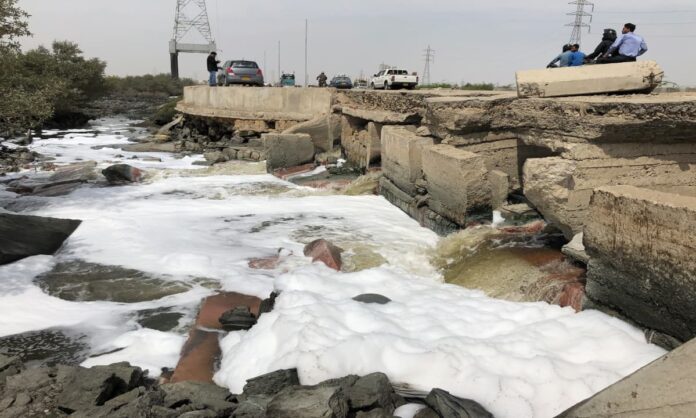
MULTAN, Sep 15 (APP): Untreated industrial effluent and solid waste, use of pesticides and chemicals and absence of water reservoirs have been continuously contamination groundwater over decades making it harmful for human health and exerting an extra burden on our health budget.
Although different governments executed projects for clean drinking water by installing water filtration plants in different cities and towns yet their proper functioning, cleanliness and hygiene had been a burning question.
South Punjab, often characterized by its underdevelopment and socio-economic challenges, also faces this critical issue as majority of people in the region not having access to portable water. Housing 34.7 million people as per South Punjab secretariat record, its 23 percent population live in urban areas and out of a total population around 10 percent have access to clean drinking water.
Then there is an issue of maintaining and ensuring proper functioning of filtration plants, meant to be the primary source of clean water for local population as it helps prevent diseases like hepatitis, cholera, dysentery, typhoid and other diseases.
As safe drinking water supports community development by reducing burden of medical bills and is essential for hygiene and sanitation, the role of filtration plants in provision of safe water is of utmost importance.
According to concerned officials, there are over 150 filtration plants in Multan city as the government alongside various philanthropists has installed these filtration plants to meet clean water needs of residents and keeps vigil on their maintenance and proper functioning.
But many of citizens are seen often complaining about their efficient functioning, on time filters replacement, cleanliness and hygiene issues and in some cases their going out of order for months.
“There are issues like improper maintenance, insufficient funding and lack of accountability and clear enforceable maintenance protocol,” said Salman Amjid, a resident of Shujabad Chowk. “Then there is also an issue that communities do not fully benefit from these plants. In many areas, these plants exist but people are not effectively utilizing them.”
It is commonly seen in our society that people often shy away from taking responsibility of community welfare projects. They can vocally criticize the governments and authorities for not providing basic amenities but once any welfare project is executed they take it as granted usually failing to dispense their duties.
“This lack of ownership is a barrier to proper functioning of these facilities. Without community engagement and a sense of responsibility, such facilities fall in despair,” remarked Muhammad Ramzan, a resident of Vehari. “Filtration plant installed at Pipli village of tehsil Vehari could not be activated due to lack of local community’s participation. People in the village are poor and could not afford electricity bill for functioning of the plant.”
Contrary, at some places the same plants are properly functioning where people share financial burden for their better health. As electricity bill for running these plants and their maintenance are the major issues, the community members have appealed not to charge taxes in bills of filtration plants.
In many cases the communities cannot afford these bills except that some philanthropist or affluent of the area take this responsibility. But, this may not happen everywhere and the burden of costs often falls on local residents. Consequently, many plants are either shut down or operate sporadically, failing to provide continuous supply of clean water to people.
Meanwhile, Chairperson Chief Minister’s Directorate for Evaluation, Feedback, Inspection and Monitoring (DEFIM) Brig Retd Babar Ala Uddin claimed that Water and Sanitation Authority was properly maintaining plants.
“We regularly monitor their functioning, ensure timely replacement of filters and cleanliness at this plants sites,” Ala Uddin said. “We also take measures to improve plants working where and when needed across our jurisdiction of action.”
However, he said making any project successful and efficiently working is a shared responsibility of the authorities and the communities. “Obviously the governments or authorities execute such projects for communities’ welfare. As we do our bit therefore, the communities must also play their role in making these projects sustainable.”
In this situation some citizens have demanded a structured maintenance program, funded and overseen by the government to ensure that all filtration plants are regularly serviced. The program should include timely replacement of filters, routine checks on water quality and immediate repairs of any damaged components. Regular monitoring and reporting should also be made mandatory, with a clear accountability mechanism to ensure that maintenance is not neglected.
As contaminated water whether it is ground or surface water, results in common and chronic diseases, the installation of new filtration plants and proper maintenance of already installed facilities, need an urgent intervention of the government departments, philanthropists and the local communities.
Since, it is a shared responsibility there is also need for raising awareness among masses and educate them about their responsibilities they owe for sustenance of such projects. Installation of these plants is a positive step but a comprehensive policy was required for plants sustenance, proper and on-time maintenance, community ownership and affordability to ensure provision of clean drinking water to citizens across the board.
Call for sustainable policies to resolve water contamination issues
US officials skip funeral in Turkiye of Aysenur Eygi, an American citizen of Turkish origin
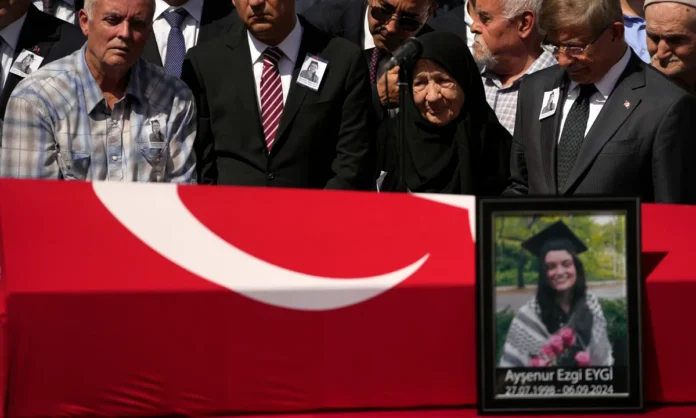
NEW YORK, Sep 15 (APP): United States officials stayed away from the heroes funeral given to Aysenur Ezgi Eygi, the Turkish-American pro-Palestinian activist, killed by Israeli forces in the occupied West Bank, as she was laid to rest Saturday in the town of Didim on Turkiye’s Aegean coast, according to a leading American newspaper.
“With Turkish flags flying and chants of ‘God is great’ resounding through the cemetery,” The New York Times reported that the funeral for Ms. Eygi, 26, was “deeply Turkish, and profoundly pro-Palestinian.
Turkish security forces, dressed in black uniforms, carried her flag-draped coffin.
“Hundreds of people, many carrying Palestinian flags and wearing Palestinian scarves, gathered at the central mosque in the town of Didim to say prayers for her, including senior Turkish officials,” NYT correspondent Ben Hubbard wrote.
“No American officials attended, and there was not an American flag in sight,” the correspondent noted, pointing out that Ms. Eygi had moved to the United States as a toddler, acquired citizenship and spent most of her life there.
The report highlighted the starkly different stances toward the conflict her two countries had taken since the Oct 7 Israeli war on Gaza: The United States has stood by Israel, continuing to supply its military with bombs even as concerns about Palestinians civilian deaths have mounted, it was pointed out.
Turkey, on the other hand, has embraced the Palestinians, with President Recep Tayyip Erdogan decrying Israel’s conduct and defending Hamas, the dispatch said.
Two relatives of Ms. Eygi decried American response to Ms.Eygi’s killing.
In an interview with the Times before her funeral, her father, also a U.S. citizen, said the United States had not stood up for her.
“I have been living in the U.S. for 25 years, and I know how seriously the U.S. looks out for the safety of its citizens abroad,” said her father, Mehmet Suat Eygi. “I know that when something happens, the U.S. will attack like the eagle on its seal. But when Israel is in question, it transforms into a dove.”
Ms. Eygi was shot in the head and died on Sept. 6 during a protest by Palestinian and international activists against an Israeli settler outpost near the village of Beita in the occupied West Bank.
Activists who were with her at the time said that she had been standing more than 200 yards away and downhill from the Israeli soldiers. They added that the protest, during which some demonstrators had thrown stones, had calmed down by the time she was shot.
Senior officials from both of Ms. Eygi’s countries — she was born in Turkey but obtained U.S. citizenship in 2005, her father said, and had lived in the Seattle area — have condemned her killing.
Underlining the extent to which Turkey has adopted her killing as a national cause, other officials who attended the funeral included the vice president; the justice, interior and foreign ministers; the head of the largest opposition party; and a former prime minister.
Turkey’s president, Erdogan, said on Monday that his country would seek to add her killing to a genocide case against Israel at the International Court of Justice in The Hague. After Ms. Eygi’s body arrived in Turkey on Friday, Turkey performed an autopsy before transporting it to Didim.
On its part, Israel has rejected accusations of genocide, saying it is defending itself after the Hamas-led attack on Oct. 7.
Ms. Eygi’s death came as international criticism of Israel’s handling of the war in Gaza has been rising. More than 41,000 people, mostly women and children, have been killed, according to the Gazan health ministry.
Airstrikes continued into Saturday, with WAFA, the Palestinian Authority’s news agency, reporting that 10 people, including women and children, had been killed in a strike that hit a home in Gaza City, among other deaths in the enclave. The Israeli military did not immediately comment.
Friends and relatives of Ms. Egyi recalled her as passionate about standing up for people she considered to be victims of injustice, the dispatch said.
Ms. Eygi had been in Turkiye before traveling to the West Bank and had told her relatives that she was going to Jordan, which is much safer, Mr. Eygi said. When they discovered through social media where she actually was, Mr. Eygi called her.
“I asked her not to die,” he recalled telling her. “She said, I’ll try my best.”
She was shot the next day.
Ms. Egyi’s father said that he had not received even a condolence call from an American official.
“The Turkish government is following the case,” he said, adding, “I hope the U.S. government will do the same.”
Vibrant, inclusive democratic process vital for resolution of nation’s issues: President

PM reaffirms commitment to democracy on International Day
BISE announces results of Uloom-e-Sharqia exams

PM emphasizes Parliament’s supremacy, calls for legislation in national interest
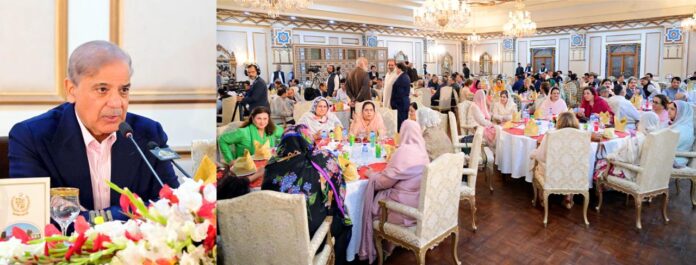
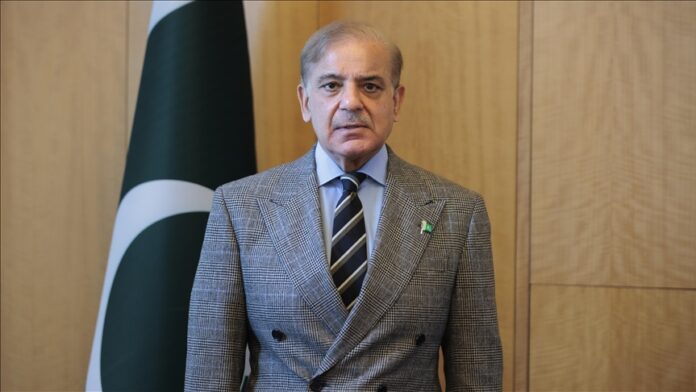
ISLAMABAD, Sep 14 (APP): Prime Minister Muhammad Shehbaz Sharif on Saturday highlighting the importance of legislative efforts in the national and public interest, said that Parliament was the supreme institution of the country.
He underscored that the sanctity of Parliament must always be upheld, adding that national issues should only be resolved through Parliament.
He was addressing a banquet, he hosted in honor of Parliamentarians here.
The prime minister said the incumbent government had steered the country away from the risk of default and towards stability.
“Political stability is crucial for ensuring economic stability and advancing the country on the path of development,” he added.
He pointed out that the anti-state elements made every effort for the country to default.
He said there were attempts to drag constitutional institutions and non-political figures into politics and make them a party.
“The Charter of Democracy was signed under the leadership of Mian Nawaz Sharif and the Shaheed Benazir Bhutto that permanently blocked the path for unconstitutional actions,” the prime minister said.
He added that politics will continue, but the continuity of policies was crucial to save the country.
He highlighted that the country was making significant progress before 2018 under the leadership of Mian Nawaz Sharif, however a well-planned conspiracy was executed to remove him from the political landscape.
“This conspiracy proved to be very expensive for Pakistan and its people as within the next three years, an incompetent government brought the country at the verge of default,” he added.
The prime minister said “when Allah Almighty entrusted us with the responsibility of pulling Pakistan out of economic quagmire, all political parties sacrificed their politics to save the country”.
He expressed his satisfaction that today the country’s economy was stabilizing again due to the prudent policies of the government. He said inflation was gradually decreasing and the policy rates cut will boost business activities in the country, create new employment opportunities, and increase exports.
He said the increase in remittances reflected the trust of overseas Pakistanis in the government. However he said much more remained to be done for the country’s development.
“Let us make a pledge today that we all will work tirelessly for the nation’s progress,” the prime minister said.
“I have complete faith that the sacrifices we all, including myself, are making for Pakistan’s economic security will not go in vain,” he added.
The dinner was attended by the federal ministers and members of parliament from Pakistan Muslim League (Nawaz), Muttahida Qaumi Movement (MQM), Balochistan Awami Party, National Party and Pakistan Muslim League Zia.
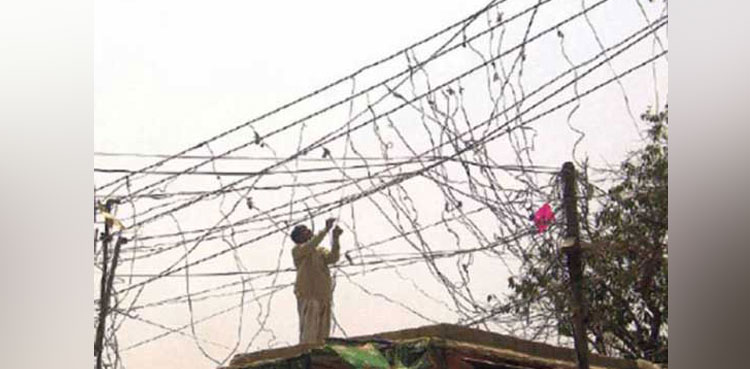
99,589 power theft arrested in province
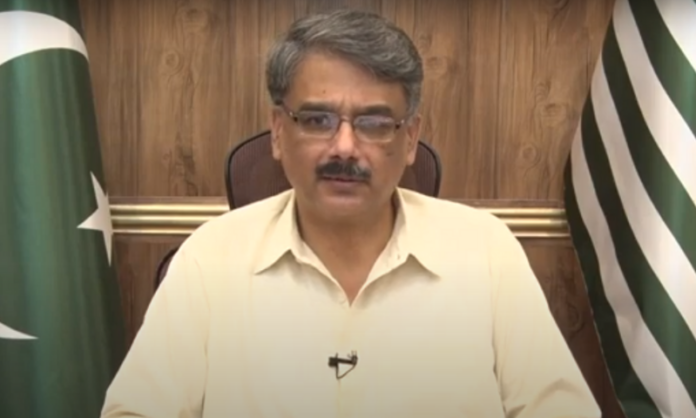
Ex-AJK PM calls on incumbent PM Anwar-ul-Haq
Punjab govt taking practical steps to increase production of onions, tomatoes
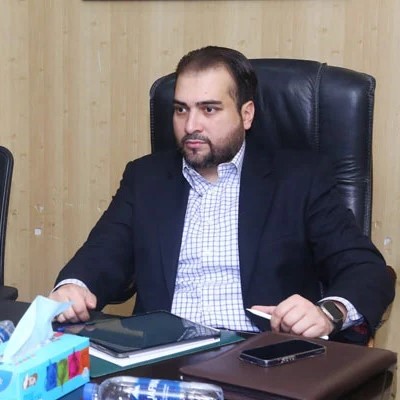
Government all set to roll judicial reforms with positive intent: Aqeel Malik