Home Blog Page 7681

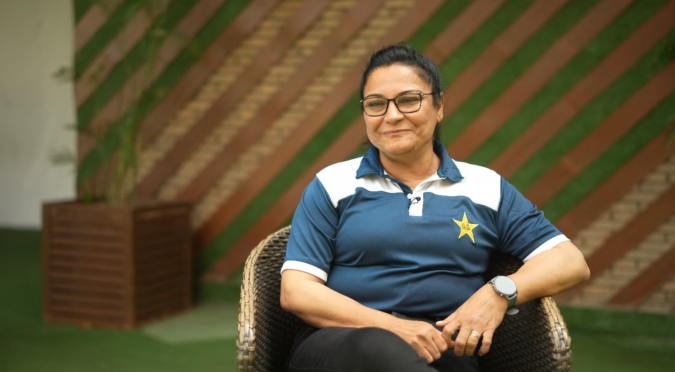
Saleema Imtiaz creates history to make into Int’l Panel of ICC Development Umpires

0
Naeem Niazi
LAHORE, Sep 15 (APP):Pakistan Cricket Board (PCB) on Sunday nominated Saleema Imtiaz to the International Panel of ICC Development Umpires which will enable her to officiate women’s bilateral international matches and the ICC women’s events.
Saleema Imtiaz’s nomination is historic as she became the first Pakistani woman official to rise to the ICC panel and the trailblazer in the sport.
The PCB, in its message, said ‘’With her nomination to the ICC International Panel, Saleema Imtiaz not only breaks barriers but also sets an inspiring precedent for the next generation of female cricket professionals.”
Saleema Imtiaz, 52, began her umpiring career with the PCB Women’s Umpires Panel in 2008.
Her extensive experience includes officiating at high-profile events under the Asian Cricket Council (ACC) such as the 2022 and 2024 ACC Women’s T20 Asia Cup and the 2023 ACC Emerging Women’s Cup in Hong Kong. Most recently, she was part of the umpiring panel for the ACC Women’s Premier Cup 2024 in Kuala Lumpur.
Acknowledging the honor, Saleem Imtiaz said, “I am thrilled to join the ICC International Panel of Development Umpires. I owe immense gratitude to the PCB for the invaluable opportunities that paved the way for this achievement.”
“The journey has been filled with hard work and personal sacrifices, but now, standing at the cusp of this new chapter, it all feels worth it,” she further said.
“This isn’t just a win for me – it’s a win for every aspiring female cricketer and umpire in Pakistan.
I hope my success motivates countless women who dream of making their mark in the sport. This moment reflects the growing influence of women in cricket and the PCB’s commitment to fostering that development. I sincerely hope to see more women follow in my footsteps and embrace this beautiful game,” Saleema added.
“Ever since my daughter Kainat Imtiaz made her debut for Pakistan in 2010, my own dream has been to represent my country at an international level. While I’ve had opportunities with the ACC, officiating at the highest level has always been the ultimate goal. I’m now focused on performing to the best of my abilities in both bilateral and ICC matches, and building my reputation as a reliable and respected match official.”
Her first on-field appointment in a bilateral series will see her officiate the Pakistan-South Africa women’s T20I series in Multan, which begins on Monday. She will be partnered by Nasir Hussain from the PCB Elite Panel of Umpires, while Humairah Farah will serve as the third umpire and Muhammad Javed Malik from the PCB International Panel of Match Referees will oversee the series as match referee.
Time to revitalize Quaid’s vision for a prosperous Pakistan

0

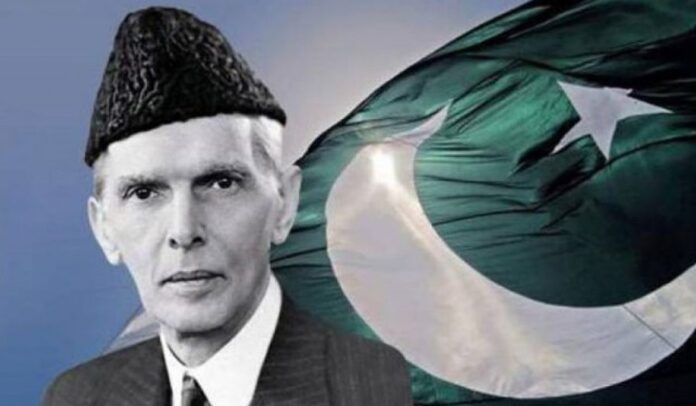
PESHAWAR, Sep 15 (APP): As 76th death anniversary of founder of Pakistan Quaid-e-Azam Muhammad Ali Jinnah passed a few days back, nation is still struggling to revitalize his vision for making the country a prosperous welfare state.
With more than 77 years down the road after Pakistan was came into being, the country passed through different phases on way to the destination envisioned by ‘Father of the Nation.’ But hurdles after hurdles hampered this journey and the country is still confronting gigantic issues like political harmony, speedy dispensation of justice, economic revival and internal and external security threats.
No doubt that Quaid’s personality, vision and struggle is recognized globally but materialization of his vision still seems like a dream as the nation is waiting miracles to happen for rectification of the time lost on way to progress and prosperity. So, the time is passing fast and limited clues are left.
Stanley Wolpert, a renowned academic, historian and writer had stated in his famous book ‘Jinnah of Pakistan’ that ‘few individuals significantly alter the course of history. Fewer still modify the map of the world. Hardly anyone can be credited with creating a nation-state. Muhammad Ali Jinnah did all three.’
No doubt it is a great acknowledgement for the leader and his unflinching struggle for a separate motherland for the Muslims of Sub-Continent. But seeing through the annals of history, we find that we remained lost somewhere in the dust oozing out from our own follies as well as conspiracies of our evil wishers, still looking for a way to rush out of this dust storm.
Lot of experiences made time and again by different regimes and rulers to hammer out our problems dashed down to ground due to one reason or the other and once again we are on crossroads of history seeking a clue to reach our destination. Can it be the noble principles of governance envisioned by our great Quaid?
“Wolper‘s remarks signified the political stature of Quaid e Azam who was a leader of par excellence and commitment. It was his undefeated courage that kneed down his treacherous opponents like Nehru and colonial rulers,” remarked Younas Khan, Chairman Pakistan Studies Department University of Peshawar.
“It was unfortunate that intrigues starting from the very beginning against a nascent state posed serious challenges to our rulers. Traps after traps kept us dragging away from our destination,” Younas Khan said.
But, still he was hopeful to find a way out for our success in Quaid’s vision as he stated, “if we still follow his vision diligently and in letter and spirit, we can emerge to highest pinnacle from bewilderment.”
As the desire for following Quaid’s vision is still alive at top level, we may have hope for a better future as stated by President Asif Ali Zardari and Prime Minister Shehbaz Sharif in their messages on Quaid’s anniversary.
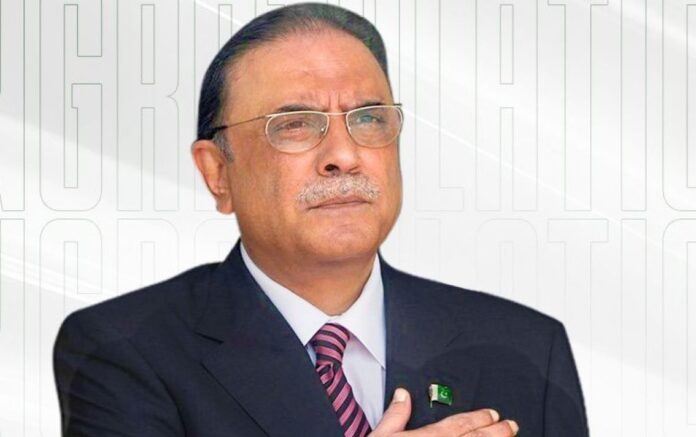
“I am sure that by acting upon his (Quaid-e-Azam) teachings and advice, we can make Pakistan strong and prosperous,” said President Zardari. “Quaid-e-Azam’s vision for Pakistan was fundamentally democratic as he firmly believed in a state where all citizens, irrespective of religion, would be equal before the law.”
“Muhammad Ali Jinnah’s struggle not only laid the foundation of Pakistan’s democratic system but continues to influence our aspirations for parliamentary democracy and communal harmony,” the President said. “Jinnah had envisioned a Pakistan based on Islamic principles of democracy and socio-economic justice.”
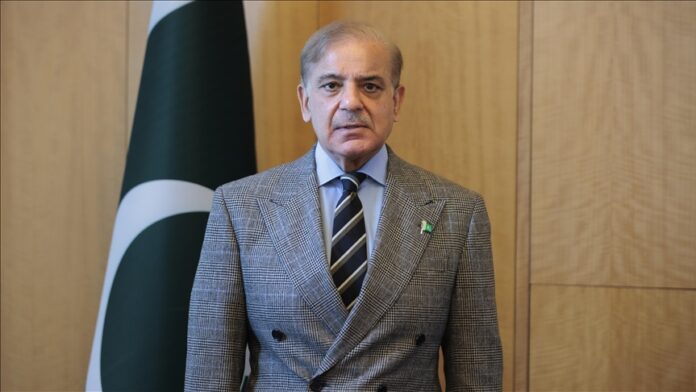
Prime Minister Shehbaz,Sharif also remarked that the Freedom Movement serves as a testament to Quaid’s political acumen and visionary leadership, reflecting his dedication to the principles of democracy and the rule of law.
“The Quaid’s unwavering commitment to principles of democracy, social justice and equality laid the foundation for a nation where every citizen could aspire to thrive despite diverse cultures,” the Premier said.
“In remembering the Quaid-e-Azam, we are also reminded of our duty to the future generations. It is our responsibility to instill in them the values of integrity, hard work and patriotism that Jinnah embodied,” he stated.
Since, we are well aware of Quaid’s vision and have a will to tread on his footsteps, we need national unity, justice and equality to create a nation where peace prevails and justice is served as stated by the Prime Minister.
“We can achieve every goal in life by strictly adhering to Quaid’s principles of unity, faith and discipline,” remarked Professor Dr AZ Hilali, former chairman, political science department, university of Peshawar.
“By revisiting symbols of the Quaid’s legacy, every strata of life must be encouraged, properly guided and taught the noble principles of Quaid’s philosophy in syllabi to evolve a nation that earns respect among comity of nations,” he said.
As Pakistan continues to navigate its path forward, the memories and ideals of its founder remain a guiding light. What we need is to decide, once and for all that each state organ strictly adheres to Quaid’s teachings and his vision for galloping off on road to national harmony and coherence, strong economy and defence, speedy justice and above all welfare of its people.

Structural Reforms – A way forward to macroeconomic stability

0

By: Muhammad Ashraf Wani

ISLAMABAD, Sep 15 (APP): As Pakistan struggles to achieve sustainable growth, the federal government is firmly resolute in its commitment to tax reforms and rightsizing to achieve macroeconomic stability and secure a prosperous and progressive future for the country.

For ordinary citizens, the impact of tax reforms and rightsizing may seem distant, but government is clear in its thinking that everyone must contribute to country’s economy and play their respective role in economic uplift.

Federal Minister for Finance and Revenue, Senator Muhammad Aurangzeb in a message termed the structural reforms as crucial for achieving macroeconomic stability, which he called is a “basic hygiene” for sustainable growth.

“Structural reforms are pivotal for ensuring sustainable economic growth and stability, forming a cornerstone of the government’s policy agenda,” the finance minister said while reacting on the issue.

Since respective governments have been endeavoring to broaden tax base by bringing more eligible into tax net, the efforts could not generate desired results. Therefore, the present government has once again embarked on an agenda to improve tax collection and bring the most needed reforms in this regime.

As per the official data, country’s 43% of sectors in the economy pay less than 1% tax, resulting in a tax-to-GDP ratio of just 8.8% which is unsustainable and no country in the world could be run with these meager resources. The consequence is very much evident that Pakistan had to depend on external financing to bridge the fiscal gaps.

In order to reduce dependence of external financing and improve revenue collections, the government eyes on lifting the tax-to-GDP ratio up to 13% as envisaged in the budget document for current fiscal year (2024-25).

The way forward is clear and needs to broaden tax base and bring potential taxpayers into tax net to boost income of the national exchequer and help reduce dependence on external financing besides encouraging investment and economic growth.

In addition to tax generation, the government has been seriously taking measures to reduce its expenditures and slash fiscal deficit. The federal budget 2024-25 predicted a headline deficit of 5.9% of GDP and a 2.0% primary surplus against 7.4% and 0.4 percent respectively during 2023-24.

Currently Federal Minister Senator Muhammad Aurangzeb is heading the High-Powered Committee on Rightsizing of the Federal Government to reduce size of different ministries and autonomous bodies.

Six ministries were asked to prepare an implementation plan for rightsizing, considering their employees, resources, properties and litigation matters. Once this process is complete, further ministries would be considered for reforms and rightsizing. However, the government would need to bring legislative changes in Civil Servant Act 1973 to carry forward the rightsizing process smoothly.

Experts believe that rightsizing would help reduce expenditures and slashing fiscal deficits; improve efficiency and productivity in the government ministries and autonomous bodies; reducing size of the federal government and improving governance besides encouraging private sector growth and investment.

Although the ride is bumpy, yet the efforts look sincere as ever since the incumbent government had assumed power, the economy is gradually coming on the right track as demonstrated by various economic indicators.

According to Economic Update and Outlook the country’s economy started Fiscal Year 2025 with positive developments, setting an optimistic tone for the months ahead.
”Both the fiscal and external sectors have shown resilience, attributed to improved management,” revealed Economic Update and Outlook and noting that the current account has improved and FBR tax collection exceeded the target.

Meanwhile, a drop in Consumer Price Index based inflation to single digit (6.9), as per the data of Pakistan Bureau of Statistics (PBS) suggested that the economy is on track. The drop in inflation would help bring the policy rate by State Bank of Pakistan (SBP) down accordingly, hence helping businesses to flourish.

The prudent policies introduced by the government brought about various positive developments on economic front. Currently, foreign exchange reserves exceed $9 billion, covering over two months of imports while the country has a stable currency.

Twin deficits, particularly the Current Account Deficit is under control whereas remittances have increased. Based on the rich performance of economy, international recognition from rating agencies Fitch and Moody’s have increased Pakistan’s rating by one notch.

President Federation of Pakistan Chamber of Commerce and Industry (FPCCI), Atif Ikram Sheikh has also expressed satisfaction over declining inflation and up-gradation in credit rates by rating agencies. “These were the clear indication of correct policies adopted by the government.”

He said, as the government vows to continue with tax reforms and rightsizing, Pakistan’s journey towards macroeconomic stability seems promising. “With the government’s commitment to simplifying the tax system and reducing size of the federal government, the country may finally be on the path to sustainable growth.”

As the government is toiling hard to steer country out of economic turmoil, there is dire need for all stakeholders especially the political parties and business community to cooperate with it for fulfillment of much-needed reforms agenda to pave way towards economic stability and welfare of people.

Call for sustainable policies to resolve water contamination issues

0

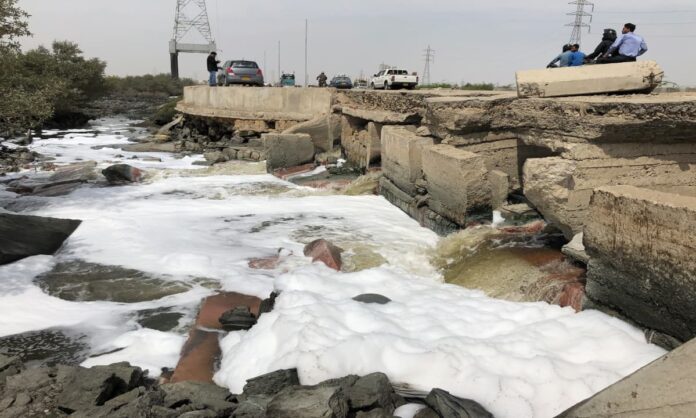
MULTAN, Sep 15 (APP): Untreated industrial effluent and solid waste, use of pesticides and chemicals and absence of water reservoirs have been continuously contamination groundwater over decades making it harmful for human health and exerting an extra burden on our health budget.
Although different governments executed projects for clean drinking water by installing water filtration plants in different cities and towns yet their proper functioning, cleanliness and hygiene had been a burning question.
South Punjab, often characterized by its underdevelopment and socio-economic challenges, also faces this critical issue as majority of people in the region not having access to portable water. Housing 34.7 million people as per South Punjab secretariat record, its 23 percent population live in urban areas and out of a total population around 10 percent have access to clean drinking water.
Then there is an issue of maintaining and ensuring proper functioning of filtration plants, meant to be the primary source of clean water for local population as it helps prevent diseases like hepatitis, cholera, dysentery, typhoid and other diseases.
As safe drinking water supports community development by reducing burden of medical bills and is essential for hygiene and sanitation, the role of filtration plants in provision of safe water is of utmost importance.
According to concerned officials, there are over 150 filtration plants in Multan city as the government alongside various philanthropists has installed these filtration plants to meet clean water needs of residents and keeps vigil on their maintenance and proper functioning.
But many of citizens are seen often complaining about their efficient functioning, on time filters replacement, cleanliness and hygiene issues and in some cases their going out of order for months.
“There are issues like improper maintenance, insufficient funding and lack of accountability and clear enforceable maintenance protocol,” said Salman Amjid, a resident of Shujabad Chowk. “Then there is also an issue that communities do not fully benefit from these plants. In many areas, these plants exist but people are not effectively utilizing them.”
It is commonly seen in our society that people often shy away from taking responsibility of community welfare projects. They can vocally criticize the governments and authorities for not providing basic amenities but once any welfare project is executed they take it as granted usually failing to dispense their duties.
“This lack of ownership is a barrier to proper functioning of these facilities. Without community engagement and a sense of responsibility, such facilities fall in despair,” remarked Muhammad Ramzan, a resident of Vehari. “Filtration plant installed at Pipli village of tehsil Vehari could not be activated due to lack of local community’s participation. People in the village are poor and could not afford electricity bill for functioning of the plant.”
Contrary, at some places the same plants are properly functioning where people share financial burden for their better health. As electricity bill for running these plants and their maintenance are the major issues, the community members have appealed not to charge taxes in bills of filtration plants.
In many cases the communities cannot afford these bills except that some philanthropist or affluent of the area take this responsibility. But, this may not happen everywhere and the burden of costs often falls on local residents. Consequently, many plants are either shut down or operate sporadically, failing to provide continuous supply of clean water to people.
Meanwhile, Chairperson Chief Minister’s Directorate for Evaluation, Feedback, Inspection and Monitoring (DEFIM) Brig Retd Babar Ala Uddin claimed that Water and Sanitation Authority was properly maintaining plants.
“We regularly monitor their functioning, ensure timely replacement of filters and cleanliness at this plants sites,” Ala Uddin said. “We also take measures to improve plants working where and when needed across our jurisdiction of action.”
However, he said making any project successful and efficiently working is a shared responsibility of the authorities and the communities. “Obviously the governments or authorities execute such projects for communities’ welfare. As we do our bit therefore, the communities must also play their role in making these projects sustainable.”
In this situation some citizens have demanded a structured maintenance program, funded and overseen by the government to ensure that all filtration plants are regularly serviced. The program should include timely replacement of filters, routine checks on water quality and immediate repairs of any damaged components. Regular monitoring and reporting should also be made mandatory, with a clear accountability mechanism to ensure that maintenance is not neglected.
As contaminated water whether it is ground or surface water, results in common and chronic diseases, the installation of new filtration plants and proper maintenance of already installed facilities, need an urgent intervention of the government departments, philanthropists and the local communities.
Since, it is a shared responsibility there is also need for raising awareness among masses and educate them about their responsibilities they owe for sustenance of such projects. Installation of these plants is a positive step but a comprehensive policy was required for plants sustenance, proper and on-time maintenance, community ownership and affordability to ensure provision of clean drinking water to citizens across the board.

US officials skip funeral in Turkiye of Aysenur Eygi, an American citizen of Turkish origin

0

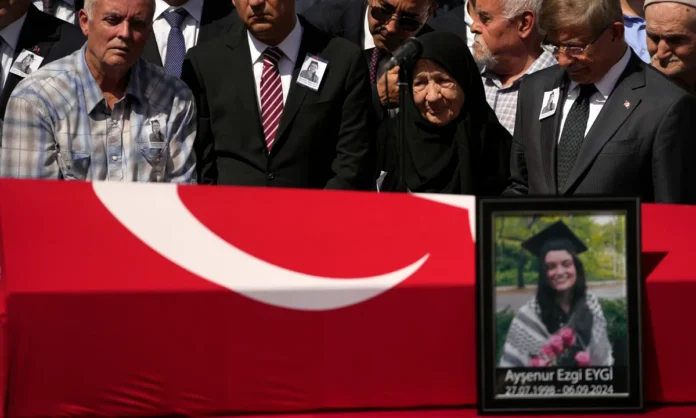
NEW YORK, Sep 15 (APP): United States officials stayed away from the heroes funeral given to Aysenur Ezgi Eygi, the Turkish-American pro-Palestinian activist, killed by Israeli forces in the occupied West Bank, as she was laid to rest Saturday in the town of Didim on Turkiye’s Aegean coast, according to a leading American newspaper.

“With Turkish flags flying and chants of ‘God is great’ resounding through the cemetery,” The New York Times reported that the funeral for Ms. Eygi, 26, was “deeply Turkish, and profoundly pro-Palestinian.

Turkish security forces, dressed in black uniforms, carried her flag-draped coffin.

“Hundreds of people, many carrying Palestinian flags and wearing Palestinian scarves, gathered at the central mosque in the town of Didim to say prayers for her, including senior Turkish officials,” NYT correspondent Ben Hubbard wrote.

“No American officials attended, and there was not an American flag in sight,” the correspondent noted, pointing out that Ms. Eygi had moved to the United States as a toddler, acquired citizenship and spent most of her life there.

The report highlighted the starkly different stances toward the conflict her two countries had taken since the Oct 7 Israeli war on Gaza: The United States has stood by Israel, continuing to supply its military with bombs even as concerns about Palestinians civilian deaths have mounted, it was pointed out.

Turkey, on the other hand, has embraced the Palestinians, with President Recep Tayyip Erdogan decrying Israel’s conduct and defending Hamas, the dispatch said.

Two relatives of Ms. Eygi decried American response to Ms.Eygi’s killing.

In an interview with the Times before her funeral, her father, also a U.S. citizen, said the United States had not stood up for her.

“I have been living in the U.S. for 25 years, and I know how seriously the U.S. looks out for the safety of its citizens abroad,” said her father, Mehmet Suat Eygi. “I know that when something happens, the U.S. will attack like the eagle on its seal. But when Israel is in question, it transforms into a dove.”

Ms. Eygi was shot in the head and died on Sept. 6 during a protest by Palestinian and international activists against an Israeli settler outpost near the village of Beita in the occupied West Bank.

Activists who were with her at the time said that she had been standing more than 200 yards away and downhill from the Israeli soldiers. They added that the protest, during which some demonstrators had thrown stones, had calmed down by the time she was shot.

Senior officials from both of Ms. Eygi’s countries — she was born in Turkey but obtained U.S. citizenship in 2005, her father said, and had lived in the Seattle area — have condemned her killing.

Underlining the extent to which Turkey has adopted her killing as a national cause, other officials who attended the funeral included the vice president; the justice, interior and foreign ministers; the head of the largest opposition party; and a former prime minister.

Turkey’s president, Erdogan, said on Monday that his country would seek to add her killing to a genocide case against Israel at the International Court of Justice in The Hague. After Ms. Eygi’s body arrived in Turkey on Friday, Turkey performed an autopsy before transporting it to Didim.

On its part, Israel has rejected accusations of genocide, saying it is defending itself after the Hamas-led attack on Oct. 7.

Ms. Eygi’s death came as international criticism of Israel’s handling of the war in Gaza has been rising. More than 41,000 people, mostly women and children, have been killed, according to the Gazan health ministry.

Airstrikes continued into Saturday, with WAFA, the Palestinian Authority’s news agency, reporting that 10 people, including women and children, had been killed in a strike that hit a home in Gaza City, among other deaths in the enclave. The Israeli military did not immediately comment.

Friends and relatives of Ms. Egyi recalled her as passionate about standing up for people she considered to be victims of injustice, the dispatch said.

Ms. Eygi had been in Turkiye before traveling to the West Bank and had told her relatives that she was going to Jordan, which is much safer, Mr. Eygi said. When they discovered through social media where she actually was, Mr. Eygi called her.

“I asked her not to die,” he recalled telling her. “She said, I’ll try my best.”

She was shot the next day.

Ms. Egyi’s father said that he had not received even a condolence call from an American official.

“The Turkish government is following the case,” he said, adding, “I hope the U.S. government will do the same.”

Vibrant, inclusive democratic process vital for resolution of nation’s issues: President

0
ISLAMABAD, Sep 14 (APP): As the international community observes the World Democracy Day on Sunday, President Asif Ali Zardari emphasised that the resolution of the issues confronting the nation lied in a vibrant and inclusive democratic process.
“We commemorate World Democracy Day to highlight the importance of democracy in empowering citizens and promoting their active participation in the political process,” he said in a message to the nation issued by the President House.
He said democracy stood as the cornerstone of a just society, advocating for the protection of fundamental rights and enabling political, economic, and social inclusion.
This year, he said, the global theme highlighted the potential of Artificial Intelligence (AI) in advancing good governance.
“AI has the potential to enhance transparency, accountability, and efficiency in public administration, making it a key tool in modern governance. AI can provide data-driven insights and thus make the democratic process more transparent and accessible for voters by sharing important information about the candidates and their policies,” he added.
President Zardari emphasized that democracy stood for people’s participation in the political process, political pluralism, and people’s rights. Its advocacy for the political, economic and social rights of citizens distinguishes it from other forms of government.
He said the political landscape of the country had witnessed many challenges. Leaders like Shaheed Zulfikar Ali Bhutto and Shaheed Mohtarma Benazir Bhutto made immense contributions to the restoration and strengthening of democratic processes in the country. Their unwavering commitment and sacrifice serve as a reminder of the continuous struggle to uphold democratic values, he added.
“As we observe this day, we also recognize the role that our Parliament plays in safeguarding democracy by representing the will of the people, formulating public policy, and addressing the nation’s most pressing challenges. It is the primary forum for addressing grievances, ensuring inclusivity, and fostering a resilient future for Pakistan, the president said.
He said “it is through democratic principles that we can achieve equality, socio-economic justice, the rule of law, and freedom of expression”.
President Zardari stressed that as Pakistan faced contemporary challenges, it was highly essential to strengthen democratic institutions, undertake reforms, and work collectively to consolidate democracy.
“Let us recommit ourselves to upholding democratic values and ensuring that democracy continues to flourish in Pakistan,” he added.

PM reaffirms commitment to democracy on International Day

0
ISLAMABAD, Sep 14 (APP):Prime Minister Muhammad Shehbaz Sharif has reaffirmed the country’s unwavering commitment to democracy, constitutionalism, rule of law, and human rights on the occasion of International Day of Democracy.
In a message, the prime minister emphasized that democracy was a fundamental value of human society.
“Our government’s commitment to constitutionalism, democracy, rule of law and human rights is firm and unwavering. Adherence to these democratic values is our calling as a nation,” he added.
The prime minister called for continuing the efforts to build a more inclusive, just, and equal world for all.
“Together, we can strengthen the foundations of democracy and ensure that it serves as a beacon of hope and progress for future generations,” he added.

BISE announces results of Uloom-e-Sharqia exams

0
FAISALABAD, Sep 14 (APP):The Board of Intermediate & Secondary Education (BISE) Faisalabad has announced results of Oriental Sciences (Uloom-e-Sharqiyya) first annual examinations 2024 here on Saturday.
According to Controller Examinations Dr Muhammad Jaffar Ali, a total 43 students participated in Uloom-e-Sharqiyya exams and out of them 33 candidates were declared successful with pass percentage 76.74.

PM emphasizes Parliament’s supremacy, calls for legislation in national interest

0

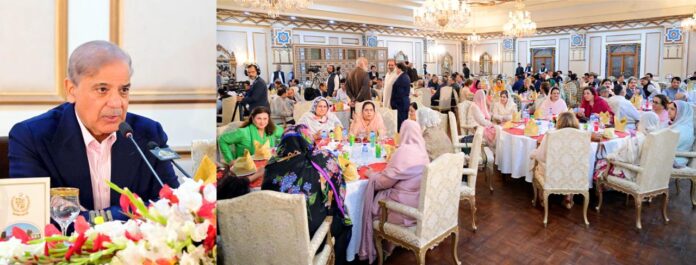
ISLAMABAD, Sep 14 (APP): Prime Minister Muhammad Shehbaz Sharif on Saturday highlighting the importance of legislative efforts in the national and public interest, said that Parliament was the supreme institution of the country.

He underscored that the sanctity of Parliament must always be upheld, adding that national issues should only be resolved through Parliament.

He was addressing a banquet, he hosted in honor of Parliamentarians here.

The prime minister said the incumbent government had steered the country away from the risk of default and towards stability.

“Political stability is crucial for ensuring economic stability and advancing the country on the path of development,” he added.

He pointed out that the anti-state elements made every effort for the country to default.

He said there were attempts to drag constitutional institutions and non-political figures into politics and make them a party.

“The Charter of Democracy was signed under the leadership of Mian Nawaz Sharif and the Shaheed Benazir Bhutto that permanently blocked the path for unconstitutional actions,” the prime minister said.

He added that politics will continue, but the continuity of policies was crucial to save the country.

He highlighted that the country was making significant progress before 2018 under the leadership of Mian Nawaz Sharif, however a well-planned conspiracy was executed to remove him from the political landscape.

“This conspiracy proved to be very expensive for Pakistan and its people as within the next three years, an incompetent government brought the country at the verge of default,” he added.

The prime minister said “when Allah Almighty entrusted us with the responsibility of pulling Pakistan out of economic quagmire, all political parties sacrificed their politics to save the country”.

He expressed his satisfaction that today the country’s economy was stabilizing again due to the prudent policies of the government. He said inflation was gradually decreasing and the policy rates cut will boost business activities in the country, create new employment opportunities, and increase exports.

He said the increase in remittances reflected the trust of overseas Pakistanis in the government. However he said much more remained to be done for the country’s development.

“Let us make a pledge today that we all will work tirelessly for the nation’s progress,” the prime minister said.

“I have complete faith that the sacrifices we all, including myself, are making for Pakistan’s economic security will not go in vain,” he added.

The dinner was attended by the federal ministers and members of parliament from Pakistan Muslim League (Nawaz), Muttahida Qaumi Movement (MQM), Balochistan Awami Party, National Party and Pakistan Muslim League Zia.

99,589 power theft arrested in province

0
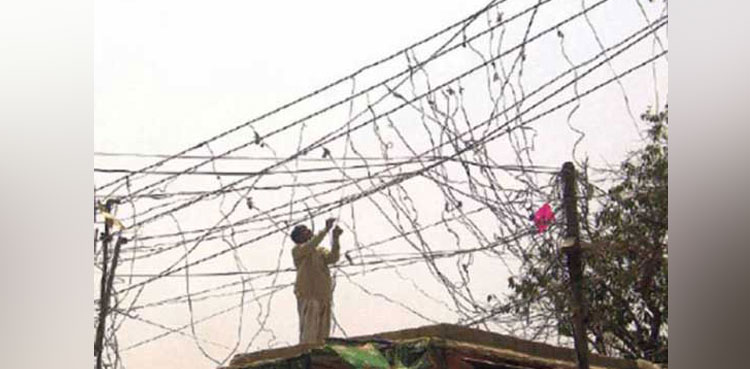
LAHORE, Sep 14 (APP):The Punjab police took action against electricity thieves and arrested 99,589 accused across the province, including Lahore, in the past year.
According to a police spokesperson,  a total of 132,745 cases were registered against the culprits besides submitting challans of 91,880 cases. Additionally, 19,764 accused were sent to jail.
Regarding operations in the provincial capital, the spokesperson said that, during this period, 42,223 power thieves were arrested in Lahore and 42,951 cases were registered.
Challans were submitted of 21,266 cases and 12,108 accused were sent to jail.
IG Punjab Dr Usman Anwar directed that actions in electricity theft cases and rate of submitting challans be further improved.
He said that police teams were providing full support to electricity companies in the crackdown against power theft.