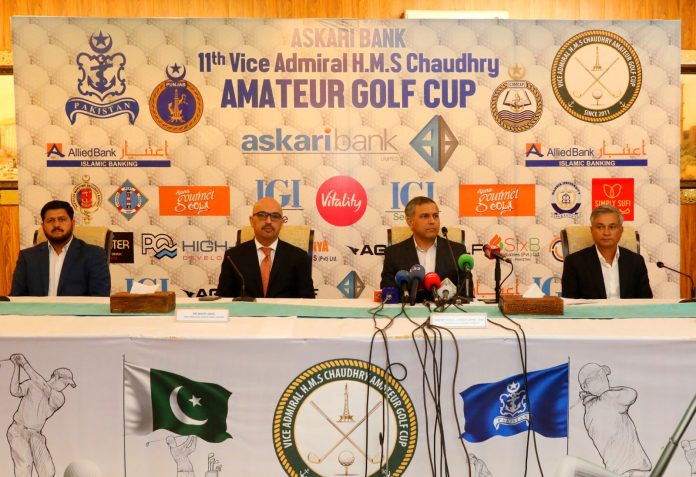
Pakistan Navy playing vital role in promoting sports
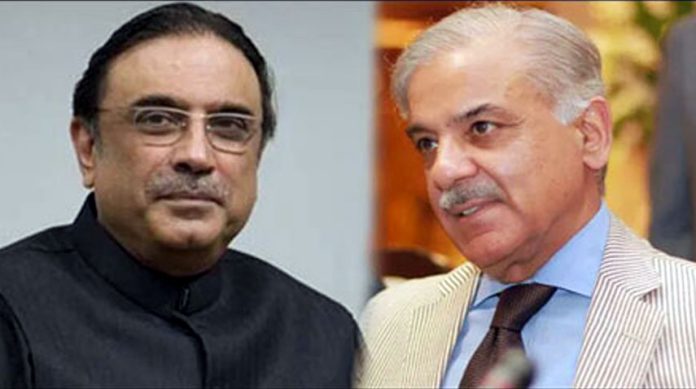
President, PM hail Security Forces for major counter-terrorism successes in Bajaur, Bannu
Planning Minister calls for proactive planning ahead of Ramazan

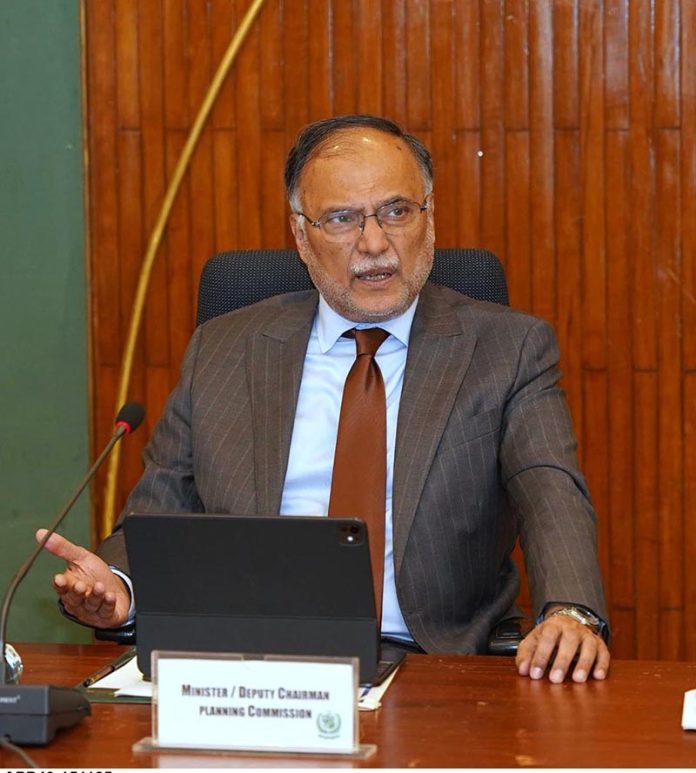
ISLAMABAD, Nov 18 (APP): Minister for Planning, Development and Special Initiatives Professor Ahsan Iqbal on Tuesday chaired a meeting of the National Price Monitoring Committee (NPMC), noting that although general inflation has eased to 6.2 per cent from 7.2 per cent during the same period last year, recent upward pressures, largely driven by crop losses following the 2025 floods, require urgent, evidence-based intervention.
Reviewing current inflation dynamics with the Chief Economist, Chief Statistician, and representatives of the Pakistan Bureau of Statistics (PBS), the Minister directed all relevant departments to intensify measures for market stability, particularly by preparing advance supply plans for essential commodities required during Ramazan to prevent price volatility and ensure uninterrupted availability throughout the holy month.
According to the inflation briefing presented by PBS, the first two months of the fiscal year saw moderate inflation averaging around 3 per cent. However, a noticeable upward trend emerged in September and October as major crops sustained severe damage due to flooding, disrupting market supply chains and affecting wholesale and retail dynamics.
Food inflation, which had recorded negative growth by August, also rose in the subsequent months as supply constraints deepened. PBS officials further reported that key sectors—including services, transport, education,health, and food, continued to exert pressure on the overall price structure.
Despite these challenges, the committee was informed that certain essential commodities, such as onions, pulses, wheat, and sugar, were helping pull down the Sensitive Price Index (SPI), providing limited but important relief in some segments.
Speaking during the meeting, Planning Minister emphasized that long-term price stabilization is closely tied to strengthening the country’s cold chain infrastructure. “Every perishable item in our markets is a live commodity. Without proper cold chain systems, we cannot maintain stable supplies, especially for essential items such as poultry, tomatoes, and vegetables,” he stated.
The Minister noted that inadequate handling, storage, and transport systems contribute to substantial post-harvest losses, which ultimately exacerbate supply shortages and price fluctuations.
Ahsan Iqbal reiterated that ensuring price stability requires a shift from reactive governance to proactive management. He directed all departments to adopt a data-driven approach to understanding inflation and to furnish detailed analytical reports that clearly identify the key drivers behind recent price movements. “We must move away from reactive responses and transition to proactive management.
All decisions must be guided by robust analytics to ensure timely interventions,” he said, adding that timely data-based insights are vital for developing corrective measures and ensuring informed decision-making.
In reviewing the status of decisions taken in the previous meeting, the Minister expressed concern over the recurrence of preventable market disruptions during predictable high-demand periods. He underscored the need for meticulous preparation ahead of seasonal peaks, particularly Ramadan, when consumption patterns change significantly across the country.
“Market stability depends on timely preparation. Products that witness high demand during Ramazan must be identified well in advance, and their supply plans should be presented in the next meeting so that any potential gaps can be addressed,” he directed. He called for a structured, cross-departmental mechanism to ensure uninterrupted availability of essential items and prevent price spikes during the holy month.
The Minister also instructed provincial authorities and district administrations to enhance market monitoring, with a particular focus on narrowing the gap between wholesale and retail prices. He stressed that excessive profiteering must be curbed to provide maximum relief to citizens already facing cost-of-living pressures.
PBS officials were further asked to strengthen their price comparison systems and coordinate closely with provincial departments to ensure consistent reporting across all markets.
The Minister noted that improving price transparency would support more responsive policymaking and help identify distortions in a timely manner.
Ahsan Iqbal reiterated the government’s commitment to maintaining price stability through coordinated efforts, analytical rigor, and improved market management. He stated that while inflation remains lower than last year, sustained vigilance is essential to shield consumers from avoidable volatility.

Tribunal remands Al-Ghazi case to CCP for fresh proceedings
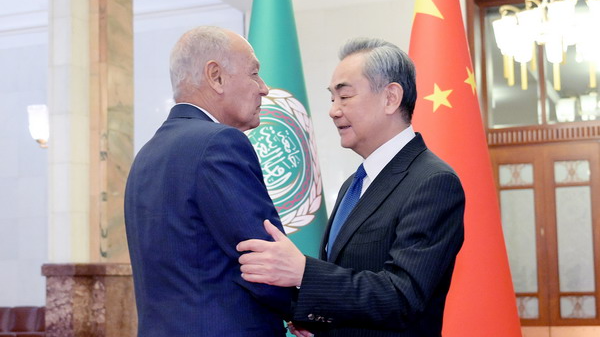
Chinese FM Wang Yi meets with Arab League chief Ahmed Aboul-Gheit
BEIJING, Nov 18 (APP): Chinese Foreign Minister Wang Yi on Tuesday met with Arab League Secretary-General Ahmed Aboul-Gheit in Beijing.
Wang said China firmly supports Arab countries in resisting external interference, pursuing development paths suited to their own national conditions, strengthening strategic autonomy, and taking their future and destiny into their own hands, adding that it also supports them in achieving unity and self-strengthening to jointly safeguard regional peace and stability.
He stressed that China never interferes in other countries’ internal affairs, nor does it engage in geopolitical rivalry, and the goal of China–Arab cooperation is shared development and shared prosperity, advancing modernization for all nations, CGTN reported.
Next year marks the 70th anniversary of the establishment of diplomatic relations between China and the Arab states, the foreign minister said, adding that the second China-Arab States Summit, scheduled to be held in China, is set to become another milestone event in the history of China–Arab relations.
Wang also said China appreciates the Arab League’s commitment to a just resolution of the Palestinian issue and its consistent support for Arab countries.
Any arrangements following the Gaza conflict should uphold the fundamental principle of “Palestinians governing Palestine” and must firmly adhere to the overarching framework of the two-state solution, he said.
China will continue to uphold fairness on the international stage, steadfastly support the restoration of the legitimate rights of the Palestinian people, and unwaveringly promote the restart and realization of the two-state solution, according to Wang.
Gheit said the Arab side is willing to work together with China to prepare for next year’s China-Arab States Summit and to open up broader prospects for China-Arab relations.
The Arab side appreciates China’s commitment to fairness and justice on the Palestinian issue and looks forward to China continuing to play a constructive role, Gheit said, adding that the Arab side also values China’s adherence to multilateralism and is willing to strengthen cooperation with China in multilateral arenas to jointly promote global peace and stability.
APP/asg
BISP distributes 5,747 free SIMs in 1st 24 hrs of Social Protection Wallet launch
Pakistan, Malaysia agree to deepen digital cooperation
ISLAMABAD, Nov 18 (APP): Federal Minister for Information Technology and Telecommunications Shaza Fatima Khawaja met Malaysia’s Minister of Communications, Ahmad Fahmi bin Mohamed Fadzil, on the sidelines of the World Telecommunication Development Conference (WTDC).
She reaffirmed Pakistan’s commitment to expanding digital cooperation with partner countries.
Both sides appreciated the strong bilateral ties and the longstanding strategic partnership between Pakistan and Malaysia.
Shaza Fatima said Pakistan’s digital vision aligns closely with Malaysia’s MyDigital Blueprint, noting that both countries share goals for building a modern, technology-driven economy.
She highlighted Pakistan’s rapidly growing IT industry and its pool of more than 600,000 tech professionals, calling it a major national asset.
The two ministers also reaffirmed their commitment to strengthening collaboration in ICT exports.
She proposed launching a Pakistan–Malaysia Digital Policy Dialogue and emphasised cooperation in talent mobility and skills development in fields such as artificial intelligence, data science and the Internet of Things.
She also discussed joint initiatives in cybersecurity and digital content development.
Separately, Shaza Fatima visited Azerbaijan’s Asan Xidmet Centre, praising its citizen service model as an excellent example of digital governance.
The Pakistani delegation received a detailed briefing on e-governance frameworks, citizen service delivery and digital integration systems. Shaza Fatima also gave an interview to Asan Xidmet Media, noting that Pakistan–Azerbaijan relations have grown stronger following Prime Minister Shehbaz Sharif’s recent visit to Baku.
She said both countries are entering a new phase of digital cooperation, technological partnership and exchange of public-service expertise.
The minister stressed that citizen-focused digital services remain central to Pakistan’s digital reform agenda.
She added that Pakistan plans to establish Asan Xidmet-style citizen service centres nationwide following the successful launch of the pilot project in Islamabad.
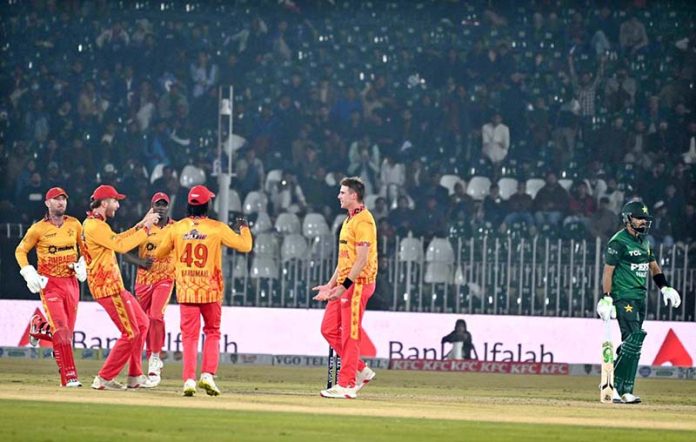
Zimbabwe batsman Tadiwanashe Marumani plays a shot during the Pakistan T20I Tri-Nation Series cricket match against Pakistan in Rawalpindi stadium


RAWALPINDI

RAWALPINDI

RAWALPINDI
Zimbabwe batsman Tadiwanashe Marumani plays a shot during the Pakistan T20I Tri-Nation Series cricket match against Pakistan in Rawalpindi stadium


RAWALPINDI

RAWALPINDI

RAWALPINDI