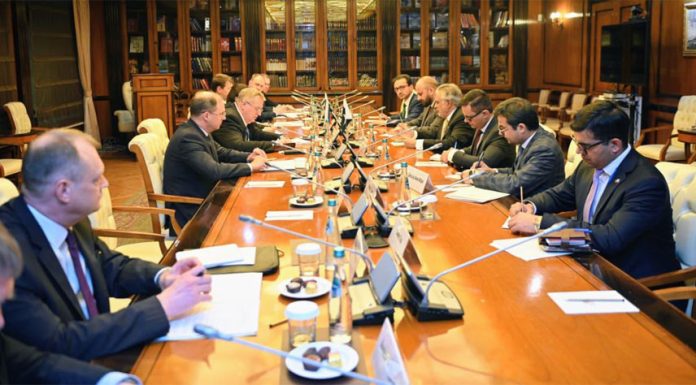
Dar, Overchuk hold wide-ranging talks in Moscow to deepen Pakistan–Russia partnership
After UN Security Council’s Gaza breakthrough, agencies highlight youngsters’ plight
UNITED NATIONS, Nov 18 (APP): As UN Secretary-General Antonio Guterres hailed Monday’s Security Council resolution paving the way for a consolidated ceasefire via a temporary International Stabilization Force in Gaza, UN aid teams warned that many Palestinian children in the enclave are in no shape to endure another harsh winter.
“We’re very optimistic that the peace plans will improve the situation,” UN Children’s Fund (UNICEF) spokesperson Ricardo Pires said, briefing reporters in Geneva on Tuesday. “But again, the reality for children on the ground continues to be very tragic.”
“We’re still in the hypotheticals,” UN aid coordination office (OCHA) spokesperson Jens Laerke said, regarding the Security Council resolution on the US peace plan, stressing that it “needs some meat on the bones”, but recalling the UN chief’s backing for the development.
The resolution endorsing the “Comprehensive Plan to End the Gaza Conflict” announced by US President Trump on 29 September received backing from 13 countries on the Security Council. China and Russia abstained from the vote.
The resolution welcomes the transitional administration known as the “Board of Peace” – which President Donald Trump will reportedly chair – to establish a temporary international force in Gaza and coordinate reconstruction efforts including the delivery of humanitarian assistance.
In a statement issued by his Spokesperson overnight, the UN Secretary-General encouraged respect for the fragile ceasefire by all parties to the conflict, which was sparked by Hamas-led attacks in Israel on 7 October 2023.
Guterres acknowledged the “continued diplomatic efforts” of Egypt, Qatar, Türkiye, the United States and regional neighbours regarding the Gaza crisis, before stressing the importance of “moving towards” the second phase of the U.S. Plan, “leading to a political process for the achievement of the two-State solution, in line with previous United Nations resolutions”.
Meanwhile in Gaza, aid agencies stressed on Tuesday that more than two years of destructive war between Hamas fighters and Israel and a chronic lack of all forms of assistance have left the enclave’s people exhausted.
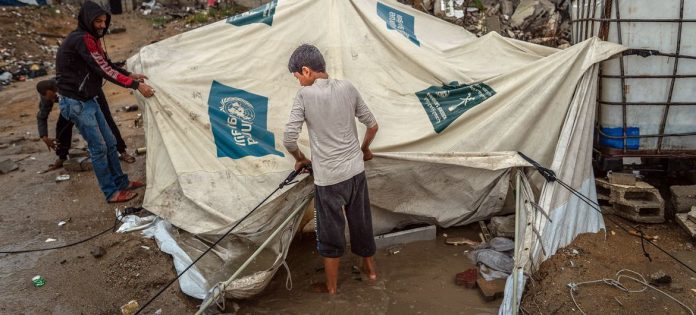
In recent days, heavy rains have inundated worn-out tents that are sheltering people displaced multiple times because of the war, said Ricardo Pires, from the UN Children’s Fund, UNICEF.
“We are seeing heartbreaking stories of desperate families feeling completely lost and exhausted after their tents got flooded,” he told journalists in Geneva. “When children are sleeping in flooded tents without warm clothing or dry bedding, many lacking the required nutrition, with very low immunity and already traumatized by conflict, winter becomes extremely dangerous.”
Pires noted that the recent bad weather in Gaza has sparked an increase in people seeking medical help – particularly among children weakened by “years of malnutrition, starvation, trauma (and) multiple displacements”.
The UNICEF officer also explained that because Israeli forces occupy more than 50 per cent of the enclave, many of the areas where Palestinians have been forced to seek shelter are coastal and the most prone to flooding.
In a call for greater aid access, he stressed this was “part of the [peace] deal and we need to see more humanitarian corridors open”.
According to OCHA, more than 5,400 metric tonnes of aid were collected between Thursday and Sunday, including shelter, medical and food items. The Zikim border crossing has reopened after staying shut for two months, bringing the number of available crossings to three.
Pires highlighted the importance of Zikim opening and said that recently UNICEF managed to bring in 96 pallets of high energy biscuits destined for the famine-stricken north of Gaza.
“We need more, a lot more,” he said. “Hopefully with the new plan, that will become a reality for children and families.”
APP/ift

Fakhar’s innings made the difference in Zimbabwe’s loss: Brad Evans
ISLAMABAD, Nov 18 (APP): Zimbabwe pacer Brad Evans believes Fakhar Zaman’s innings made the difference in Zimbabwe’s close loss to Pakistan in the Tri-Nation Series opener.
Reflecting on Zimbabwe’s batting performance after the end of the game, at Rawalpindi Cricket Stadium, Evans said the team initially assessed 175 as a par score on the surface.
“If we had managed to get to 160 or 165, I think that could have been enough tonight because I thought we bowled well,” he said. “That being said, we were close. We took it to the last over. That often seems to be the case when Pakistan and Zimbabwe play.”
Evans praised Pakistan’s Fakhar Zaman for his match-defining contribution. “I think Fakhar batted really well and became the backbone of their innings. Once he got out, the game opened up again for us,” he said.
“Zaman rotated the strike, ran hard, and punished the bad balls for fours and sixes. He kept their chase alive by maintaining the run rate, and the players around him chipped in with important cameos. Credit goes to Fakhar for the innings he played in the middle.”
Speaking about conditions, Evans said the team had prepared for significant dew but were surprised to find it manageable. “At the ground we trained at, Islamabad Cricket Club, there was a lot of dew, and we were shocked. But when we trained here last night, we were pleasantly surprised that there wasn’t as much. There was some dew during the match, but it didn’t have a major impact.”
Evans added that Zimbabwe’s young squad is steadily growing in confidence. “Taking big teams to the end of games is an achievement. Many of our players are young or haven’t played international cricket consistently. I think once we win a couple of matches and get a taste of victory, things will change. Winning is a habit, and once we get a few big wins, it will ease the pressure and help us finish games.”
Meanwhile, Pakistan wicketkeeper-batter Usman Khan said following the coaches’ instructions to spend time at the crease helped him finish the match successfully, adding that he is determined to deliver consistent performances and play a key role in the team’s victories.
He said he has been placing special emphasis on his fitness. As part of this focus, he also participated in domestic cricket.
Usman said that alongside batting, he is rigorously working on his wicketkeeping to further improve his overall game. Usman said his experience of playing several Pakistan Super League matches in Rawalpindi proved valuable and helped refine his performance.
Reflecting on his evolving batting approach, he admitted that in the past he often got out early while trying to score too quickly. “Now I have changed my strategy and prefer spending more time at the crease, and the results have been positive,” he said.
He said representing Pakistan is every cricketer’s dream and he has no regrets about giving up cricket in the UAE. “Playing for Pakistan is an honour for me. If I get the opportunity in the World Cup, I will try my best to contribute to the team’s success by playing my natural game,” he said.
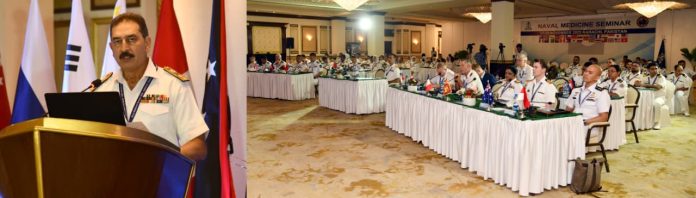
Inaugural session of Naval Medicine Seminar 2025 held in Karachi
Pakistan outplay Zimbabwe by five wickets
Hearing on cases of Nov 26, protest adjourned
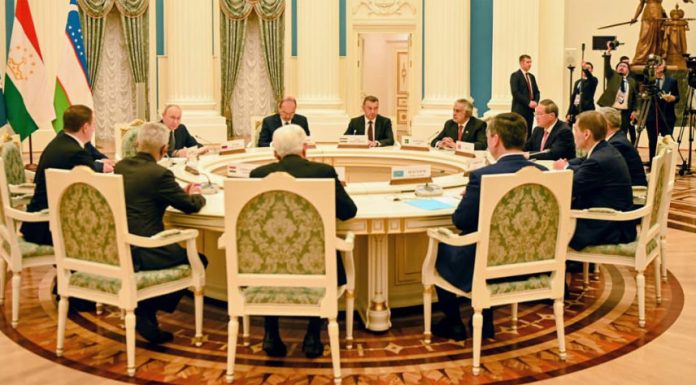
DPM Dar calls on President Putin among other heads of govt delegations at SCO moot
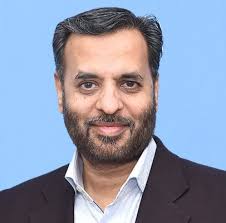
Govt aims to promote eastern medicines alongside allopathic treatment: Mustafa Kamal
KARACHI, Nov 18 (APP): Federal Minister for Health Services, Syed Mustafa Kamal, stated on Tuesday that the government aims to promote eastern medicine alongside allopathic treatment. He announced that a separate secretariat would be established in Islamabad for this purpose. The minister made these remarks during a visit to Hamdard University.
Mustafa Kamal held a meeting with Hamdard University’s Chancellor Sadia Rashid (Hilal-e-Imtiaz).
He said that importance of eastern medicine should not be denied; therefore, the discipline should no longer be ignored. Awareness should be raised among common people about the modern research taking place in the field.
The meeting was also attended by Hamdard University’s Vice Chancellor Prof Dr Imran Amin, Registrar Kaleem Ahmed Ghias, former vice chancellor and PAEM president Hakim Abdul Hanan, Dean Faculty of Eastern Medicine Prof Dr Arshad Mahmood, President of the National Council of Medicine under the Ministry of Health Hakim Muhammad Ahmed Salimi, Ministry of Health official Saleem Cheema, members of the National Council for Medicine Hakim Naseem Qasmi and Hakim Mukhtar Barkati and senior officials of the Hamdard Group.
Sadia Rashid drew the federal minister’s attention to the lack of official support for eastern medicine. She said that modern research in the area has proven very useful for tackling diseases like thalassemia, stomach ulcers, and PCOS.
She added that Shaheed Hakim Muhammed Said did not just play a vital role in introducing eastern and Unani medicine at the global level but also built a unique knowledge city in Pakistan where opportunities for education range from basic to advanced international standards. Today, Hamdard University graduates are making the country proud in Pakistan and abroad.
Ms Rashid said that Hakim Said gave new vigour and vitality to the idea of developing eastern medicine on modern lines.
The minister appreciated the research work being undertaken at Hamdard University’s Faculty of Eastern Medicine and said the public should be made aware of modern research in medicine, for which media can play an important role.
Kamal offered his services to promote traditional forms of treatment and said all possible support will be provided. He appointed Senior Ministry of Health official Saleem Cheema as its coordinator, who will serve as the liaison between Hamdard University and the Federal Ministry of Health.
Mustafa Kamal also visited the Faculty of Eastern Medicine, where Acting Dean Prof Dr Arshad Mahmood briefed him on the modern research work.