Home Blog Page 58

Another drug peddler killed in police encounter

0
BOUREWALA, Dec 18 (APP):Another alleged drug peddler was killed in an encounter with the Crime Control Department (CCD) near Galla Godown within the limits of Model Town Police Station, officials said.
According to a CCD spokesperson, the deceased opened fire on police officials after suddenly spotting them. Police retaliated, resulting in his death on the spot. The spokesman claimed the firing was initiated by the suspect, though it’s not underlined whereabouts of the reported appearance of the alleged accomplice who killed and managed to flee the scene after the shoot.
The deceased was identified as Muhammad Yamin, a resident of Muhammad Nagar, Burewala. The body was shifted to THQ Hospital for legal formalities, while police launched a search operation to arrest the accomplice what it was claimed.
Following the incident, DPO Vehari Tasawar Iqbal said action against criminal mafias would be further intensified. He added that the protection of lives and property of citizens would be ensured at all costs.

Education key to national progress, development: Abbasi

0

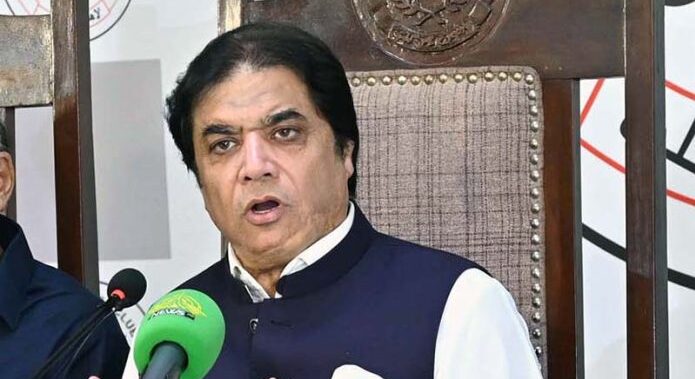
ISLAMABAD, Dec 18 (APP): Federal Minister for Railways Muhammad Hanif Abbasi on Thursday said that education was the key to national progress and development.

Addressing a Convocation 2025 of the Capital University of Science and Technology (CUST) as the chief guest here, the minister said that all provinces and people of Pakistan were united for the country’s prosperity and stability.

A total of 1,323 graduates, including 25 PhD scholars were awarded degrees in their respective disciplines. Executive Director CUST Professor Sohail Afzal presided over the convocation.

Stressing the need for unity, the federal minister urged citizens to set aside personal differences and work collectively for national development.

The minister said the entire nation stands like a solid wall with the armed forces of Pakistan, which has enabled the country to give a befitting response to its enemies and uphold national pride.

Vice Chancellor Professor Dr. Mansoor Ahmed, in his inaugural address, warmly welcomed the graduating students and highlighted the university’s contributions to higher education.

He emphasized that education plays a pivotal role in the economic development of a country by enhancing productivity and efficiency, and by producing skilled human resources capable of leading the nation’s economy.

The PhD degrees were awarded to scholars across various disciplines, including Management Sciences, Electrical Engineering, Civil Engineering, Computer Science, Mathematics and Biosciences.

A total of 90 top position holders were also honored with gold, silver, and bronze medals in their respective degree programs.

The graduates who were awarded PhD degrees include Muhammad Ali Malik, Fizza Asif, Anum Shafique and Mahboob Khan in Management Sciences, Waqas Toor, Mohsin Ullah and Qumrish Arooj in Electrical Engineering, Sajjad Shuker Ullah, Aaroon Joshua Das, Mustafa Sultan and Usman Shahid in Civil Engineering, Ibrar Ahmed, Bilal Khan, Ehtsham Irshad and Shahid Khan in Computer Science, Shahana Rizvi and Areej Fatima in Mathematics, while Qasim Khan, Sobia Khurshid, Naveed Soomro, Faiqa Rashid, Imran Khan, Iqra Bashir, Rukhsana Tabassum and Sabahat Javid got degrees in the field of Biosciences.

The prestigious Jinnah Gold Medal for overall best graduate of the convocation was awarded to Qurat-ul-Ain Fatima of the BS English program in recognition of her outstanding academic performance and excellence in co-curricular and extracurricular activities.

The convocation concluded with applause and celebrations, marking a significant milestone in the academic journey of the graduating students.

Vegetable prices fixed for Bahawalpur district

0
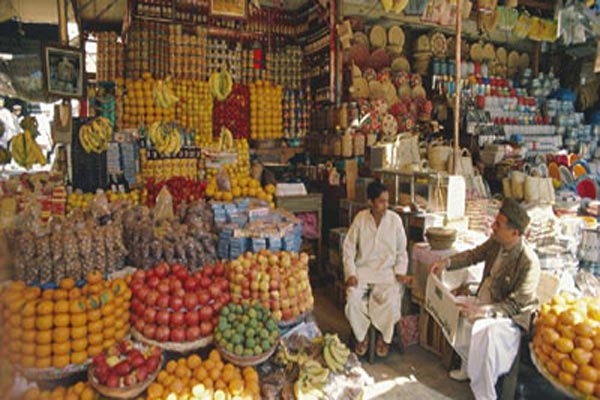
BAHAWALPUR, Dec 18 (APP):The Market Committee Department has announced the official retail prices of vegetables for Bahawalpur district, with an immediate effect.
According to the notification, the price of local potatoes (with skin) has been fixed at Rs 45 per kilogram, while cold-storage potatoes (sugar-free) will be sold at Rs 22 per kilogram. Ginger (Thailand) has been priced at Rs 320 per kilogram, brinjal (eggplant) at Rs 28 per kilogram, cabbage at Rs 56 per kilogram, onions at Rs 68 per kilogram, spinach at Rs 22 per kilogram, and cauliflower at Rs 22 per kilogram.
The committee has also set prices for other vegetables. Pumpkin (chappan kaddoo) and tomatoes will be available at Rs 44 per kilogram each, mustard greens (saag) at Rs 40 per kilogram, fresh coriander at Rs 30 per bundle, and green chilies at Rs 78 per kilogram. Sohanjna has been fixed at Rs 265 per kilogram, capsicum (bell pepper) at Rs 154 per kilogram, turnip at Rs 34 per kilogram, sweet potato (shakarqandi) at Rs 110 per kilogram, cucumber at Rs 58 per kilogram, bottle gourd (kaddoo) at Rs 34 per kilogram, and carrots at Rs 44 per kilogram.
The prices will remain in force until further notification.

Helmet distribution ceremony held in Gujrat

0
GUJRAT, Dec 18 (APP):A helmet distribution ceremony was held at Police Lines Gujrat to promote road safety, during which helmets were distributed among Foodpanda motorcycle riders.
District Police Officer (DPO) Gujrat Rana Umar Farooq distributed helmets to the riders and stressed the importance of adhering to traffic laws and using helmets. He said that wearing helmets is vital for safeguarding precious human lives and that safe driving is a collective responsibility.
The DPO said that Gujrat Police is taking various initiatives to raise public awareness about road safety in order to reduce traffic accidents.
Police officers, traffic police officials and representatives of Foodpanda were also present on the occasion. Participants appreciated the initiative and termed it a positive step towards ensuring public safety.

Market committee issues fruit rates

0
BAHAWALPUR, Dec 18 (APP):In Bahawalpur city and adjoining areas including Khairpur Tamewali, Hasilpur and Yazman, the fruits’ price list has been issued by the District Government Market Committee Department, Bahawalpur.
According to the list, guava price was set at Rs 130 per kg, guava (Larkana) at Rs 165 per kg, pomegranate (Kandhari) at Rs 635 per kg, grapes (Sundarkhani) at Rs 675 per kg.
The price of papaya was set at Rs 254 per kg, sapodilla (chikoo) at Rs 264 per kg, muskmelon at Rs 190 per kg, apple (golden) at Rs 220 per kg, apple (kala kullu, hilly) at Rs 345 per kg, apple (white) at 212 per kg, apple (black Iranian) at Rs 300 per kg, fruiter (mixed) at Rs 120 per kg, kinnow at Rs 125 per kg, dates (Iranian) at Rs 440 per kg, grapefruit at Rs 64 per kg and sweet lime (mosambi) at Rs 70 per kg.

Students commemorate 11th anniversary of APS tragedy

0
RAWALPINDI, Dec 18 (APP):Students organized a solemn memorial event to mark the 11th anniversary of the tragic Army Public School (APS) attack, remembering the 144 lives lost in the terrorist attack.
The event was organized at the Allama Iqbl Mission High School, Tench Bhatta was attended by a large number of students and parents.
School Principal Yasir Rahman addressed the gathering, highlighting the details of the horrific tragedy and praising the prompt and valiant response by the armed forces. He paid tributes to the brave students who showed extraordinary courage during the attack and to the resilient parents of APS who have channeled their sorrow into advocacy for education and peace. The principal urged students to honor the martyrs by excelling in their studies and contributing to national progress.
Students actively participated by delivering heartfelt speeches, paying tribute to the martyred children of APS and expressing solidarity with their families.
A candlelight vigil was also arranged, where participants lit candles in remembrance, creating a poignant atmosphere of reflection and unity.
Vice Principal Misbah Tahir reiterated the school’s commitment to fostering patriotic students, emphasizing values of resilience, national pride, and unity to prevent such tragedies in the future.
The event concluded with special prayers offered for the higher ranks of the martyrs, and for the peace, prosperity, and security of Pakistan.

CTO Hamza leads action against tinted glass sellers in Islamabad

0
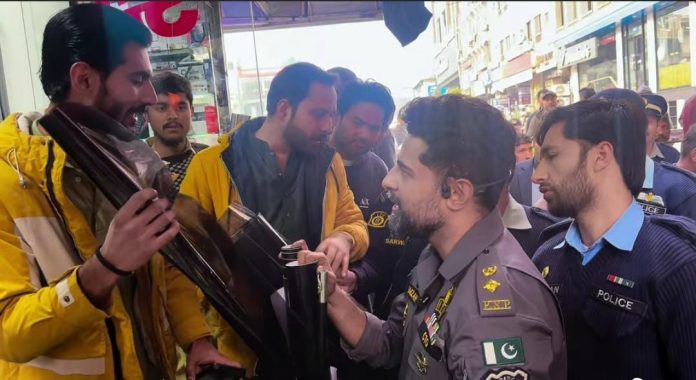
ISLAMABAD, Dec 18 (APP):Islamabad Traffic Police (ITP) continued strict enforcement against the sale and installation of black-tinted glasses, as Chief Traffic Officer (CTO) Captain (R) Hamza Humayun conducted surprise visits to various markets and shops across the federal capital to ensure compliance with traffic laws.
An official told APP on Thursday that during the visits, the CTO inspected shops involved in selling and installing tinted-glass material and issued clear instructions to strictly follow traffic regulations.
CTO Hamza leads action against tinted glass sellers in Islamabad
He warned that a zero-tolerance policy would be enforced against violations, adding that no compromise would be made on public safety.
During the inspections, shopkeepers voluntarily destroyed black-tinting sheets and related material in the presence of CTO Hamza Humayun.
 In some markets, traders jointly disposed of the illegal material and pledged that they would not install black-tinted glasses on vehicles in the future. The shopkeepers acknowledged that tinted glasses pose a serious threat to law and order and appreciated the awareness provided by the traffic police.
The CTO also directed traders to refrain from promoting fancy number plates, saying that both black-tinted glasses and non-standard plates facilitate criminal activities and endanger citizens’ safety.
CTO Hamza said that the campaign was being carried out solely for the protection of citizens and the maintenance of law and order in Islamabad. He urged the public to fully comply with traffic laws, adding that strict legal action would continue against violators.
Islamabad Traffic Police reaffirmed that enforcement against tinted glasses and other traffic violations would remain ongoing to ensure a safer and more disciplined traffic environment in the capital.

China’s Shandong Xinxu group meets Maritime Minister Junaid Anwar Chaudhry on Port Qasim mega industrial plan

0
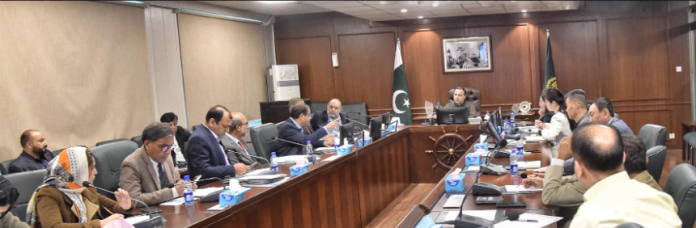
ISLAMABAD, Dec 18 (APP):A five-member delegation from China’s Shandong Xinxu Group has met Federal Minister for Maritime Affairs, Muhammad Junaid Chaudhry to discuss a proposed multi-billion-euro Integrated Maritime Industrial Complex (IMIC) at Port Qasim.
The delegation, led by the company’s chairman Hou Jianxin, discussed a proposal for the project, estimated to cost between €1 billion and €2 billion, aimed at revitalising Pakistan’s maritime and heavy industrial base, said a press release on Thursday.
The proposed IMIC would comprise three main components including the revival of the Iron Ore and Coal Berth (IOCB) Jetty, commonly referred to as the steel jetty, the establishment of shipbuilding and shipbreaking facilities, and the setting up of a steel mill integrated with port operations.
The IOCB was designed to handle bulk cargo, including iron ore and coal, primarily for Pakistan Steel Mills. The jetty can accommodate vessels ranging between 55,000 and 75,000 deadweight tonnes (DWT) and is connected to the steel mill through a dedicated conveyor system spanning approximately 4.5 to 8 kilometres, linking directly to stockyards and blast furnaces.
During the meeting, the federal minister Junaid Chaudhry  welcomed the interest shown by the Chinese group and asked the delegation to submit an unsolicited ptoposal outlining plans and comprehensive roadmap for the proposed project.
The minister emphasised that the roadmap should include clearly defined core concepts, detailed implementation plans and feasibility studies covering technical, financial and environmental aspects.
Following the submission of the comprehensive report, a committee comprising members from the Ministry of Maritime Affairs and Shandong Xinxu Group, led by Additional Secretary Umar Zafar Sheikh, will review the proposal.
The minister underscored the importance of ensuring that the project aligns with Pakistan’s broader industrial and sustainability goals, particularly in terms of job creation, value addition and environmentally responsible development.
The IMIC concept was first unveiled by the minister in November 2025 at an event hosted by Port Qasim Authority in Karachi to mark the port’s recognition as the world’s ninth most improved container port.
 Branded as the “Steel-to-Green Sea” initiative, the project envisions an integrated model that links ship recycling with domestic steel production, reducing reliance on imports while maximising the use of recyclable materials.
If approved, the project could represent one of the largest recent investments in Pakistan’s maritime and industrial sectors, strengthening Port Qasim’s role as a regional hub for heavy industry and logistics.

At UN, nations pledge people-first digital future, tighter AI safeguards; Pakistan pushes for implementation

0
Iftikhar Ali
UNITED NATIONS, Dec 18 (APP):United Nations member states Wednesday pledged to narrow widening digital divides and put stronger safeguards around artificial intelligence (AI), with Pakistan calling for “effective” implementation of those promises at the UN General Assembly, which concluded a major review of how the world manages the Internet and digital technologies.
“While digital technologies have expanded opportunities, they have also introduced new inequalities that demand urgent collective action,” Ambassador Asim Iftikhar Ahmad, permanent representative of Pakistan to the UN, told the high-level meeting.
The two-day meeting marked the conclusion of the World Summit on the Information Society (WSIS+20), a process launched in the early 2000s to guide global cooperation on digital development, access and inclusion, at a time when the internet was only starting to become an essential part of everyday life.
Two decades later, delegates said the challenge is no longer simply getting people online but ensuring that digital technologies – including AI – are governed in ways that protect human rights, build trust and close widening digital gaps.
WSIS was created in 2003 to help countries work together on the opportunities and risks posed by information and communication technologies, or ICT.
It brought governments together with businesses, civil society and technical experts – a multistakeholder approach that remains central to digital governance today.
At this year’s review, participants reflected on how deeply digital tools now shape the economy, education, healthcare and daily life, while warning that millions remain excluded.
In remarks to the General Assembly on Tuesday, its President, Annalena Baerbock, said access to the internet has become essential – from telemedicine in remote villages to online education and digital financial services – yet progress is sluggish.
While global Internet access stands at around two-thirds of the world’s population, she noted that in developing countries it is far lower, and women and girls continue to be disproportionately left behind.
“Two decades later, our shared vision of a people-centred, inclusive and development-oriented information society remains unfinished,” she said.
She warned that access alone is not enough, stressing the need for responsible governance of emerging technologies such as AI, particularly as innovation often moves faster than regulation.
The meeting concluded with the adoption of an outcome document reaffirming countries’ commitment to a people-centred digital future grounded in human rights and the principles of the UN Charter.
The text calls for faster action to close digital divides, greater investment in digital infrastructure and skills, and more predictable policy environments to support digital development. It also highlights the importance of trustworthy governance of data and AI, building on commitments already made under the Global Digital Compact.
Member States encouraged stronger international partnerships on AI capacity-building, particularly for developing countries, including training programmes, access to resources and support for smaller businesses.
Throughout the process, speakers emphasized that governments cannot shape the digital future alone. The outcome reinforces the approach that brings governments, industry, civil society and the tech world together.
International Telecommunication Union (ITU) Secretary-General Doreen Bogdan-Martin said WSIS was born from a belief that digital innovation must reflect human needs, while UN Development Programme (UNDP) Associate Administrator Haoliang Xu described the review as both a moment to recognize progress and to chart a path forward.
In his remarks, Asim Ahmad, the Pakistani ambassador, said that his government is taking decisive steps in digital transformation, citing this year’s adoption of the Digital Nation Pakistan Act and the National AI Policy that provide a strong institutional and policy foundation for a secure, inclusive, and future-ready digital ecosystem.
“Under the ‘Uraan Pakistan’ initiative, with E-Pakistan at its core, we are moving to expand connectivity, strengthen digital public infrastructure, advance
e-governance, and invest in skills development,” he told the gathering.
Reaffirming Pakistan’s commitment to the WSIS process, the Pakistani envoy said, “We stand ready to work with all partners to ensure that ICTs (Information and Communications Technologies) and emerging technologies serve as tools for inclusion, shared prosperity, and sustainable development for all.”

Tarar warns fake news on social media posses biggest challenge of digital age

0
attaullah-tarar
ISLAMABAD, Dec 18 (APP):Minister for Information and Broadcasting Attaullah Tarar on Thursday cautioned that fake news circulating on social media has become the greatest challenge of the digital era.
He emphasized that in today’s world, it is vital to use social media responsibly and to strike a balance in the face of rapidly evolving technologies.
Speaking at the closing session of the National Cyber Security Seminar,  the minister underscored that a grasp of cybersecurity must start with demographic realities.
 Pakistan’s digital landscape, he noted, encompasses more than 117 million internet users, 148 million mobile broadband subscribers, and upwards of 79 million active social media accounts.
He said, digital life today is split along a generational fault line. On one side are the digital immigrants—those who stepped into the online world later in life, adapting to its rapid evolution. On the other are the digital natives—a generation born into cyberspace, fluent in its language from the start.
Speaking on the divide between generations, he noted that digital natives tend to navigate technology instinctively, while digital immigrants are still learning to use social media responsibly.
He emphasized that there is no one-size-fits-all approach to cybersecurity awareness, stressing that effective outreach must be tailored to different audiences through diverse channels, strategies, and language.
The Federal Minister highlighted the rapid evolution of Pakistan’s cyberspace over the past four decades. Reflecting on the media landscape, he pointed to a gradual and systematic shift from traditional platforms to electronic media, describing it as a natural progression.
 He noted that print media has undergone a complete transformation, evolving into electronic formats through a comprehensive process of change.
He noted that during this period, editorial oversight existed, boards of directors were in place, and in the early 2000s, the Pakistan Electronic Media Regulatory Authority (PEMRA) was established, introducing a formal regulatory framework.
He said this structured process enabled the evolution of media. However, the subsequent shift from electronic to digital media was an unnatural transition for which no one was prepared.
This change arrived suddenly, and it was accepted as it came. He added that due to the rapid pace of this evolution, there was a lack of an adequate regulatory framework, limited awareness, and the main reason was a lack of understanding, as it took significant time to grasp cyberspace, cybersecurity, and its realities.
Digital literacy and responsible online behavior continue to lag, underscoring the need for greater awareness of what constitutes responsible conduct. Speaking on the issue, he emphasized that cybersecurity and the responsible use of social media stand among the most pressing challenges of our era.
At the World Economic Forum, global leaders were asked to name the greatest challenges of our time. Surprisingly, neither nuclear war nor climate change topped the list. Instead, the threat they singled out was misinformation and fake news.
Referring to the Bondi Beach tragedy in Sydney, he noted that social media was quickly flooded with false reports. Some outlets hastily alleged the attacker was from Pakistan—without evidence or credible information. He stressed that Pakistan, itself a victim of terrorism, was unfairly targeted by baseless claims repeated even by global media, despite the absence of any documentary proof, causing serious damage to the country’s image.
On December 16, as Pakistan commemorated the martyrs of the Army Public School Peshawar, false reports abroad wrongly linked an overseas attack to Pakistan.
He warned that such baseless claims put Pakistanis in Australia, Europe, and the United States at risk. The contradiction was stark: while the nation honored children who sacrificed their lives against terrorism, international media outlets spread unfounded allegations, with consequences witnessed worldwide.
Later, the attacker’s identity and documents, along with an Indian police statement and press release, revealed a different chain of events. The Federal Minister lauded the fact-checking tool iVerify, saying he regularly uses it to confirm news and effectively counter misinformation.
The Federal Minister for Information stressed the urgent need to boost digital literacy, noting that while the shift from print to electronic media was gradual and well-regulated, the rapid digital revolution has left critical gaps. He affirmed that immediate measures are required and the government is fully committed to addressing them.
He said that with this approach, Pakistan’s first Digital Communication Department was established, as no formal digital department existed when he took charge of the Ministry of Information. He added that the ministry now has its own fact-check unit and has established connections with media organizations to verify and curb fake news, but further measures are still needed.
The Federal Minister for Information lauded TikTok’s move to add AI labels, noting it helps users identify content generated through artificial intelligence.
He said this is a small step that should be adopted by all other platforms. He added that advertisements are also being generated using AI, affecting many professions such as content creators, directors, graphic designers, and actors, putting their livelihoods at risk, which is a matter of concern.
He stressed the need for balance, noting that no single awareness policy fits all. Each social media platform requires tailored approaches, he said, acknowledging the challenge but voicing optimism that with initiatives like today’s and collaboration among PTA, UNDP, and the Government of Pakistan, the right strategy can overcome it.