5.2-Magnitude earthquake hits South Sandwich Islands in Atlantic Ocean
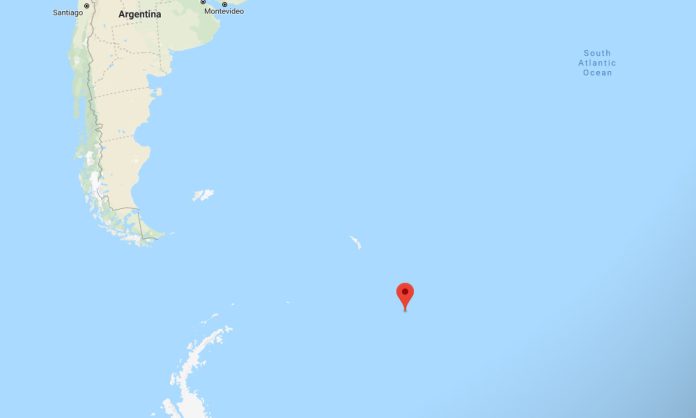
LONDON, Dec 15 (QNA/APP): An earthquake measuring 5.2 on the Richter scale hit the South Sandwich Islands, a British Overseas Territory in the South Atlantic Ocean.
Theآ US Geological Survey said that the earthquake occurred at a depth of 94.1 km.
The South Sandwich Islands are an archipelago within the UK’s sovereign territory of South Georgia and the South Sandwich Islands.
The region experiences frequent seismic and volcanic activity due to its location at the tectonic plate junction between the South American and Antarctic plates.
In August 2021, the region was struck by a powerful earthquake exceeding magnitude 8.0. Since the islands are uninhabited, the impacts of such events are typically minimal.
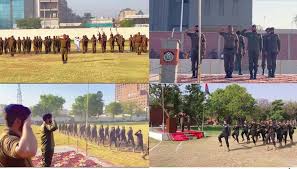
Police conducts weekly general parade across province
Rescue 1122 response to 210 Emergencies last week
Days of Uzbek Culture Open at Heydar Aliyev Center
BAKU, Dec 15 (AZƏRTAC/APP) : The opening ceremony of the Days of Uzbek Culture, organized by Azerbaijan’s Ministry of Culture, was held at the Heydar Aliyev Center. The event featured a concert program with artists from both countries. Guests first viewed a photo exhibition dedicated to Uzbekistan’s cultural heritage, history, and modern development.
Deputy Minister of Culture of Azerbaijan Farid Jafarov described the event as a vivid manifestation of mutual respect and love between the two fraternal peoples. He emphasized its significance for the entire Turkic world, noting the long-standing admiration for each other’s cultures and the tradition of reciprocal culture days as a commitment to preserving shared spiritual heritage.
Jafarov highlighted the deep historical, cultural, and spiritual ties uniting Azerbaijan and Uzbekistan as integral parts of the unique Turkic world, strengthened by common roots, language family, rich heritage, and religious values. These relations extend to political, economic, and humanitarian cooperation, including multilateral formats through organizations like the Organization of Turkic States, UNESCO, ICESCO, and the CIS.
Uzbekistan’s Deputy Minister of Culture Bahodir Ahmadov stated that the event demonstrates the high level of cultural ties, reflecting mutual love, respect, and shared values. He noted thorough preparations, with the concert featuring not only Uzbek performers but also Azerbaijani music and art samples, showcasing cultural enrichment and close roots.
The concert presented music and dance performances reflecting Uzbekistan’s rich heritage. The Days aim to strengthen friendship, develop humanitarian cooperation, and expand cultural dialogue. They will continue until December 20.
On December 15, the first meeting of the Uzbekistan-Azerbaijan Joint Cultural Commission is scheduled. The program includes performances by the “Navruz” dance ensemble and the Uzbekistan State Symphony Orchestra. The closing ceremony will take place at the Mirzo Ulugbek secondary school in Fuzuli, built by Uzbekistan in 2023.
A cultural program for the Uzbek delegation is also planned in Baku. This follows the Days of Uzbek Culture in Baku in 2023 and Days of Azerbaijani Culture in Tashkent in 2024.
Young students shine at Headstart F-7’s annual Sports Day
Govt focusing on private sector, export-led growth to maintain economic stability: Bilal
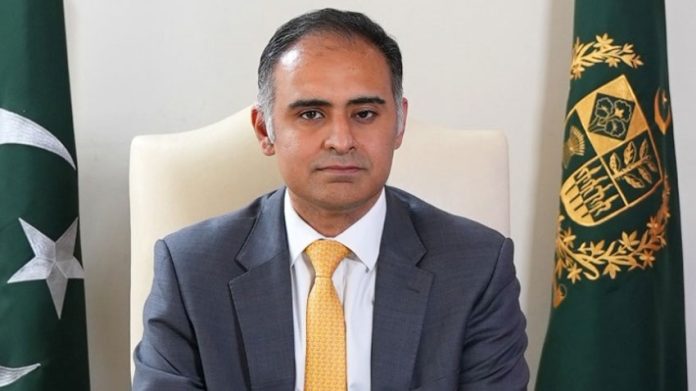
ISLAMABAD, Dec 15 (APP): Minister of State for Finance Bilal Azhar Kayani on Monday said the government was pivoting decisively towards private sector-led, export-driven growth to sustain the economic stability achieved since assuming office after the 2024 general elections.
Addressing a news conference here, the minister said the current policy direction was firmly anchored in macroeconomic stabilisation secured under the International Monetary Fund (IMF) programme, which also provided the framework for last year’s federal budget.
“Stabilisation was the first imperative. Now, the Prime Minister is focused on translating that stability into durable, private sector-led economic growth,” he said, outlining the government’s post-stabilisation reform priorities.
Bilal Azhar said the economic indicators reflected tangible improvement. Inflation during fiscal year 2025 had declined to low single digits, foreign exchange reserves had increased significantly, Federal Board of Revenue (FBR) collections had recorded a 26 percent growth, and the tax-to-GDP ratio had risen by 1.5 percentage points, from 8.8 percent to 10.3 percent.
He said Pakistan’s previous growth cycles had largely been consumption-led, resulting in imports outpacing exports and placing pressure on the external account.
“For sustained and resilient economic growth, export-led growth is essential. This is our clear target,” he said, stressing that enhancing competitiveness, diversifying exports and improving productivity were central pillars of the government’s medium-term economic strategy.
Following macroeconomic stabilisation, the minister said the government had intensified engagement with the private sector to remove policy bottlenecks and align incentives with export expansion.
“That is why the Prime Minister is focusing on private sector-led economic growth, because without exports, growth cannot be sustained,” he added.
Referring to progress under the IMF programme, Bilal Azhar said the IMF Executive Board approved the programme review on December 8, which, he said, reflected international confidence in Pakistan’s reform trajectory and policy continuity.
He said several government-led working groups had already submitted recommendations aimed at translating reform commitments into actionable measures.
“These include the Export Development Fund, the Industrialisation Fund, the Income Tax Group, and the Customs Trade and Tariff Group,” he said, adding that the government was moving rapidly from consultation to implementation.
Highlighting a concrete reform outcome, the minister said a 0.25 percent levy on export turnover, identified by the working groups as a burden on exporters, had been promptly abolished.
“After the working group meeting, the Prime Minister directed that this levy be removed. It was implemented within a week to ten days, and from now on no export proceeds will be charged under this head,” he said, describing the move as evidence of the government’s responsiveness to exporter concerns.
Bilal Azhar said additional working groups covering energy, railways, information technology, ports and agriculture were expected to submit their recommendations to the Prime Minister next week, further expanding the reform agenda aimed at reducing the cost of doing business and improving productivity.
He said the reforms were designed to crowd in private investment, strengthen industrial capacity and provide exporters with a predictable policy environment.
“These are only a few examples. You will see more measures in the coming weeks as recommendations are converted into action,” he said.
However, the minister expressed concern over what he termed disruptive actions by a segment of the opposition, alleging that certain elements were attempting to create uncertainty at a time when economic stability required collective national support.
“Unfortunately, there is a group in the opposition that is trying to push the country towards default. They have even written letters to the IMF,” he said.
Criticising the Pakistan Tehreek-e-Insaf (PTI), Bilal Azhar alleged that the party had repeatedly attempted to undermine Pakistan’s economic stability by approaching the IMF at critical junctures.
He recalled that during PTI’s exit from government, its leadership had, according to him, sabotaged the IMF programme, pushing the country towards default, and later continued writing to the Fund even after the coalition government assumed office in 2022 and sought to revive the programme in the national interest.
The minister was of the view that PTI’s conduct formed part of a broader pattern that had damaged Pakistan’s economy, diplomatic standing and national institutions.
He said the party had consistently avoided parliamentary forums, boycotted standing committees and declined to participate in key national security briefings and cross-party consultations, including those convened after major security incidents.
Bilal Azhar further said that PTI’s social media campaigns had echoed hostile narratives against Pakistan and its institutions, calling such conduct irresponsible at a time when national unity was essential to consolidate economic recovery.
Reiterating the government’s position, he said political opposition was legitimate within Parliament, but efforts to destabilise the economy and undermine state institutions were unacceptable and against the national interest.
Responding to a question, the minister rejected claims of political instability, saying the country had remained stable despite repeated attempts over the past two to three years to create disruption.
“Despite all such attempts, we have achieved economic stability, strengthened national defence and reinforced Pakistan’s diplomatic standing,” he said.
He urged the opposition, particularly PTI, to adopt constructive rather than disruptive politics and to play its constitutional role responsibly within the democratic framework.
Reiterating the government’s commitment to reforms, Bilal Azhar said economic stability and sustainable growth required continuity of policy and cooperation across institutions.
“Our focus remains clear: to strengthen the private sector, expand exports, and safeguard the stability we have worked hard to achieve,” he added.

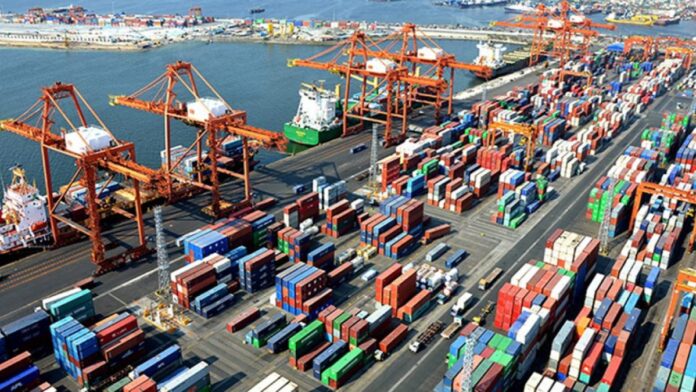
Shipping activity at Port Qasim
Researchers find vital clue in progression of Type 1 diabetes
FLORIDA, Dec 15 (WAM/APP): Researchers at the University of Florida’s Diabetes Institute have identified an early biological sign that signals the development of type 1 diabetes, according to a study published in the journal Diabetes.
The study found that the smallest collections of insulin-producing beta cells, as well as single cells scattered throughout the pancreas, are the first to die as the immune system launches its assault. This is thought to occur even before someone with diabetes exhibits symptoms.
The loss of these cells appears to be a harbinger of the next phase of Type 1 diabetes, when the immune system begins to destroy the larger and more significant collections of insulin-producing cells in the pancreas. These clusters of cells are called the islets of Langerhans.
“We did not expect that,” said the study’s senior author, Clive H. Wasserfall, Ph.D., a researcher at the UF Diabetes Institute. “And we can only speculate as to why that would be. This leads to a place where, if we can save these remaining bigger islets of Langerhans, perhaps one day we could prevent or delay the disease from happening.”
Understanding the disease’s progression, Wasserfall said, provides the scaffolding for strategies to combat the disorder even as a cure remains a distant hope.
The finding might also one day help doctors detect Type 1 diabetes earlier, allowing for quicker intervention to slow its progression.
“The genesis of the study was to see if the islets are closer together in the smaller pancreases,” said Wasserfall, an assistant professor in the UF College of Medicine’s Department of Pathology, Immunology and Laboratory Medicine. “It turned out that they’re not.”
Along the way, the team used advanced imaging and computer analysis to examine slides of pancreatic tissue from the UF Health-based Network for Pancreatic Organ donors with Diabetes, or nPOD. It’s the largest biorepository of pancreatic tissue used for Type 1 diabetes research.
The study revealed that smaller insulin-producing clusters vanished early in the disease process, while larger islets remained mostly intact in samples from individuals with early-stage disease.
“And not all the islets disappear at the same rate,” Wasserfall said. “The smaller ones tended to go first.”
That finding could help explain why Type 1 diabetes progresses differently in children than in adults. Young children, whose pancreases naturally have more small islets, often lose insulin-producing ability rapidly after diagnosis. Older individuals may retain some insulin production for years.
Flash floods kill 21 people in Morocco’s Safi
RABAT, Dec 15 (WAM/APP): At least 21 people were killed in flash floods triggered by torrential rains in Morocco’s Atlantic coastal province of Safi, 330 kilometres (205 miles) south of Rabat, Moroccan authorities said.
The floods also injured 32 people, and most of them have left the hospital, authorities said in a statement.
One hour of heavy rain was enough to flood homes and shops in the old town of Safi, and sweep away cars and cut many roads in Safi and its surroundings, as rescue efforts continue, they said.