Home Blog Page 13774

SC adjourns petitions regarding May 9 riots accused till Monday

0
SC adjourns petitions regarding May 9 riots accused till Monday

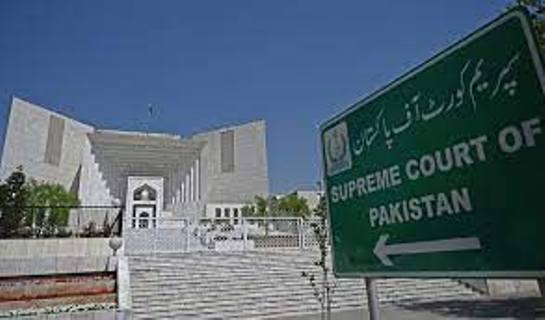
ISLAMABAD, Jun 23 (APP):The Supreme Court on Friday adjourned the hearing of the petitions pertaining to trial of May 9 riots accused in military courts till June 26 (Monday).

A seven-member bench headed by Chief Justice of Pakistan Umar Ata Bandial and comprising Justice Ijaz ul Ahsan, Justice Mansoor Ali Shah, Justice Munib Akhter, Justice Yahya Afridi, Justice Mazahar Ali Naqvi and Justice Ayesha Malik heard the petitions.

At the outset of hearing, the chief justice remarked that it was a wrong perception that a civilian could never be tried in army court. A civilian could be tried in army courts if he was accused of instigating army personnel against institution for sedition

He, however, said the procedure adopted to bring the accused of May 9 incidents in the jurisdiction of army courts would have to be viewed. It would also be viewed that on which grounds the anti-terrorism courts allowed to shift the trials, he added.

The chief justice observed that it was understood that the institution would identify the crimes under the Official Secret Act and it could file the request to the ATCs for the custody of civilian accused.

CJP Bandial said harassing the legal fraternity was not legal and also asked the Attorney General for Pakistan that what was the policy of government about journalists. He asked the AGP to contact the acting provincial governments and took their stance about the lawyers and journalists.

The role of lawyers and journalists was essential for the self-confidence of the society, he added.

AGP Mansoor Usman Awan said that no any accused was in the custody of Islamabad Police regarding the May 9 incidents, while four persons were in the custody of Khyber Pakhtunkhwa Police. About 41 persons were arrested in Punjab under MPO and 141 were taken in custody under the Anti-Terrorism Act (ATA).

A total of 81 women were arrested in Punjab, out of which 42 had been released, he added.

The AGP said 172 accused were in the judicial custody in Sindh, and 70 of them got bails. Some 117 persons were arrested in Sindh under 3-MPO and 102 were in army’s custody. No woman, child, lawyer or journalist was in military custody in connection with the incidents of May 9 and 10, he added.

Mansoor Awan said the Federal Government had a clear stance that no journalist or lawyer would be arrested for May 9 riots and no action would be taken against any innocent person too.

The CJP remarked that the court would neither take a suo-motu action nor it would pass a judicial order but it was noting everything.

Earlier, Justice Ijaz ul Ahsan observed that a reference could be sent to the Federal Government if the custody of a civilian was required to the institution as per law and then former would take a decision in the matter.

He said the top court had declared in the 21th Constitutional Amendment case that army courts were set up for certain circumstances like war situation.

The basic rights of army personnel would be suspended under the Army Act but the civilians would have protection under basic human rights in every condition, he added.

Justice Mansoor Ali Shah said trial under the Official Secrets Act would be conducted only when there was a matter of national security. When and how the civilian accused had violated the OSA and under what law the arrests had been made, he asked.

He remarked that the Constitution did not allow the court to view the Army Act then how it could take a decision about it.

Justice Mazahar Ali Naqvi asked that how the commanding officer could request the custody of a civilian accused. He noted that the sections of OSA were not applied as per the crime report produced before the bench and asked that when those sections were added in cases after May 9.

Justice Ayesha Malik asked on which grounds civilian accused were being tried under the Army Act and how it used to be decided that a case would be registered under the Army Act or the OSA. She asked the counsel of the civil society Faisal Saddiqui that what were the extraordinary situations under which the trial of civilian accused could be conducted by army courts. The question was that if the crime of the accused fell in jurisdiction of OSA or not, she said.

Justice Ayesha Malik said the magistrate concerned could not grant custody of an accused on the request of someone.

Petitioner Jawad S. Khawaja’s counsel also prayed the court to form a larger bench into the matter if there were solid reasons for that.

Khawaja Ahmed Hussain Advocate said the trial of civilians in army courts was an illegal act as it would affect the rights of accused given under Articles 9, 10 and 25. Only in extraordinary situations civilians were tried in military courts in the United States and Britain, he added.

The counsel for the civil society Faisal Saddiqui also gave arguments earlier in this case.

The court adjourned further hearing of the case till coming Monday. The chief justice said that the bench wanted to conclude the case till coming Tuesday. He asked Salman Akram Raja to give arguments in the case on next hearing.

Hina hails contributions of women in diplomatic field

0
Hina Rabbani Khar

ISLAMABAD, Jun 23 (APP): Minister of State for Foreign Affairs Hina Rabbani Khar Friday said the significance of June 24 as the ‘International Day of Women in Diplomacy’ was self-evident, symbolizing global recognition and admiration for women’s accomplishments in the diplomatic realm.

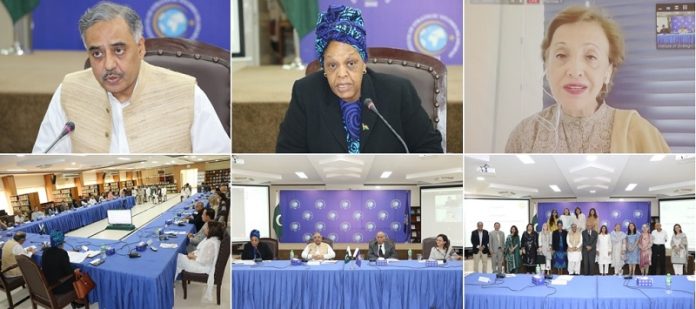
She made these remarks in a message delivered at a roundtable discussion to mark the ‘International Day of Women Diplomacy’ here on Friday by the Centre for Strategic Perspectives (CSP) at the Institute of Strategic Studies Islamabad (ISSI).

The minister said, having the great honour of being the first woman Foreign Minister of Pakistan, this Day held great meaning and significance for her personally.

“It both brings satisfaction and strengthens our resolve to continue to do more. Nations proudly showcase their progress in appointing more women in diplomatic roles, deserving commendation for tangible advancements,” she said adding Pakistan had made notable strides despite socio-economic challenges, with women achieving prominent positions, including a woman Prime Minister and a young Nobel Prize laureate.
“While celebrating, we must also acknowledge remaining challenges and work together for a future of equal opportunities, amplifying women’s voices and utilizing their expertise in peace-making, peacebuilding, and achieving Sustainable Development Goals (SDGs).”

The discussion was chaired by Ambassador Sohail Mahmood, Director General ISSI. Participants included: ambassador Tehmina Janjua, Former Foreign Secretary of Pakistan; Nyambura Kamau, High Commissioner of Kenya to Pakistan; Dr. Noor Khan, Minister Counsellor/Deputy Head of Mission, Embassy of Norway in Islamabad; Ms. Alice Courlander, Second Secretary at the British High Commission in Islamabad; Ambassador Nadeem Riyaz, President IRS; Ambassador Shah Jamal, Former Ambassador to Iraq; Ambassador Fauzia Nasreen, Former Ambassador to Poland; Ambassador Riffat Masood, Former Ambassador to Iran, Dr. Shabana Fayyaz, Professor, QAU; Dr. Salma Malik, Associate Professor, QAU; Ms. Iqra Ashraf, Director Spokesperson Office/StratCom, MoFA; and Ambassador Khalid Mahmood, Chairman, BoG, ISSI.

Dr. Neelum Nigar, Director of CSP, and the research team of ISSI were also present.

In her introductory remarks, Dr. Neelum Nigar said that celebrating this important day today served as a powerful reminder of the significant contributions women have made and continue to make in the field of diplomacy. It provides an excellent opportunity to reflect on the achievements, challenges, and aspirations of women diplomats worldwide.

In his welcome remarks, DG ISSI Ambassador Sohail Mahmood stated that the UNGA resolution of 20 June 2022 that proclaimed 24 June to be the ‘International Day of Women in Diplomacy’ calls upon member states to observe this Day annually, promoting women’s equal participation in diplomacy through education and awareness-raising activities. He added that the field of diplomacy, traditionally male-dominated, is undergoing positive transformation with the number of women diplomats increasing sharply. Some countries have achieved gender parity, while others are progressing. Pakistan has made significant strides in the past two decades, appointing its first women Foreign Minister, Foreign Secretary, and Spokesperson. The Foreign Ministry has also seen a notable increase in the recruitment of women diplomats. Ensuring women’s meaningful and effective participation in diplomacy and their rise to leadership/decision-making levels remains crucial. While acknowledging women’s achievements, we must also recognize the continuing challenges. Commemorating this Day is both a celebration of the achievements as well as an occasion to reaffirm the commitment to do more.

In her remarks, ambassador Tehmina Janjua, who has had the distinction of being the first woman Foreign Secretary of Pakistan, emphasized that women constitute a crucial component of strategic perspectives.

The United Nations deserves praise for its commitment to commemorating this significant Day. When discussing women in diplomacy, three essential aspects come to light: firstly, it is imperative to address the levels at which women participate in decision-making within diplomacy and dismantle the barriers that hinder their progress; secondly, the distinctive approach that women bring to diplomacy, introducing fresh perspectives that warrant recognition and appreciation; and thirdly, careful consideration of how gender is utilized in diplomacy, acknowledging its potential positive impacts while guarding against its misuse for self-serving purposes.

High Commissioner Kamau, in her remarks, said that celebrating women in diplomacy acknowledges the progress that has been made while also highlighting the work that still needs to be done. It encourages thoughtful consideration of the obstacles faced by women in this realm, igniting initiatives aimed at overcoming barriers and promoting gender equality.

In her elaboration about the Kenyan foreign service, the High Commissioner highlighted the significant strides made by women over the past decade. Women in the Kenyan foreign service have witnessed positive developments and improvements. They bring specific advantages to negotiations that enhance their effectiveness in diplomatic endeavors.

However, women engaged in diplomacy encounter the challenge of finding a delicate balance between their professional careers and family obligations. This delicate balance often poses obstacles that can impede their overall progress and advancement in the field.

During the interactive session, the other participating diplomats and academics shared their experiences and perspectives with regard to women’s role in the field of diplomacy. Ambassador Fauzia Nasreen noted that the civil service reforms of 1972 opened the way for Pakistani women to enter the foreign service. She herself went on to become the first-ever career foreign service officer rising to the level of ambassador.

Dr. Salma Malik underscored the substantial impact of women diplomats in diverse arenas, surpassing barriers to effectively engage in diplomatic and security issues. She emphasized their ability to overcome obstacles, challenge traditional norms, and make significant contributions in areas traditionally dominated by men including dealing with and writing on strategic issues.

Ms. Alice spoke about the advancements made by women diplomats in the United Kingdom, highlighting their remarkable contributions particularly over the past two decades. She recognized the significant role that women diplomats have played in shaping UK’s diplomatic landscape, bringing diverse perspectives and expertise to the fore. Their tireless efforts and groundbreaking accomplishments have paved the way for greater gender equality and inclusive in the field of diplomacy.

Ambassador Riffat Masood shared her views and highlighted the importance of recognizing and valuing the contributions of women diplomats, as their diverse experiences and approaches contribute to more comprehensive and holistic decision-making processes.

Iqra Ashraf and Dr. Noor Khan, both young diplomats, acknowledged and highlighted the pioneering contributions of their senior colleagues, expressing gratitude for how these trailblazers have paved the way and made their own journeys in diplomacy more accessible and smooth. They recognized the invaluable guidance, mentorship, and support received from their experienced counterparts, which had helped them navigate the challenges and opportunities of the diplomatic field.

Dr. Shabana Fayyaz expressed appreciation for the ISSI in providing a platform that facilitated interface between women diplomats and academics focused on gender studies, recognizing the value of bringing together practitioners and scholars in a meaningful dialogue. While suggesting that the Institute should consider making it a regular feature, Dr. Fayyaz proposed the establishment of a dedicated women’s desk at the Foreign Ministry, which would serve as a place for exchange of ideas, experiences and dialogues relating to gender parity and enhanced participation of women in diplomacy.

The roundtable discussion was concluded with remarks by Chairman BoG, ISSI, Ambassador Khalid Mahmood.

Hina hails contributions of women in diplomatic field

0
ISLAMABAD, Jun 23 (APP):Minister of State for Foreign Affairs Hina Rabbani Khar Friday said the significance of June 24 as the 'International Day of Women in Diplomacy' was self-evident, symbolizing global recognition and admiration for women's accomplishments in the diplomatic realm.

She made these remarks in a message delivered at a roundtable discussion to mark the ‘International Day of Women Diplomacy’ here on Friday by the Centre for Strategic Perspectives (CSP) at the Institute of Strategic Studies Islamabad (ISSI)
The minister said, having the great honour of being the first woman Foreign Minister of Pakistan, this Day held great meaning and significance for her personally.

“It both brings satisfaction and strengthens our resolve to continue to do more. Nations proudly showcase their progress in appointing more women in diplomatic roles, deserving commendation for tangible advancements,” she said adding Pakistan had made notable strides despite socio-economic challenges, with women achieving prominent positions, including a woman Prime Minister and a young Nobel Prize laureate.
“While celebrating, we must also acknowledge remaining challenges and work together for a future of equal opportunities, amplifying women’s voices and utilizing their expertise in peace-making, peacebuilding, and achieving Sustainable Development Goals (SDGs).”

The discussion was chaired by Ambassador Sohail Mahmood, Director General ISSI. Participants included: ambassador Tehmina Janjua, Former Foreign Secretary of Pakistan; Nyambura Kamau, High Commissioner of Kenya to Pakistan; Dr. Noor Khan, Minister Counsellor/Deputy Head of Mission, Embassy of Norway in Islamabad; Ms. Alice Courlander, Second Secretary at the British High Commission in Islamabad; Ambassador Nadeem Riyaz, President IRS; Ambassador Shah Jamal, Former Ambassador to Iraq; Ambassador Fauzia Nasreen, Former Ambassador to Poland; Ambassador Riffat Masood, Former Ambassador to Iran, Dr. Shabana Fayyaz, Professor, QAU; Dr. Salma Malik, Associate Professor, QAU; Ms. Iqra Ashraf, Director Spokesperson Office/StratCom, MoFA; and Ambassador Khalid Mahmood, Chairman, BoG, ISSI.

Dr. Neelum Nigar, Director of CSP, and the research team of ISSI were also present.

In her introductory remarks, Dr. Neelum Nigar said that celebrating this important day today served as a powerful reminder of the significant contributions women have made and continue to make in the field of diplomacy. It provides an excellent opportunity to reflect on the achievements, challenges, and aspirations of women diplomats worldwide.

In his welcome remarks, DG ISSI Ambassador Sohail Mahmood stated that the UNGA resolution of 20 June 2022 that proclaimed 24 June to be the ‘International Day of Women in Diplomacy’ calls upon member states to observe this Day annually, promoting women’s equal participation in diplomacy through education and awareness-raising activities. He added that the field of diplomacy, traditionally male-dominated, is undergoing positive transformation with the number of women diplomats increasing sharply. Some countries have achieved gender parity, while others are progressing. Pakistan has made significant strides in the past two decades, appointing its first women Foreign Minister, Foreign Secretary, and Spokesperson. The Foreign Ministry has also seen a notable increase in the recruitment of women diplomats. Ensuring women’s meaningful and effective participation in diplomacy and their rise to leadership/decision-making levels remains crucial. While acknowledging women’s achievements, we must also recognize the continuing challenges. Commemorating this Day is both a celebration of the achievements as well as an occasion to reaffirm the commitment to do more.

In her remarks, ambassador Tehmina Janjua, who has had the distinction of being the first woman Foreign Secretary of Pakistan, emphasized that women constitute a crucial component of strategic perspectives. The United Nations deserves praise for its commitment to commemorating this significant Day. When discussing women in diplomacy, three essential aspects come to light: firstly, it is imperative to address the levels at which women participate in decision-making within diplomacy and dismantle the barriers that hinder their progress; secondly, the distinctive approach that women bring to diplomacy, introducing fresh perspectives that warrant recognition and appreciation; and thirdly, careful consideration of how gender is utilized in diplomacy, acknowledging its potential positive impacts while guarding against its misuse for self-serving purposes.

High Commissioner Kamau, in her remarks, said that celebrating women in diplomacy acknowledges the progress that has been made while also highlighting the work that still needs to be done. It encourages thoughtful consideration of the obstacles faced by women in this realm, igniting initiatives aimed at overcoming barriers and promoting gender equality. In her elaboration about the Kenyan foreign service, the High Commissioner highlighted the significant strides made by women over the past decade. Women in the Kenyan foreign service have witnessed positive developments and improvements. They bring specific advantages to negotiations that enhance their effectiveness in diplomatic endeavors. However, women engaged in diplomacy encounter the challenge of finding a delicate balance between their professional careers and family obligations. This delicate balance often poses obstacles that can impede their overall progress and advancement in the field.

During the interactive session, the other participating diplomats and academics shared their experiences and perspectives with regard to women’s role in the field of diplomacy. Ambassador Fauzia Nasreen noted that the civil service reforms of 1972 opened the way for Pakistani women to enter the foreign service. She herself went on to become the first-ever career foreign service officer rising to the level of ambassador.

Dr. Salma Malik underscored the substantial impact of women diplomats in diverse arenas, surpassing barriers to effectively engage in diplomatic and security issues. She emphasized their ability to overcome obstacles, challenge traditional norms, and make significant contributions in areas traditionally dominated by men including dealing with and writing on strategic issues.

Ms. Alice spoke about the advancements made by women diplomats in the United Kingdom, highlighting their remarkable contributions particularly over the past two decades. She recognized the significant role that women diplomats have played in shaping UK’s diplomatic landscape, bringing diverse perspectives and expertise to the fore. Their tireless efforts and groundbreaking accomplishments have paved the way for greater gender equality and inclusivity in the field of diplomacy.

Ambassador Riffat Masood shared her views and highlighted the importance of recognizing and valuing the contributions of women diplomats, as their diverse experiences and approaches contribute to more comprehensive and holistic decision-making processes.

Iqra Ashraf and Dr. Noor Khan, both young diplomats, acknowledged and highlighted the pioneering contributions of their senior colleagues, expressing gratitude for how these trailblazers have paved the way and made their own journeys in diplomacy more accessible and smooth. They recognized the invaluable guidance, mentorship, and support received from their experienced counterparts, which had helped them navigate the challenges and opportunities of the diplomatic field.

Dr. Shabana Fayyaz expressed appreciation for the ISSI in providing a platform that facilitated interface between women diplomats and academics focused on gender studies, recognizing the value of bringing together practitioners and scholars in a meaningful dialogue. While suggesting that the Institute should consider making it a regular feature, Dr. Fayyaz proposed the establishment of a dedicated women’s desk at the Foreign Ministry, which would serve as a place for exchange of ideas, experiences and dialogues relating to gender parity and enhanced participation of women in diplomacy.

The roundtable discussion was concluded with remarks by Chairman BoG, ISSI, Ambassador Khalid Mahmood.

Bilawal for collective efforts by world powers to root out terrorism effectively

0
Bilawal for collective efforts by world powers to root out terrorism effectively

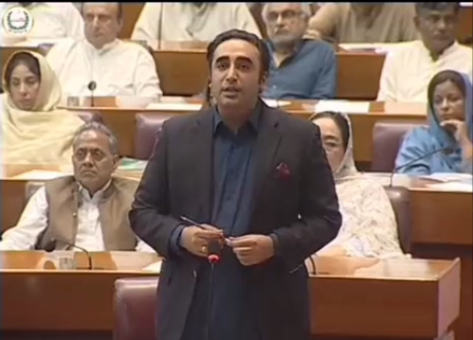
ISLAMABAD, Jun 23 (APP):Foreign Minister Bilawal Bhutto Zardari on Friday stressed that collective efforts were needed by the world powers to root out the menace of terrorism, which had affected Pakistan the most.

Speaking in the National Assembly, he said being a global issue, terrorism should not be seen through the prism of geopolitics.

The foreign minister regretted that after the fall of Kabul, the world powers had shifted their focus to the Ukraine conflict and the menace of terrorism remained unaddressed.

Pakistan, he added, suffered the most from terrorism as it had lost more people than the rest of the world in the fight against terror.

Exterminating terrorism and extremism was in the interest of Pakistan itself as it was the key to peace, stability and prosperity, he added.

Bilawal said first of all there was the need to bring political stability in Pakistan and then the focus should be shifted to further enhancing bilateral relations and forging partnerships with other countries, including the United States.

He said the Pakistan Tehreek-i-Insaf (PTI) chairman himself pushed his party into a blind alley following the May 9 vandalism of military installations and martyrs’ memorials due to his rigidness.

He said time and again the PTI chief was asked from the parliamentary forums to announce his disassociation from the May 9 incidents but he paid no heed and consequently his party was today in trouble. Those involved in attacking the military installations and the memorials of martyrs did not deserve any leniency, he added.

Bilawal said on May 9, the PTI protesters attacked the Jinnah House, military installations, the General Headquarters, and the monuments of martyrs.

Had such attacks been carried out in the US, the United Kingdom or any other country, their perpetrators would not have spared in the name of democracy, he remarked.

He said there was no politics, rather the May 9 incidents were acts terrorism. “The Pakistan Peoples Party will never defend those who had attacked the military installations, sensitive places and memorials of martyrs,” he added.

The minister said there were provisions in the law that those involved in such heinous acts could be tried in the military courts, and it was also the responsibility of the parliament, government and judiciary to establish the writ of the state at every cost.

Bilawal said all the social media accounts of the former US president [Donald Trump] were closed after his supporters attacked the Congress, the legislature of the federal government of the United States.

He regretted that the so-called popular politician [PTI chief] also adopted the same strategy, violated the Constitution and attempted to defeat the no-confidence motion moved by the joint opposition in the National Assembly against him in March 2022.

On May 25, 2022, he said, the PTI launched an attack on the Federal Capital, after its chief’s ouster from the Prime Minister House through a democratic and constitutional way of no-confidence motion, in the name of long march and set Islamabad on fire; besides hatching a conspiracy against the ongoing programme of International Monetary Fund (IMF).

At that time, he recalled, that the finance ministers of Punjab and Khyber Pakhtunkhwa were also involved in the conspiracy that was also proven by their leaked telephonic conversation.

He said in order to bring political stability to the country, the incoming government and the opposition [after the next general elections] would have to play a responsible role while sticking to the Charter of Democracy, signed by the top leadership of the Pakistan Peoples Party (PPP) and the Pakistan Muslim League-Nawaz (PML-N) in 2006.

The minister stressed the need for devising a comprehensive road map for achieving political and economic stabilityby engaging the reconcilable opposition members.

He thanked Prime Minister Muhammad Shehbaz Sharif and Finance Minister Ishaq Dar for allocating funds in the budget for the reconstruction and rehabilitation of the flood-affected areas; and mobilizing the available resources for instant rescue and relief of the people facing the brunt of the widespread destruction caused by the heavy rains and floods in 2022.

Faiza, Naheen win Gold medals in Badminton Doubles

0
Faiza, Naheen win Gold medals in Badminton Doubles

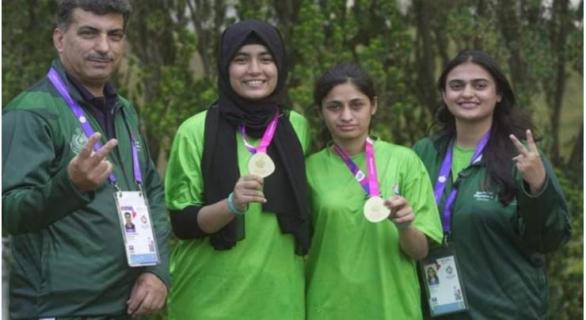
KARACHI, Jun 23 (APP): Pakistan’s Faiza Nasir and Naheen Khan won the gold medal in the Badminton Women’s Doubles Unified event of the ongoing 16th Special Olympic, being played in Berlin, (Germany).

In the badminton event played at Messe Berlin, Pakistani players won the gold medal by defeating Uzbekistan by 21-5 and 21-17 points, Malaysia by 21-14 and 21-6 and Kyrgyz Republic by 21-12 and 21-13, said a communication here on Friday.

Head coach Mutahir Sohail and coach Qamar Ali Mona of Faiza Nasir and Naheen Khan from Lahore said that both players have been preparing for the World Games for the past two years. They stayed busy in this regard, they also participated fully in the training camps organized by Special Olympics Pakistan in Karachi and Islamabad.

Meanwhile, in the men’s unified doubles event of Badminton, Pakistan’s Noshiwan Arif Raja and Talha Asif won the silver medal after defeating Paraguay 21-18 and 21-12 and Macau by 21-12 and 21-16.
However, Pakistan suffered a defeat against Hong Kong by the margin of 16-21 and
18-21.

APP/sso/pas

Symposium on corporate supervision, regulatory actions begins

0
Symposium on corporate supervision, regulatory actions begins

ISLAMABAD, Jun 23 (APP): The Securities and Exchange Commission of Pakistan (SECP) is hosting the Symposium on Corporate Supervision and Regulatory Actions on June 23-24.

The first day of the symposium saw notable members of the judiciary take the stage and address key challenges and opportunities pertaining to the corporate sector of Pakistan, said a press release issued here.

SECP Chairman Akif Saeed, in his welcome address, said, “We aim to build a strong and growing corporate sector that is attractive to both domestic and foreign investors, ensuring economic stability and prosperity for our nation”.

He added, “In this crucial mission, we are fortunate to be assisted by our esteemed partners at the World Bank, and we express our heartfelt gratitude for their invaluable support in creating a conducive corporate environment in Pakistan”.

Justice Shahid Karim, Honorable Justice (R) Hamid Ali Shah, and Barrister Iftikharuddin Riaz highlighted the developments in Company Law, the need for upgrading the procedures under Company Law, and discussed new concepts.

IHC Advocates Syed Bulent Sohail and Umer Ejaz Gilani presented a case study on the empirical analysis of Company Court judgments and also shared recommendations on the subject.

Honorable Chief Justice of Pakistan (R) Tassaduq Hussain Jillani also delivered the keynote address at the symposium and gave a presentation on corporate social responsibility (CSR) and its reforms in Pakistan.

He pointed out some successful CSR programs in the country and also shed light on CSR Reforms undertaken by the SECP including CSR reporting guidelines, integration of CSR into the Code of Corporate Governance as well as capacity building and awareness programs to educate companies on CSR.

He also pointed out the areas where Pakistan’s corporate sector is lacking in CSR. He said that only listed companies are required to comply with the CSR requirement and that SECP has taken a soft approach so far which needs to be made more stringent.

Chief Justice of Pakistan (R) Iftikhar Muhammad Chaudhry spoke on the role of the judiciary in economic development, regional integration, and Foreign Direct Investment (FDI).

He said that a well-functioning judiciary has a pivotal role in governance, democracy, constitutionalism, and economic growth.

He added, “A judiciary that upholds the principles of justice, accountability, and equitable access can truly propel our nation towards economic development, regional integration, and foreign investment”.

He said that there should be a clear division of responsibilities, even amongst courts, so that the matters of companies and businesses are not delayed because the courts are busy elsewhere.

Justice Jawad Hassan gave a keynote address on “Evolution of Company Law Jurisprudence and Role of Company Benches of the Hon’ble High Court”. He accentuated Sections 4, 5, and 6 of the Companies Act, 2017.

He quoted examples from his own judgments and explained how the interpretation of law is only half of the story, the laws themselves are equally significant. He mentioned SECP’s laws and shed light on their significance.

Justice Yousuf Ali Sayeed spoke on “Reflective Loss and the Derivative Action”. He said that owning a company’s shares does not offer a right to shareholders over the assets of the company, and the cases need to be decided to keep this in mind.

He elaborated how the shareholders, at times, try to claim damages that are not necessarily theirs but are, in fact, the company’s losses. However, if the claimant can satisfy that the reported loss counts as a derivate loss, then the court should also operate accordingly.

Chief Prosecutor and SECP Prosecution & Legal Affairs Division Head-Executive Director Muzzafar A. Mirza gave a presentation on “Laws Governed by SECP with special reference to supervision and regulatory actions”.

Badiuddin Akber, CEO of Central Depository Company (CDC) of Pakistan Limited, gave a presentation on CDC procedures, including Automated Securities Settlement Process. He also elaborated on Investor Protection Measures put in place by the CDC. “CDC has 1,149 securities, 666 Mutual Funds/Pension Funds, as well as 193.86 billion shares worth PKR 4,74 trillion,” he informed the audiences, adding that CDC also has 333,013 sub-accounts and 118.53 billion shares in investor account services”.

Senior Puisne Judge Justice Irfan Saadat Khan, from the High Court of Sindh, addressed the symposium on “Implementation of Sections 5 & 6 of Companies Act, 2017, Issues and Challenges.”

Sergio Ariel Muro, World Bank (WB) Senior Financial Sector Specialist, delivered a presentation on the subject of “Towards Efficient Business Restructuring and Exit: Lessons from International Experience”.
He underlined the importance of establishing a robust insolvency system.

“A modern, credit-based economy requires a predictable, transparent, & affordable enforcement framework through efficient mechanisms as well as a sound insolvency system”, he said, adding, “Uncertainties in the legal framework on security rights cause high costs and credit unavailability”.

He recommended strengthening formal insolvency mechanisms, establishing accessible and cheap out-of-court procedures for MSEs, facilitating conciliation and mediation, and promoting debt forgiveness and discharge of natural-person debtors.

Justice Syed Muhammad Attique Shah, from Peshawar High Court, spoke on “Best practices in conducting cross-examination”.

He talked about including technology in judicial processes, such as Lahore and Peshawar courts allowing video link appearances.

He shared examples from his own career and insisted that technology could prove instrumental in ensuring speedy justice.
Advocate Supreme Court Asma Hamid took the stage to speak on the Admissibility of evidence and related issues in corporate matters. She outlined the rights and responsibilities of company benches and processes of relevant jurisprudence under the Companies Act, 2017.

She presented examples of cases that elaborate on the applicability and operationality of different laws pertaining to companies. She gave comprehensive guidelines on how to approach a case from the perspective of the petitioner as well as a jurist.

Justice Sardar Ejaz Ishaq Khan IHC gave the final address of Day 1 of the Symposium on Corporate Supervision and Regulatory Actions: Challenges and Reforms, on “Company Bench and Conduct of Liquidation.”

“I think that SECP needs to ensure expertise in finance, accounting, and law, not just for the financial officers but especially for the liquidators, who need to be well versed in Finance and accounting,” he said.

He also insisted on the need for adjusting remunerations for liquidators in Pakistan, describing the current standards as “out of sync”. He reiterated CJ Iftikhar Chaudhry’s viewpoint about prioritizing company cases so they are not delayed due to other cases.

He said that SECP needs to look into whether they can shoulder the responsibility of a liquidation case. They should not be focused on digging until they find the final penny to make a case ascertainable.

Justice Mian Gul Aurangzeb gave the concluding speech of the day. He built upon the points raised by Justice Ejaz and said, “SECP should give us a panel of liquidators who are qualified”.

“SECP ought to play a more proactive role in having a larger panel of legal advisors than they have right now, not just in cases of liquidation but also in other corporate matters,” he said, while also appreciating SECP prosecutors for assisting the court.

“The SECP and the IHC ought to sit together, at least the company judges in the IHC, for these matters to be adjudicated expeditiously. There should be dedicated judges, as former CJ Iftikhar Chaudhry said, or at least dedicated time frames, to decide on these matters,” he added.

SECP’s Chief Prosecutor, Muzzafar A. Mirza, gave a comprehensive presentation on the laws governed by SECP with
special reference to supervision and regulatory actions.

SECP Executive Director Imran Inayat Butt spoke on the Transformation of Corporate Supervision, and shed light on the aims and details of the supervision process, as applicable under SECP’s ambit.

SECP’s Chairman Akif Saeed distributed shields among the Honorable Justices who presented keynote addresses.
Tomorrow stakeholder consultations will be also held to suggest a way forward for expeditious disposal of matters relating to mergers & amalgamation, liquidation, and adoption of ADRs.

Honorable members of the superior judiciary, Registrars, prominent advocates, key adjudication officers of the regulated sectors of SECP and related professionals participated in the symposium.

AHF announces match schedule for Asian Champions Trophy

0
AHF announces match schedule for Asian Champions Trophy

ISLAMABAD, Jun 23 (APP): The Asian Hockey Federation (AHF) has announced the match schedule for the upcoming edition of the Hero Men’s Asian Champions Trophy Chennai 2023.

The event will begin on August 3 and go on till August 12.

The six-team tournament will see Korea, Malaysia, Pakistan, Japan, China, and India battle it out for top honours. All the teams are part of one pool and the positions on the points table will be decided by a league system.

The defending Champions at the Hero Men’s Asian Champions Trophy is South Korea, who won the 2021 edition of the tournament.

The tournament will begin with Korea and Japan playing the first game at the Mayor Radhakrishnan Hockey Stadium in Chennai.

Pakistan will take on Malasysia on August 3 in their opening match. In their second match, they will face Korea on
August 4. In the third match, they will meet Japan on August 6. On August 7, they will compete against China. In their last pool match, they will vie against traditional rivals India on August 9. The semifinals and 5th/6th place match will take place on August 11. The final and 3rd/4th place fixture will be held on August 12.

India (2011, 2016 & 2018) and Pakistan (2012, 2013 & 2018) have both won three titles each, and are the most decorated nations in the history of the tournament.

The president of AHF Dato Fumio Ogura said, “It is my great pleasure to announce the eagerly awaited match schedule for the Hero Asian Champions Trophy Chennai 2023. This prestigious tournament promises to be an extraordinary celebration of hockey, showcasing the exceptional talent and unity of Asian hockey. Our vision for the Hero Asian Champions Trophy Chennai 2023 is to create an unforgettable experience for players, fans, and stakeholders alike.“

Pakistan desires close ties with Afghanistan: Bilawal

0

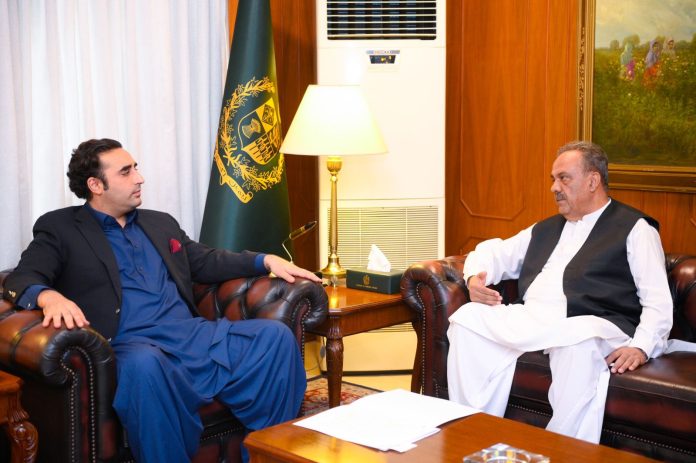
ISLAMABAD, Jun 23 (APP):Pakistan’s Special Representative on Afghanistan Asif Durrani called on Foreign Minister Bilawal Bhutto Zardari here on Friday and discussed matters of mutual respect.

They reviewed the ongoing situation in Afghanistan.

The foreign minister reiterated Pakistan’s desire to build close co-operative relations with Kabul.

He urged expeditious completion of flagship projects initiated by Pakistan and Afghanistan.

WAPDA, UAE firm sign MoUs for capacity enhancement of existing small HPPs, development of floating solar power

0

ISLAMABAD, Jun 23 (APP): Water and Power Development Authority (WAPDA) signed two Memoranda of Understandings (MoUs) with the Private Office of Sheikh Ahmed Dalmook Al Maktoum of United Arab Emirates on Friday.

The MoUs were signed by Chairman WAPDA Lt Gen (Retd) Sajjad Ghani and Sheikh Ahmed Dalmook Al Maktoum on behalf of their respective organizations, said a press release.

The first MoU is aimed at establishing a framework for cooperation and collaboration between the Private Office of Sheikh Ahmed Dalmook Al Maktoum and WAPDA to explore investment opportunities for WAPDA’s small hydel power stations including 1MW-Renala, 22 MW-Rasul, 13.2 MW-Chichokimalian and 13.8 MW-Nandipur.

The second MoU is related to exploring investment opportunities in the energy sector of Pakistan, specifically for the development of floating solar power project on water reservoirs and water bodies of the existing hydel power stations of WAPDA.

Under the two MoU, both organizations will work together to assess the technical and economic feasibility of these projects and develop a plan for their implementation.

Bilawal, envoy discuss Pakistan-Iran ties

0
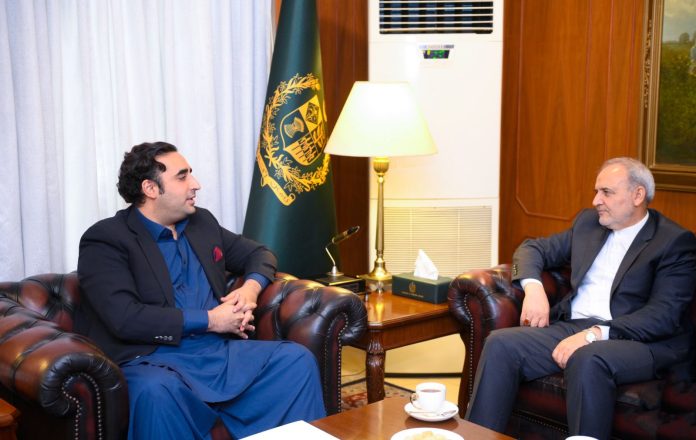
ISLAMABAD, Jun 23 (APP):Ambassador of Iran Reza Amiri Moghaddam called on Minister for Foreign Affairs Bilawal Bhutto Zardari here on Friday and exchanged matters of mutual interest.

The foreign minister congratulated Dr. Moghadam on his appointment as ambassador of Iran in Pakistan.

He expressed satisfaction at positive trajectory of relations of Pakistan and Iran. He emphasized importance of high-level exchanges between the two countries.