UNITED NATIONS, Jan 25 (APP): Pakistan has urged the advocates of the concept of ‘responsibility to protect’, or R2P, to apply it to safeguard the oppressed people of occupied Palestine and Indian-occupied Jammu and Kashmir.
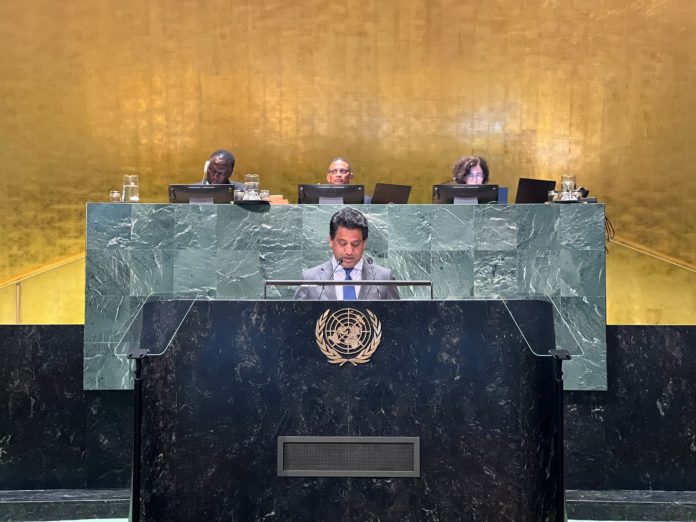
“Apart from its abuse, the concept of R2P has also led to the criticism that some powerful states have failed to invoke R2P by showing hesitancy, either in condemning the massive human rights violations committed by so-called ‘strategic allies’ or by holding them accountable in the Security Council,” Ambassador Aamir Khan, deputy permanent representative of Pakistan to the UN, told the UN General Assembly on Monday.
One specific circumstance, where #R2P would surely apply, is in situations of foreign occupation or alien domination, such as, in occupied Palestine or in Indian-occupied Jammu & Kashmir, where voices to intervene to protect populations are unappealingly quiet:Amb Aamir Khan DPR pic.twitter.com/D2kZWjfqoE
— Permanent Mission of Pakistan to UN, NY (@PakistanUN_NY) June 27, 2023
Speaking in a debate on the responsibility to protect and the prevention of genocide, war crimes, ethnic cleansing and crimes against humanity, the Pakistani envoy said for more than 7 decades, India had, denied the right of self-determination to the Kashmiri people, in violation of multiple resolutions of the Security Council, prescribing a free and fair plebiscite.
India, he said, had deployed 900,000 troops, resorted to extra-judicial killings; forced abductions; collective punishments; and the incarceration of the entire political leadership of the All Parties Hurriyet Conference (APHC).
To this end, he said Pakistan had circulated a dossier with the evidence of 3,432 war crimes, committed by India’s officials in Jammu and Kashmir, while adding that Muslims’ persecution had become a ‘routine norm’ for India.
On Saturday, during a visit of Indian Home Minister Amit Shah to Jammu and Kashmir, Ambassador Aamir Khan said that Indian Army personnel stormed into a Mosque in Pulwama district of south Kashmir while Muslims were offering prayers and forced Muslims to chant ‘Jai Shri Ram’ against their will.
Noticing this dangerous trend, Professor Gregory Stanton, the founder of Genocide Watch, has warned that a genocide of Muslims could very well happen in India, it was pointed out.
“The International community, specially the advocates of R2P concept, must carefully analyze the devastating human rights situation that is transpiring in India as well as the occupied territory of Jammu and Kashmir,” the Pakistani envoy said.
(The concept of R2P rests upon three pillars: the responsibility of each State to protect its populations; the responsibility of the international community to assist States in protecting their populations; and the responsibility of the international community to protect when a State is manifestly failing to protect its populations.)
Aamir Khan said under the terms of R2P concept, the international community was expected to protect those in danger, but its selective application — driven by double standards and geopolitical considerations, undermined its credibility as a genuine humanitarian doctrine.
“To truly uphold the principle of accountability and protect vulnerable populations, a more nuanced and balanced approach that avoids selectivity and promotes objectivity and impartiality is necessary,” the Pakistani envoy added.
Ambassador Aamir Khan’s pointed words against Indian policies, evoked a response from an Indian representative, and a Pakistani delegate immediately countered it.
Kajal Bhat, counsellor in the Indian Mission to the UN exercised her right of reply and claimed that Jammu and Kashmir was an integral part of India.
Rabia Ijaz, second secretary in the Pakistani Mission to the UN, debunked Indian claims, saying that the representative of India did not address the facts regarding its deeply troubling trajectory of human rights, and asserted that Kashmir was an internationally recognized disputed territory, not a part of India. India has used terrorism as a State policy against its neighbours, Ms. Ijaz added.
Opening the debate, George Okoth-Obbo, Special Adviser of the Secretary-General on the Responsibility to Protect, introduced the ‘Report on the responsibility to protect and the prevention of genocide, war crimes, ethnic cleansing and crimes against humanity’.
He stressed that the debate was particularly evocative as countless civilians continued to be caught in situations of conflict and subjected to genocide and war crimes. The responsibility to protect thus remained as imperative today as when the world resounded ‘never again’ at the 2005 World Summit.
The report underlined that development can build the conditions for sustainable peace, he added. In underdevelopment, however, poverty, societal inequalities, human rights abuses and conflict can be drivers of atrocity crimes.
Recalling that ‘this annual debate is a reminder to us not to drift from our commitment, our duty, our responsibility to protect’, he stressed: “The lives of millions depend on that responsibility being given meaning.”
In the ensuing debate, speakers deliberated on whether the responsibility to protect was a principle or a notion, with many emphasizing that it was an inherent obligation of sovereign States under international law, while others pointed to the lack of consensus on its definition and scope.
APP/ift
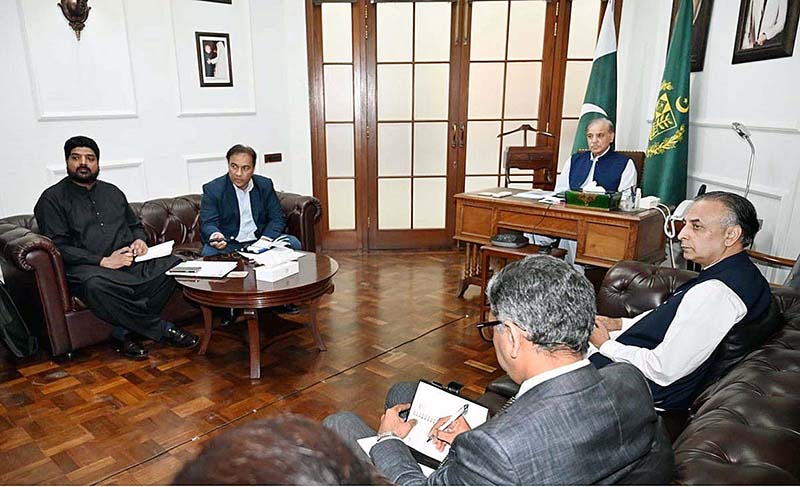

ISLAMABAD, Jun 27 (APP):Federal Minister for Finance and Revenue Senator Muhammad Ishaq Dar on Tuesday said for the first time in the country’s history, the Federal Board of Revenue (FBR) had collected Rs 7,000 billion annual tax by June 26, 2023.
“This Fiscal Year 2022-23 will end on June 30 and it is hoped that more revenue will be collected, which will be the first time in the history of the country,” the minister wrote on Twitter.
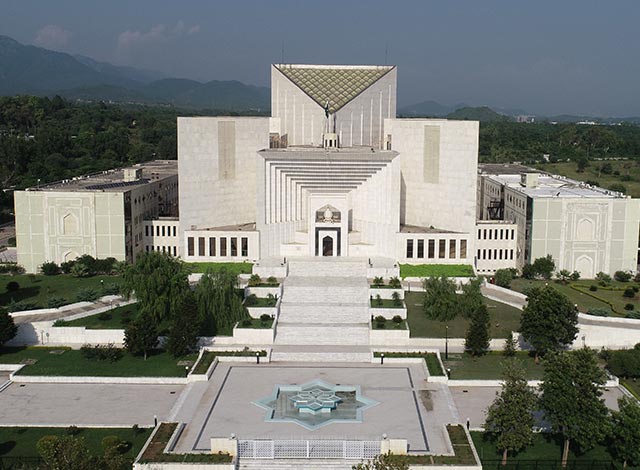
ISLAMABAD, Jun 27 (APP): Attorney General for Pakistan (AGP) Mansoor Usman Awan on Tuesday, submitting details of 102 accused who were in military custody in connection with the May 9 riots of May 9, informed the Supreme Court that they were being provided all basic facilities.
A six-member bench headed by Chief Justice of Pakistan Umar Ata Bandial and comprising Justice Ijaz ul Ahsan, Justice Munib Akhtar, Justice Yahya Afridi, Justice Mazahar Ali Akbar Naqvi and Justice Ayesha Malik heard identical petitions regarding the trial of civilian accused by military courts.
At the outset of hearing, the CJP observed that it was inappropriate to take actions against somebody without any evidence. The court had trust in the AGP’s statement, he added.
He said the army officers had passion to sacrifice their lives for the country due to their high morale and their morale was very important.
The AGP requested the court not to make public the list of May 9 riots accused, who were in the custody of army. He, however, clarified that so far the trial of not any civilian was being run in army courts as the matter was at investigation stage.
Justice Ayesha Malik asked the AGP to public the list so that everyone knew that who was taken in custody.
The CJP also remarked that the public should know on Eid day that who was in the custody of army. He questioned whether the prisoners had the phone call facility to their family members on daily basis as in many jails such a facility was available.
CJP Bandial observed that being the citizens of Pakistan the prisoners should be taken care. The court was viewing the matter in a positive way, and women, children, journalists and lawyers should particularly be taken care.
The AGP said the accused in army custody had the facility to talk with family members on phone and they also had the permission to meet their families once in a week. However, for availing the facility they had to submit a request.
He further said all the 102 prisoners would be provided books for reading, besides the basic facilities.
Earlier, Justice Ijaz ul Ahsan, addressing the lawyer of Pakistan Tehreek-e-Insaf (PTI), said Article 175 (3) was introduced in 1986, and the current circumstances were different from the court verdicts referred to by him.
Justice Ahsan asked how the accused were being kept in army custody as according to available record none of them been charged.
Justice Yahya Afridi said it would be appropriate if the list of the accused was made public, or their contacts with their families through phones should be arranged.
The AGP said the contacts of the accused with their families on phones would be ensured in next 24 hours. Arrangements were in place to deal with any medical emergency situation, he said, adding the accused had the right to hire the services of lawyers.
Justice Munib remarked that as per army rule, firstly an accused was arrested and then the investigation process against him started.
The civilian accused, he added, could only be tried in military courts in a war like situation. Even a magistrate could not take action against any accused until a police report was submitted. How someone, who did not fall in the ambit of the Army Act, could be investigated by the institution, he asked.
Justice Naqvi questioned when the crime was not on record as per the Army Act then how the anti-terrorism court (ATC) granted custody of the accused.
Justice Yahya Afridi asked under which law the ATC had handed over the custody of the accused to the army. The AGP replied Section-II D(1) was imposed.
The chief justice observed that it was strange that the Official Secrets Act was not available to the bench and asked which crimes fell under Section-II D(1).
PTI chairman’s counsel Aziz Bhandari gave arguments on behalf of his client.
The court also rejected the petitioners’ request to grant a stay order into the matter and adjourned the case till next week.

Serving the nation since 1947 by providing an accurate, objective, uninterrupted flow of news to the people, the national news service is pursuing a comprehensive strategy to transform the existing news operations into a forward-looking service – APP Digital for its diverse subscriber-base and the public.
Contact us: news@app.com.pk
Copyright © Associated Press of Pakistan