ISLAMABAD: September 07
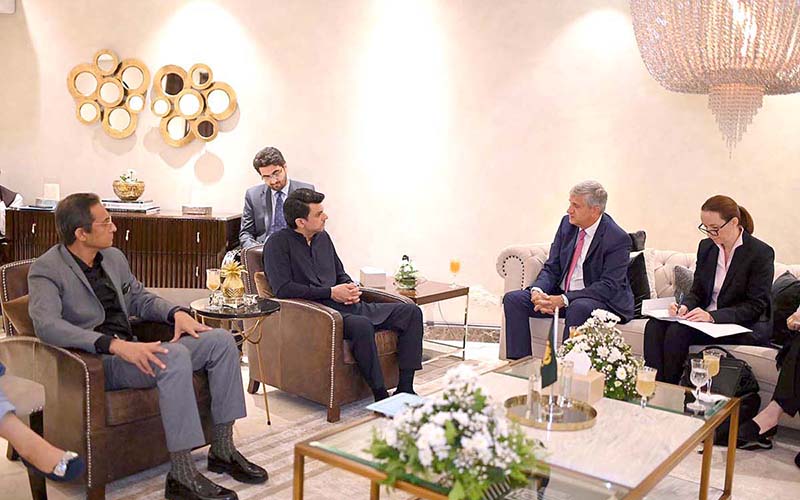

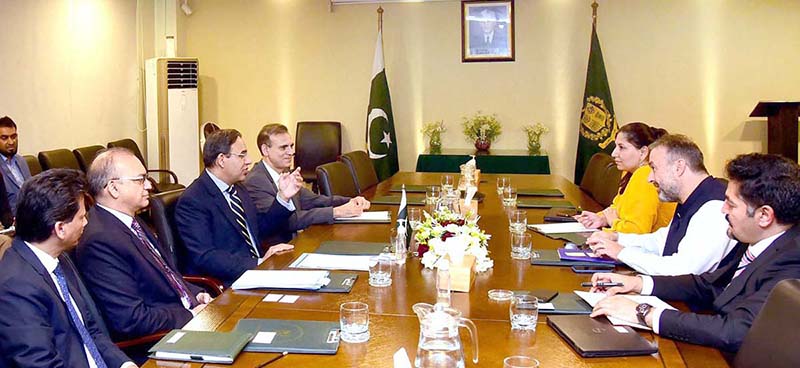
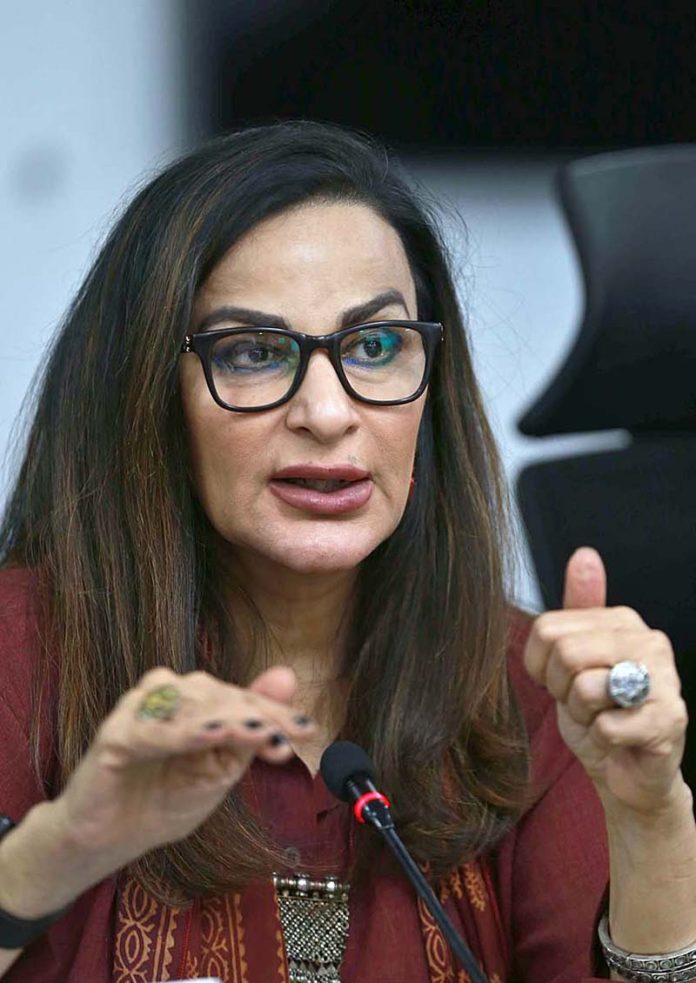
ISLAMABAD, Sep 07 (APP): Senator Sherry Rehman at Jinnah Institute’s roundtable titled ‘Financing Climate Action for Pakistan’ on Thursday said, “In leveraging options for climate action, especially in the lead-up to COP28, Pakistan needs to prioritize finance, capacity at scale and climate governance.”
“The intensifying terrain of environmental, climate and pollution challenges in Pakistan needs a reinforcement of priorities for government, civil society and development partners,” she added, speaking with a group of leading climate experts and heads of multilateral agencies, a news release said.
Senator Rehman also launched the Centigrade Platform at this policy convening, to spur policy discourse, knowledge-based collaborations and resilience advocacy in Pakistan’s climate and environment space.
She explained that the idea behind Centigrade is to generate science-based climate leadership and communications for amplifying the scale and urgency of the emergencies facing communities, as well as fostering capacity towards emerging and existing crises, both sectoral and national.
Speaking at the event, UN Resident Coordinator, Julien Harneis suggested that there was a need to tally Pakistan’s receipt of climate funds against other vulnerable countries and any variance should be examined in terms of absorptive capacity. He also observed that engineers working on Pakistan’s large infrastructure projects did not consider the obvious damage that was being caused to the environment.
Resident Representative UNDP Pakistan, Samuel Rizk stated that climate finance opportunities for a lower middle-income country (LIMC) like Pakistan were limited, and a finance and investment combination was more likely to be the solution.
For development partners like UNDP to assist Pakistan, there were key challenges to consider such as the regulatory environment, deficits in human capital and technical capacity that caused slower progress, he added.
Country Representative Unicef, Abdullah Fadil observed that the current distribution of climate finance is slanted towards integration, not inclusion.
“75% climate-related investments are made in hard infrastructure, as opposed to investments in the resilience of vulnerable communities which help them combat climate stress themselves,” he highlighted.
There is a great deal of data now available through Unicef’s Multi-Indicator Cluster Survey (MICS), which shows that 40% of Pakistani children are suffering from nutritional stunting, which leads to stunted economic contribution and stunted GDP growth. Development needs to be prioritised with inclusion before anything else.
Dr Abid Suleri, Executive Director of SDPI, pointed out a dichotomy in the international climate finance regime, whereby vulnerable countries like Pakistan could not leverage the Geneva Pledge unless there was requisite compliance with IMF. While he urged that fiscal prudence was necessary, making crisis adaptation funds dependent on IMF clearance was unnecessary and unfair. He suggested that Debt for Nature Swaps could be explored as an option for climate finance.
Agreeing with this observation, senior climate expert Ali Tauqeer Sheikh argued that governmental assessments of development projects were severely lacking and did not provide a convincing projection of adaptation and mitigation figures.
Other participants at the events included World Bank Senior Disaster Risk Management Specialist Ahsan Tehsin, UN Assistant Resident Representative Amir Khan Goraya, Australian First Secretary Danielle Cashen and Head Social & Environmental Policy Habib Bank, Ahmed Saeed.

BEIJING, Sept 7 (APP):: Justice ministers from member states of the Shanghai Cooperation Organization (SCO) have agreed to continue to strengthen interactions between their ministries and deepen cooperation in legal services.
Based on the agreement, made at the 10th Meeting of the SCO Ministers of Justice in Shanghai, they signed a joint statement emphasizing the importance of cooperation in legal and judicial fields, and continuing regular dialogues and implementing agreements, China Daily reported.
Altogether, 11 bilateral and multilateral talks between the member states were held during the meeting, Du Yaling, head of the international cooperation bureau of the Ministry of Justice, which held the meeting, said during a news conference.
The SCO was established 22 years ago and is the world’s largest political, economic and international security and defense organization in terms of population.
Its members include China, India, Russia, Pakistan, Iran, Kazakhstan, Kyrgyzstan, Tajikistan and Uzbekistan.
The meeting involved 300 representatives, including government officials and professionals from the legal service industry, academia and business sectors, from home and abroad.
China’s Ministry of Justice signed a cooperation framework with its counterpart in Russia and a cooperation plan with its counterpart in Kyrgyzstan to further clarify the content and form of cooperation in the judicial field, said Du.
During her meeting with Konstantin Chuychenko, Minister of justice of Russia, He Rong, China’s Minister of Justice, introduced the tremendous achievements made in the construction of rule of law in China.
She said China’s Ministry of Justice was willing to work with its counterpart in Russia to continue to deepen practical cooperation in the fields of legislation, law enforcement supervision, judicial assistance, transfer of sentenced individuals, as well as legal services, such as lawyers and notary service and arbitration.
These actions will better utilize the rule of law to serve the economic and social development of the two countries and provide legal guarantees for the development of China-Russia relations and foreign cooperation between the two countries.
Chuychenko said the ministry of justice of Russia was willing to deepen exchanges, mutual learning and practical cooperation with China’s Ministry of Justice in various fields, and make more contributions to promoting new and greater development of China-Russia relations in the new era.
Akbar Toshqulov, Minister of justice of Uzbekistan, said that China was an important partner of Uzbekistan, and Chinese investment in Uzbekistan was currently very active.
“The pace of cooperation is developing rapidly and the cooperation involves many fields, which plays an important role in promoting the development of bilateral relations,” said Toshqulov.
“We have reached an agreement with Chinese legal service institutions to allow their local operation to defend the interests of Chinese investors. Offices of such institutions have been established in Tashkent, Uzbekistan’s capital,” he said.
APP/asg

Serving the nation since 1947 by providing an accurate, objective, uninterrupted flow of news to the people, the national news service is pursuing a comprehensive strategy to transform the existing news operations into a forward-looking service – APP Digital for its diverse subscriber-base and the public.
Contact us: news@app.com.pk
Copyright © Associated Press of Pakistan