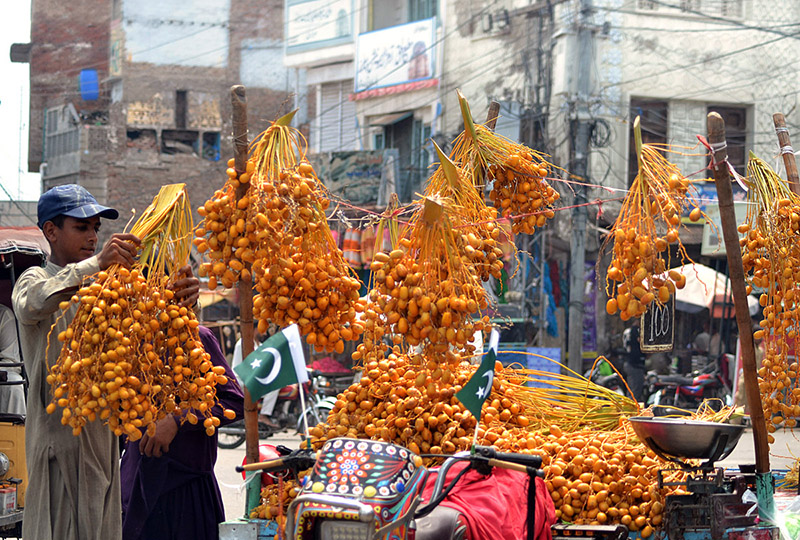
DC chairs meeting to review arrangements for Eid Milad-un-Nabi (PBUH)
25 illegal immigrants arrested in Islamabad
Commissioner chairs meeting of Divisional Task Force for Polio
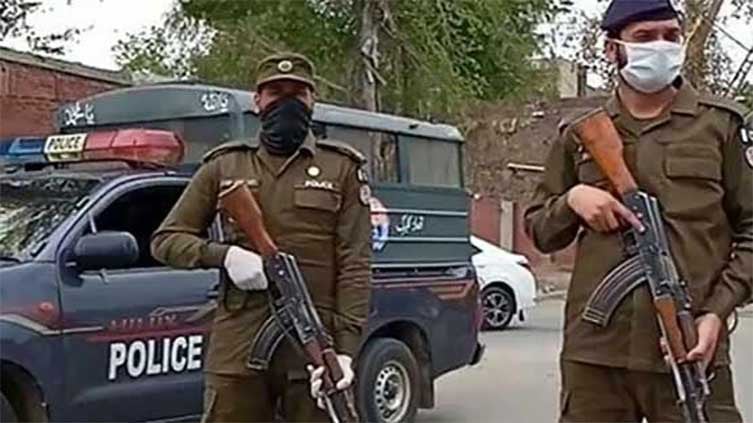
LEAs, intel operation launched against Gold smuggling mafia
Solangi grieved over demise of senior journalist’s mother
ISLAMABAD, Sep 14 (APP): Caretaker Minister for Information and Broadcasting Murtaza Solangi on Thursday expressed grief and sorrow over the demise of the mother of senior journalist Umar Hayat Khan from BOL News.
The minister, in a condolence message, prayed to the Almighty to rest the departed soul in eternal peace and grant courage to the bereaved family to bear the loss with fortitude.
He said the death of a mother was a big tragedy for everyone, and added he shared the grief of the bereaved family.
Caretaker Federal Minister for Commerce, Dr. Gohar Ejaz met with the Saudi Arabian Ambassador to Pakistan H.E. Nawaf bin Said Al-Malki at the Ambassador’s residence to discuss issues of mutual interest


ISLAMABAD: September 14 –
ECP has authority to announce election date: Solangi
ISLAMABAD, Sep 14 (APP): Caretaker Minister for Information and Broadcasting Murtaza Solangi on Thursday said under Article 218(3) of the Constitution the Election Commission of Pakistan (ECP) had the authority to announce a date for the general elections.
The caretaker government would fully facilitate and assist the ECP in holding free, fair and transparent elections, he said while talking to a private channel.
The minister said the Election Commission had already announced that the delimitation of constituencies would be completed by November 30, and soon after that it would hopefully announce the election schedule.
He underlined the need for reposing trust in the ECP which was a constitutional institution.
Responding to a query, Solangi said the ECP had been actively working on election since the approval of the result of fresh census by the Council of Common Interests.
He said it was clearly stated in the Election Act that all the parties would be given 54 days for the election campaign. “We fully abide by the Constitution and the law,” he added.
According to legal experts, he said, it was the ECP which had the authority to announce the date of election.
The minister maintained that actions against power thieves would ensure reduction in electricity prices.
He said both the ministries of Finance and Energy had been working the initiatives that would ensure provision of relief to the masses in electricity prices.
The minister said measures had been taken to curb dollar smuggling and illegal money exchanges that had helped the rupee strengthen further. Crackdown had also been launched against those who were involved in hoarding of sugar.
To a query, he said the prices of petroleum products were linked with the international market.
FM Jilani meets Prince Edward; discusses Pakistan-UK ties
LONDON, Sep 14 (APP): Foreign Minister Jalil Abbas Jilani had an audience with Prince Edward, Duke of Edinburgh here at St James’s Palace, reinforcing Pak-UK friendship.
The two sides exchanged views about the existing frateral ties between Pakistan and the United Kingdom.
The Foreign Minister conveyed good wishes from the government and people of Pakistan to Prince Edward.
Prince Edward, the Duke of Edinburgh expressed his goodwill for the government and people of Pakistan.
The Duke of Edinburgh also offered condolences for the lives lost during last year’s devastating floods in Pakistan.
ECP should not delay elections after completing delimitation: Ahsan
ISLAMABAD, Sep 14 (APP):Pakistan Muslim League-Nawaz senior leader Ahsan Iqbal on Thursday said that leaders of different political parties had been demanding the Election Commission of Pakistan (ECP) to hold general elections after completing the delimitation of constituencies.
The ECP should not delay the elections after finishing the task of delimitation in December this year, he said while talking to a private television channel.
To a question, he said the ECP would be in a position to hold the general elections in January or February 2024.
As regards the cipher issue, he said the Pakistan Tehreek-e-Insaf (PTI) leaders were found involved in breaching the diplomatic norms.
Naaz Baluch of the Pakistan Peoples Party said the PPP Chairman Bilawal Bhutto Zardari had asked the ECP to conduct elections in the 90 days period.
She said elections wes the only solution to strengthen political, democratic and economic system of the country.
She said there was a dire need to address issue of inflation being faced by the common man.
UN weather agency warns climate inaction threatens lives
UNITED NATIONS, Sep 14 (APP): The UN World Meteorological Organization (WMO) has, in a report released on Thursday, warned that insufficient progress towards climate goals is slowing down the global fight against poverty, hunger and deadly diseases.
UN Secretary-General Antonio Guterres echoed that message, warning that record temperatures and extreme weather were “causing havoc” around the world.
The global response has fallen “far short”, the UN chief insisted, just as the latest UN data indicates that the Sustainable Development Goals (SDGs) are only 15 per cent on track at the midway point of the 2030 Agenda.
According to WMO, a Geneva-based agency, current policies will lead to global warming of at least 2.8 degrees Celsius above pre-industrial levels over the course of this century – well above the Paris Agreement target of 1.5°C.
This year’s northern hemisphere summer has been the hottest on record, prompting the UN chief last week to reiterate his call for a “surge in action”.
In his foreword to the report, Mr Guterres underscored that weather, climate, and water-related sciences could “supercharge progress on the SDGs across the board”.
The United in Science report, which combines expertise from 18 UN organizations and partners, shows how climate science and early warnings can save lives and livelihoods, advance food and water security, clean energy and better health.
After recent flooding in Libya that has claimed thousands of lives, WMO Secretary-General Petteri Taalas stressed that a lack of adequate forecasting capacity could have deadly consequences for a country when faced with extreme weather events.
He highlighted the risky situation developing in Sudan, where conflict has crippled the agency’s capacity to forecast hazards.
The head of the country’s met service told him that most of her staff members escaped Khartoum and were unable to “run their business in a normal way”, he said.
“They are not able to forecast this kind of high-impact weather events anymore,” he warned.
Extreme weather events are also a key factor in the spread of global hunger and the new report seeks to inform urgent action on this front as the UN estimates that nearly 670 million people may be food insecure in 2030.
The report’s authors explore the link between life-saving food production and nutrition, and investments in weather sciences and services which enable farmers to make decisions on crops and planting.
Early warnings are also crucial to “helping identify potential areas of crop failure that may lead to emergencies”.
“United in Science” includes analysis from the Intergovernmental Panel on Climate Change (IPCC), which warned that climate change and extreme events such as heatwaves are set to “significantly increase ill health and premature deaths”.
The report’s findings show that integrating epidemiology and climate information makes it possible to forecast and prepare for outbreaks of climate-sensitive diseases, such as malaria and dengue.
Early-warning systems can also help reduce poverty by giving people the chance to anticipate and “limit the economic impact” of disasters.
The WMO-led report shows that between 1970 and 2021, there were nearly 12,000 reported disasters from weather, climate and water extremes, causing $4.3 trillion in economic losses – the majority of them in developing countries.
WMO deplored the fact that so far, there has been “very limited progress” in reducing the gap between promises that countries made to reduce greenhouse gas emissions and the level of emissions cuts really needed to achieve the temperature goal of the Paris Agreement.
To limit global warming to 1.5°C, global greenhouse gas emissions must be reduced by 45 per cent by 2030, with carbon dioxide (CO2) emissions falling close to net zero by 2050.
The report’s authors wrote that while some future changes in climate are unavoidable, “every fraction of a degree and ton of CO2 matters to limit global warming and achieve the SDGs”.
WMO also underscored the importance of the UN’s “Early Warnings for All” initiative aiming to ensure that “everyone on Earth is protected from hazardous weather, water, or climate events through life-saving early warning systems by the end of 2027”.
Currently, only half of the countries worldwide report having adequate multi-hazard early warning systems.
The United in Science report was issued ahead of the SDG Summit and Climate Ambition Summit which take place at the UN General Assembly next week.
These meetings will “shine a spotlight on how to rescue the SDGs at the half-way mark to 2030” and “boost ambition to tackle the climate crisis”, the UN chief told reporters in New York on Wednesday.