Home Blog Page 12137

AIOU closes admissions in second phase of Autumn 2023 semester

0
AIOU

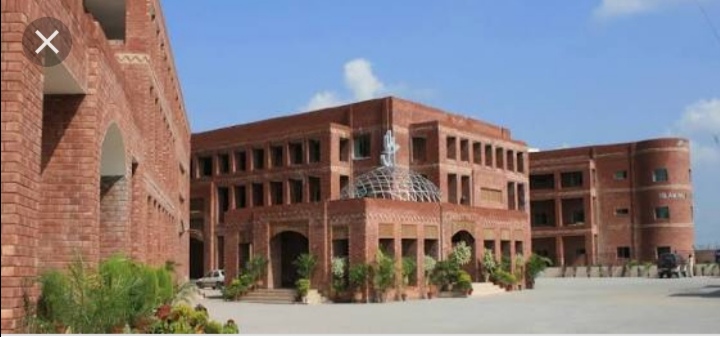
ISLAMABAD, Nov 19 (APP): Today (Monday, November 20) is the last day for admissions to the programs offered in second phase of Autumn 2023 semester at Allama Iqbal Open University (AIOU).

According to Director Admissions, this is the final date and will not be extended further.

Vice Chancellor AIOU, Prof. Dr. Nasir Mahmood, has expressed the hope that prospective students would take advantage of this opportunity to enroll.

The last date for admission was originally set for November 7, but some students missed the deadline.

They were given an extension until November 20 to apply. Dr. Nasir explained that the academic calendar prevents the date from being extended any further due to the semester system.

Admission forms and prospectus of Associate degree in Arts (BA General), Associate degree in Commerce (B.Com), Associate degree in Education, BS (ODL) programs, B.Ed programs, BBA, postgraduate diplomas and certificate courses are available on the university website.

UN FAO’ s 40 ambitious projects to revolutionize agriculture in Pakistan: Country Rep

0
Country Rep
Mudassar Iqbal
ISLAMABAD, Nov 19 (APP): The United Nations Food and Agriculture Organization’s (FAO) on Sunday unveiled a dynamic portfolio of 40 diverse projects strategically dispersed across various regions of Pakistan. These initiatives, with varying scopes, financial parameters, and target audiences, underscore the FAO’s commitment to fortifying the agriculture and food security sectors in the country.
In an exclusive panel interview with the Associated Press of Pakistan (APP), Country Representative Florence Rolle and Assistant FAOR (Programs) Dr. Aamer Irshad highlighted the proactive role of the FAO in numerous initiatives and programs aimed at strengthening Pakistan’s agriculture and food security sectors.
These initiatives span a spectrum, including enhancing agricultural productivity and sustainability, supporting livestock and fisheries development, and implementing food security programs to alleviate hunger and malnutrition.
The FAO’s involvement extends beyond traditional agricultural support. The organization actively engages in sustainable natural resource management, providing humanitarian assistance during emergencies, and collaborating closely with the Pakistani government on policy development. Additionally, the FAO supports research and innovation while helping Pakistan adapt to the challenges posed by climate change.
Rolle outlined FAO’s 2023–2027 priorities with Pakistan: enhancing food availability, strengthening climate-responsive planning, and improving agricultural value chains. The focus includes nutrition policy, climate frameworks, support for enterprises, disease control, and women’s empowerment in agriculture.
She explained that project selection is based on a thorough consultative process, aligning with the United Nations Sustainable Development Cooperation Framework (UNSDCF) 2023–2027. The FAO’s Country Programming Framework (CPF) for 2023–2027 involves consultations with relevant ministries, departments, academia, UN agencies, and resource partners at both federal and provincial levels.
Highlighting the FAO’s commitment to accountability, Rolle underscored the presence of a robust monitoring and evaluation system with units in Islamabad and across provinces. This system plays a pivotal role in shaping program effectiveness by providing guidance based on lessons learned.
Discussing assessment methods, Dr Aamer Irshad emphasized the efficiency and accuracy of modern scientific tools, particularly satellite technology, in evaluating crop damage. Rolle acknowledged challenges in assessing areas adjacent to large riverine regions and reiterated the FAO’s advantage in utilizing satellite technology in such scenarios.
As a UN agency, the FAO collaborates closely with governments worldwide, operating primarily in partnership with government entities at federal and provincial levels. The organization also engages with academic institutions, research organizations, and NGOs, employing a versatile approach tailored to the specific context and needs of each project.
Aamer discussed the Living Indus initiative, a government-backed endeavor where the FAO serves as the technical lead. In addressing threats to the Indus basin, she emphasized the pivotal role of mass involvement, particularly among the youth, in mobilizing support and creating awareness.
Touching upon the crucial role of youth in agriculture, Rolle emphasized their significance in driving economic growth. She highlighted the need to attract educated youth to the agriculture sector, noting the sector’s evolution toward precision farming, digital technologies, satellite monitoring, and research-based practices.
Dr Aamer Irshad emphasized the necessity of modernizing the sector to make it more appealing to the younger generation.
Despite agriculture contributing 22% to the country’s economy, she stressed the need for strategic reduction without compromising productivity. Large farms benefit from supportive government policies, while smallholder farmers face challenges due to insufficient profits and a lack of business acumen.
The UN representative proposed a comprehensive plan involving specialized education, financial incentives, rural infrastructure improvement, awareness campaigns, and technology adoption to make agriculture more attractive to educated youth.
In a broader perspective, Rolle highlighted FAO’s contributions to all Sustainable Development Goals (SDGs), particularly those closely related to six key sub-sectors within agriculture: zero hunger, water resources, fisheries, climate change mitigation, livestock management, gender, and food losses.
As the FAO continues to spearhead initiatives in Pakistan, its comprehensive approach aims at transforming the agriculture landscape and contributing to the achievement of the SDGs.

Locals welcome resumption of Sibi-Harnai train service after 17 years

0
Sibi-Harnai train

ISLAMABAD, Nov 19 (APP): Residents in the vicinities of Sibi and Harnai districts in Balochistan province expressed a collective sense of relief following the restoration of train services connecting these twin cities after a 17-year hiatus.

The restoration of this vital transport link has been warmly received by the local community, heralding the resurgence of economic activities and offering prospects for enhancing the standard of living.

The renewed accessibility provided by the Sibi-Harnai train service is anticipated to not only catalyze commercial endeavors but also foster avenues for the locals to elevate their socio-economic conditions.

“The long-awaited railway line, traversing rugged and perilous terrains, including mountainous regions, has been hailed as a vital transportation link in the province by Muhammad Asfand Khan, a local resident told APP on Sunday.

He highlighted the restored railway track’s significance, providing an affordable travel alternative and a catalyst for economic growth in the area. Originally established during the late 18th century under British rule, this railway section was deemed instrumental in Balochistan’s development. However, in 2006, a banned armed organization orchestrated bombings that extensively damaged bridges and tracks along this line.

Hikmat Khan Bugti, another resident, emphasized the absence of proper roads, making train travel a much-needed alternative. The reopening of this railway track drastically reduces the travel distance between Harnai and Sibi, eliminating the necessity for a 330-kilometer journey to Quetta.

“Prior to the track’s restoration, our travel between Sibi and Harnai cost us Rs 1500 to Rs 1800 by bus. Now, we reach our destination for just Rs 220,” he added. Harnai, previously part of Sibi, became a separate district in August 2007. Despite its predominantly Pashtun population, it is home to Marri tribes linked to Kohlu and Sibi’s mountainous regions.

Sarzameen Marri, a local landlord, welcomed the decision to revive the railway service, believing it would benefit over one million residents in the Sibi division. “With the train service resuming, the scenic journey through picturesque landscapes is expected to attract tourists, showcasing the region’s beauty,” he added.

Local traders anticipate significant reductions in travel distances, with a projected 300-kilometer decrease in journeys due to the restored train services. During the restoration process, approximately 50 small and large bridges were reconstructed in challenging mountainous terrain between Sibi and Harnai.

The Harnai railway station underwent complete reconstruction, while all nine railway stations, including Sibi, were upgraded. Additionally, two new rest houses were built, according to an official from the Ministry of Railways.

The first phase restored the 94-kilometer line from Sibi to Harnai, with plans to maintain the remaining 39 kilometers from Harnai to Nakas, Shahrag, and Khost in the next phase.

To ensure security, 58 security checkpoints have been established along the railway line from Sibi to Harnai, aiming to prevent sabotage activities by outlawed organizations.

The train will depart from Harnai every alternate day at 10 am, reaching Sibi by 3 pm. The return journey from Sibi to Harnai will commence the following day at 9 am, arriving in Harnai around 3 pm.

The fare for the Harnai to Sibi journey is set at Rs 220, with cargo fares at Rs 132 per 40 kilograms. The revival of train services is expected to facilitate the transportation of fresh produce, vegetables, and coal at a lower cost across the country.

Pakistan Railways also plans to start a cargo-bearing train from Harnai in the near future, aiding the transportation of agricultural produce and coal from the region to other parts of the country.

The restoration of the strategic Sibi-Harnai railway track by Pakistan Railways, in collaboration with the National Logistics Cell (NLC), is poised to significantly boost economic and commercial activities in the region.

The completion of reconstruction and renovation work by Pakistan Railways, supported by the National Logistics Cell (NLC), marks the long-awaited restoration of the Sibi-Harnai railway track for traffic.

The line had been rendered dysfunctional after a series of bomb blasts damaged 22 steel bridges in the highly rugged and inaccessible area. Its restoration between the historical cities of Sibi and Harnai is expected to have a positive impact on the economy and agriculture of the entire region.

The rehabilitation of the railway track holds the promise of enabling deserving students from both districts to access higher education while stimulating economic and commercial growth in the area.

Stemming out domestic violence still a far cry

0
domestic violence
By Muhammad Yousaf
LAHORE, Nov 19 (APP): Despite essential legislation and repeated efforts to control this menace, domestic violence still persists in societies worldwide – thanks to ignorance of people to religious and legal obligations and their deep entrenchment in primitive sociocultural norms.
It persisted as an insidious issue in our society for decades that transcends geographical, economic, racial, and cultural boundaries, inflicting its impact on women through verbal abuse, physical assault, beatings, and tragically sometimes even murder.
The repercussions extend far beyond mere physical injuries, reaching into the realms of compromised health, weakened psychological well-being and profound emotional distress. Unfortunately, our country is also not immune to this pervasive problem.
The roots of domestic violence are deeply embedded and multifaceted with factors like women’s low education, poverty, lack of awareness, misinterpretations of Islamic teachings and adherence to customary and prevalent cultural customs contributing to this menace.
Significantly, this issue disproportionately affects families in the lower socio-economic strata as men with higher education usually exhibiting a lower propensity to abuse their family women.
“Besides other factors, domestic violence against women is a case of failure of respective institutions in effective implementation of relevant laws,” remarked Sabahat Rizvi, Secretary Lahore High Court Bar Association.
“Being a law practitioner, I can validly attribute the increasing cases of domestic violence to a general tendency of overall lethargy by such institutions and a spirit of male dominance in society,” she added.
At the same time Sabahat argued that women’s welfare is not a government responsibility alone as she also pointed out a growing societal conservatism contributing to the rise in such incidents.
“Men, in their personal capacity, perceiving themselves as more powerful, engage in acts of violence against women,” she explained. “Therefore, the remedy lies in proper awareness of women and rigorously enforcing relevant legislation to curtail men.”
The Punjab government has taken several measures to counter this negativity on part of men folk and its detrimental consequences by establishing Punjab Women’s Helpline 1043 and Women Safety Mobile Application.
“These measures and landmark legislation manifest the commitment of the Punjab government to control and reverse the detrimental consequences of domestic violence,” said an official of the Punjab government.
In this context, he mentioned to introduction of the Punjab Protection of
Women against Violence Act (PPWVA) in 2016. “This act, following similar legislation in Sindh and Balochistan seeks to establish an effective system for protection, relief and rehabilitation of women facing violence, delineating a comprehensive code for its implementation.”
Under the provisions of PPWVA, the government is mandated to establish a universal toll-free complaints hotline, protection centers and shelter homes. These facilities serve as critical components for mediation, reconciliation, rescue operations, medical examinations, treatment and legal assistance for the aggrieved.
Mechanisms for periodic awareness campaigns among public servants and the creation of a robust database and software for monitoring and evaluation are also integral aspects of the legislation.
But, sill a lot is needed to be done in the field of implementation as even in the presence of effective legislation and other commendable measures, this grim reality still persists.
Gender Reality Report 2021 of the Punjab Commission on the Status of Women revealed no significant decrease in domestic violence during 2019 and 2020 even after five years of passage of the Act for protection of women.
Even during the regime of the claimant to create “Riasat-e-Medina,” Imran Khan, domestic violence showed an upward trend in cases encompassing murder, attempted murder and incidents of domestic beating.
Lahore, the provincial capital, reported the highest number of cases, underscoring the widespread nature of the issue. Alarmingly, some districts reported none, potentially indicating underreporting or lack of awareness among women about reporting mechanisms. The most common form of domestic violence in Punjab had been ‘beating.’
Sarah Shiraz, Punjab Resident Director of Aurat Foundation mentions to multiple factors behind the ongoing violence against women. “We face critical challenges in the implementation of laws against domestic violence.”
Then there is a significant hurdle is the form of lack of awareness among women regarding their rights under this legislation, she said. “Even when women are aware, navigating the bureaucratic maze for grievance redressal proves to be a formidable challenge.”
She further remarked, “The institutions responsible for addressing grievances often lack a focused approach, leading to victims to shuttle from one place to another without satisfactory resolution.”
Sarah emphasized an urgent need for collaborative efforts between the government departments and civil society to combat this menace. “A holistic approach focusing on awareness raising, laws implementation, accessible support systems and streamlined grievance redressal is essential.”
She also stressed to focus on women’s education to educate them about their rights and the means to seek assistance.
The battle against domestic violence in Punjab is far from over and a multifaceted, collaborative approach is imperative to foster a society where women are safe, empowered and free from the scourge of domestic violence.
To achieve this goal, there is a dire need for law enforcement agencies, the clergy, civil society and non-governmental organizations to join hands for ensuring that women fully enjoy their rights and live in a violence-free atmosphere.

CM Baqar visits shrine of Abdullah Shah Ghazi

0
CM Baqar

KARACHI, Nov 19 (APP): The Caretaker Chief Minister Sindh Justice (Retd.) Maqbool Baqar visited the shrine of Hazrat Abdullah Shah Ghazi here on Sunday.

The caretaker chief minister placed a sheet of cloth (Chadar), to pay his respects, on the shrine and prayed.

He visited the shrine without any protocol.

Solangi leaves for home from Maldives

0
Solangi
MALE( Maldives), Nov 19 (APP): The Federal Minister of Information, Broadcasting, and Parliamentary Affairs, Murtaza Solangi, left for home on Sunday after attending the Presidential Inauguration 2023.
The minister was seen off by senior officials of the Ministry of Foreign Affairs at Male, said a Ministry of Foreign Affairs post on X, formerly Twitter.

Career counseling helps students to acquire employment as per their potential, aptitude

0
Career
By Fakhar e Alam
PESHAWAR, Nov 19 (APP): Most of the students at school, college, and even at the university level are unaware of their true potential and aptitude in the selection of subjects, hunting for jobs, and seeking professional careers that could match their inner abilities.
Filing an online application in a net café for a government job, Ehtisham Qasier (26) is hopeful to achieve his dream this time after repeating this painstaking exercise for nearly three years despite his higher education qualification.
Graduated from Government Postgraduate College Peshawar, Ehtisham was unable to secure a government job either through recruitment testing agencies or the public service commission, apparently due to his low grades and repeated changes in education line in his 16-year education career.
“I am applying for government and NGOs jobs for the last three years soon after obtaining a BS four-year degree in Urdu literature from the Government Postgraduate College, Peshawar, but could not succeed due to inappropriate selection of subjects and repeated changing of education line,” the Nowshera-born graduate told APP before leaving for home on a motorbike at Hastnagri bazaar, Peshawar.
Ehtisham is rushed to the net cafe to apply for jobs after seeing vacancies advertised in newspapers by different government departments, companies, and NGOs from time to time, and his struggle culminates in extreme disappointment owing to his low educational grades and changing of subjects in secondary, higher secondary, and graduation.
“During my entire educational career, there was hardly anyone in our educational institutes who guided us in the selection of subjects as per our potential and aptitude. As a result,  many of my colleagues had either found it difficult to get a dignified job in the public or private sector or left study incomplete, thus putting an extra burden on parents who pinned high expectations on them,” he said.
“There was hardly any other suitable option left for me now but to join a private educational institute in Peshawar as a part-time Urdu teacher to meet my pocket expenses,” he said. Like Ehtisham Qaiser, many students in Khyber Pakhtunkhwa were finding it difficult to get a dignified job due to low grades in their education career owing to the change of subjects from Metric to MA and MSc due to a lack of professional career counselors in schools and colleges in the province.
Dr. Khalid Mufti, former principal of Khyber Medical College, Peshawar, and senior psychiatrist, told the news agency that career counseling is very important in shaping the lives of students at a young age, besides helping them to make informed decisions about their career path.
He said the country’s job market was competitive, requiring skilled hands, while the education system was outdated and non-market-oriented. “Most of our students at primary and even at college level were unaware of their true potential and chose subjects in metric, FA/FSc, graduation, and later MA/MS without consulting career counselors, which later leads to unhappiness, depression, and frustration in society after they fail to get jobs.”
“The selection of the right career is one of the most life-changing decisions in a student’s life, and if it is not taken seriously, it may result in lifetime regret, frustration, anxiety, and demotivation.”
In a country like Pakistan, where the population bulge had crossed the psychological barrier of 240 million this year and where there were an estimated 22.8 million out-of-school children, including 4.7 million in KP, the role of career counselors carried significant importance, especially in schools and colleges, to provide much-needed advice on the basis of an assessment of students’ aptitude, personal interests, and desired path.
Besides doctors and engineers and competitive exams, he said there are many education disciplines like artificial intelligence, mechatronics, telecommunication, architecture, textiles, banking, transport, forestry, mining, IT, and petroleum engineering for students to excel in.
Dr. Khalid Mufi suggested the appointment of professional career counselors in elementary and secondary education for the assistance of students, besides ensuring personal and educational growth in life.
“Poor selection of career path and repeated changing of curriculum subjects often lead to poverty and unemployment in the country, where the jobs market is already overburdened,” said Professor Dr. Naeemur Rehman, former Chairman, Economics Department, University of Peshawar, while talking to APP.
Dr. Naeem, while citing a report from the Pakistan Institute of Development Economics (PIDE), which uses employment data from 2001–02 to 2020–21, said that the unemployment rate for graduates in 2020–21 had increased to 16.1% as compared to 14.9% in 2018–19, while the unemployment rate for engineers had doubled from 11% to 23.5% in two years.
Similarly, the unemployment rate for computer science graduates has jumped from 14.2% to 22.6% in just two years, while the unemployment rate of agriculture science graduates grew from 11.4% to 29.4% during the said period.
He said the gap between the rate of overall unemployment (6.3 percent) and that of graduates (16.1 percent) is almost 10-percentage-point wide, and the misalignment between demand and supply of graduates largely contributed to the higher unemployment rate among graduates in Pakistan.
Ikhlaq Ahmed, Chief Education, Government of KP, said that a special center was setup for offering career counseling and job placement services to students and youth in the field of vocational and professional education.
He said the center was established by the Khyber Pakhtunkhwa Technical Education and Vocational Training Authority (KP-TEVTA) at the Government Advanced Technical Training Center at Industrial Estate Peshawar, where necessary professional training was being provided to job seekers wishing to go abroad.
The center was supported by the KP Government, the National Vocational and Technical Training Commission (NAVTTC), and the TVET Sector Support Program with the assistance of donor agencies.
He said KP-TEVTA was planning to replicate the career counseling and job placement centers in other regions of the province.
These centers, equipped with the latest technology and career counselors, are providing the much-needed support to the trainees, helping them to reach their desired career.
The official said these centers would also extend services to skilled workers in finding jobs in national and international markets through job portals.

Late breast cancer diagnosis causes 44,000 deaths annually in Pakistan: Begum Alvi

0

ISLAMABAD, Nov 19 (APP): First Lady Begum Samina Alvi on Sunday said that nearly 44,000 women died of breast cancer every year in Pakistan due to late diagnosis and stressed that thousands of women and their families could be saved if it was diagnosed at an earlier stage with chances of survival up to 98 percent.

However, she regretted that there was a lack of awareness about the early symptoms of this disease in Pakistan. As a result, the disease kept on spreading silently and proved fatal.

The first lady was addressing at Pakistan Foreign Office Women’s Association (PFOWA)’s annual charity bazaar.

Late breast cancer diagnosis causes 44,000 deaths annually in Pakistan: Begum Alvi

The spouses of Islamabad-based diplomats organized stalls on the occasion depicting the culture, cuisine and artifacts of their respective countries. The proceeds of the charity bazar will be used for the welfare of the low-income staffers of the Ministry of Foreign Affairs.

Begum Alvi said that they had started a comprehensive, inclusive and nationwide breast cancer awareness campaign.

“One of the major challenges before us was to convey our message to women living in far-flung areas of the country. Most of the cancer cases in Pakistan were reported in the third or fourth stages, which not only made the treatment painful and expensive but also reduced the chances of survival. Apart from this, mammography, ultrasound and screening facilities are either lacking in our country or these facilities are very expensive,” she added.

Late breast cancer diagnosis causes 44,000 deaths annually in Pakistan: Begum Alvi

Referring to autism, children with disabilities, and the importance of early detection of breast cancer issues, she said that these initiatives hold immense importance, as they had the potential to save many lives.

About progress on public awareness, Begum Alvi said that they had reached out to millions of mobile users across the country with the help of ring-back tone and messages and in this year over 140 million SMS on breast cancer had been sent to mobile users in Pakistan.

She said that now the number of cancer cases in the third and fourth stages had decreased in different hospitals in Pakistan, while the reporting of cancer cases in the first and second stages had increased.

Late breast cancer diagnosis causes 44,000 deaths annually in Pakistan: Begum Alvi

Now, mammography, ultrasound, and screening facilities were being provided at subsidized rates in different hospitals across the country and the number of these facilities has also increased, she added.

Similarly, the first lady said they had worked to shatter misconceptions, foster inclusivity, promote inclusive education and rehabilitative services, and ensure equal opportunities for the persons with disabilities (PWDs).

“One of our aims was to bring about behavioural change in society towards them, create sensitivity in our society towards their issues, and make them feel part of the mainstream,” she added.

Late breast cancer diagnosis causes 44,000 deaths annually in Pakistan: Begum Alvi

The first lady also urged the need of provision of skills, training and jobs to persons with disabilities as per their aptitude and skillset.

The first lady said that they had also asked international experts on disability to contribute their energies to train teachers to impart education to children with disabilities.

She opined that children with different abilities should be given the opportunity to learn and grow with other children because in this way, they would be socialized and the society would also become more aware of their special needs.

Late breast cancer diagnosis causes 44,000 deaths annually in Pakistan: Begum Alvi

About the issue of mental health and early counselling, she said that they were taking the initial steps towards building healthier communities and trying to educate the people that mental health was an important aspect of their overall health and well-being.

“As per one estimate, almost 24 million people in Pakistan need mental health counselling and services,” she shared.

Late breast cancer diagnosis causes 44,000 deaths annually in Pakistan: Begum Alvi

The first lady alluded to acute shortage of mental health facilities and trained professionals in Pakistan and said that they were making efforts to connect with trained overseas Pakistani professionals and international experts, asking them to donate their time and expertise to train and advise people in Pakistan.

“Similarly, Artificial Intelligence, chatbots, and IT tools are being used in Pakistan to extend mental health counselling services and advisory to people in need,” she maintained.

She appealed to media to continue to talk about such issues and continue to create awareness through programs, talk shows, morning shows, dramas, news bulletins, and public service messages.

The first lady also congratulated members of PFOWA, the Foreign Service community, the diplomatic corps, and private organizations for their unwavering support and contributions to the success of this event.

She appreciated PFOWA for the significant contributions to social welfare, and said that annual charity bazaar served as a testament to their unwavering dedication.

Speaking on the occasion, Secretary Ministry of Foreign Affairs Syrus Sajjad Qazi said that the annual charity bazaar featured handicrafts and cuisines from different parts of the world and the proceeds of the bazaar would go to the charitable activities of POFWA.

He also commended that social welfare endeavors of POFWA.

Patron PFOWA Shaista Jillani said that the event was a manifestation of POFWA’s commitment to making a positive difference in society and serving the people in need.

President PFOWA Shazza Syrus Qazi, in her remarks, said that POFWA had been endeavouring for the last 70 years to serve the people in need and contributed to the flood victims in Pakistan as well as the people of Gaza and earthquake affectees in Turkiye and Syria.


Cutting educational expenses through novel methodologies

0
educational expenses
By Qaiser uz Zaman
ISLAMABAD, Nov 19 (APP): As continuously increasing education expenditures were reaching beyond parents capacity, experts believe that modern and novel teaching methodology could be one of panacea to address this issue.
In a tug of war between the parents and owners of private educational institutions, either the students miss the opportunities of quality education or the lives of their parents become miserable.
The owners, despite earning significant profit, are often seen complaining of extra expenditures in running their institutions due to the price hike of essentials.
If, for a moment, their claims were accepted, there could have been no justification for them to continue with this business if there was no profit. But they go with it, and the easy way to recover their expenditures is to shift the burden to parents through an increase in fees.
Therefore, educational experts have come up with the notion of adopting proper planning, the use of the latest technologies, and a systematic approach to reducing education costs at schools.
For them, it might initially seem counterintuitive to invest in new technology. However, choosing the right software and tools can reduce the need for working capital and minimize the use of material resources.
“In many cases, private institutions are charging hefty amounts, and the government should actively engage with them to get fee structures rationalized,” remarked former Vice Chancellor Allama Iqbal Open University (AIOU) Dr. Shahid Siddiqui. “When they are earning millions of rupees, the chargeable amount is becoming unbearable even for middle-class parents, while kids of poor people cannot even think of studying at these institutions.”
“The government and the owners of private institutions should sit together and think out a way forward to address this issue,” he added.
He pleaded in favor of the idea of distant learning through the latest online techniques and said, “It will make us technologically efficient and help save money.”
Dr. Siddiqui said different schools use bulk paper to maintain records of teachers and students and prepare reports, timetables, syllabuses, and much more. “Imagine how much money is spent on maintaining this physical record. But, by going paperless and moving databases to the cloud, they can cut down on a sizeable amount of money.”
He regretted that non-formal education had been a deprived area since 1974, as after AIOU, only Virtual University was established to provide distant education. “Virtual or distant learning is an easy source for students to access quality education on lesser fees than to physically approach the educational institutions.”
“Then there is another dilemma of the number of books and notebooks,” he mentioned and said, “it is unkindness to our babies, seen carrying kilos of books on their backs.”
“Why do we overload our primary-level students with books and notebooks?” he stated. “Can’t we reduce the number of books and shift them to the latest modes of learning in this era of the latest technologies?”
He said the formal universities are converting to an online system, which will surely reduce the cost of education.
Keeping in view the hardships of parents, Vice Chancellor Islamia University Bahawalpur, Prof. Dr. Muhammad Ali, came up with the idea of amending the laws and creating a corporate cluster by using the physical assets of education departments to earn money and provide cheaper education to students.
“We can use science and technology parks as money-making hubs, and by cutting extra expenses, we can establish ‘endowment funds’ at colleges and universities to support needy students,” he stated.
Recently, the Higher Education Commission (HEC) under the Higher Education Development in Pakistan (HEDP) project conducted an extensive capacity-building session for public sector universities on financial autonomy and revenue generation.
This meeting was aimed at encouraging higher education institutions (HEIs) to develop projects for generating funds and revenue to meet their needs. 75 vice chancellors, treasurers, and registrars from public sector HEIs discussed the possibility of resource generation.
As, for decades, education has remained a neglected sector, the expert strongly pleads to enhance the budget for the education sector.
“First of all, the government should take education as a top priority and allocate at least 5% of the GDP for this sector,” said Renoqned educationist Murtaza Noor. “As per law, education is free from Grade I to 16, and the state should ensure facilities for such students, especially scholarships for those in dire need.”
He suggested establishing students’ alumni to support poor students, control the cost of education, and award scholarships to kids from marginalized segments through charity. “The private sector must also be bound to give fee concessions and scholarships to deserving students under corporate social responsibility (CSR).”
Fund allocation for the higher education sector in Pakistan was very low as compared to international standards, while the financial contribution by the provincial governments for HEIs had also been negligible, except in Sindh province.
As a key objective of its HEDP project, the HEC has encouraged public-sector HEIs to enhance revenues from non-traditional sources other than government grants and student fees.
Since the costly education and paucity of funds for public sector universities persist as a chronic issue, it is the utmost responsibility of the upcoming government to take revolutionary measures for coping with this challenge.

CPEC has transformational impact on socio-economic landscape in Pakistan: Ahsan Iqbal

0
CPEC
BEIJING, Nov 19 (APP): The China-Pakistan Economic Corridor (CPEC), a flagship project of China’s Belt and Road Initiative (BRI), has emerged as a transformative force reshaping the socio-economic transformational impact on the lives of people in Pakistan, former Minister for Planning and Special Initiative Ahsan Iqbal said.
“When we started CPEC in 2013, Pakistan was suffering from a major energy crisis. We were experiencing power shortages for 16 to 18 hours per day, and we had major infrastructural bottlenecks with very poor physical infrastructure,” he said in an exclusive interview with China Global Television Network (CGTN).
And because of a lack of electricity, energy was not there, and industrial and agricultural production was suffering, which meant there was more unemployment, which was a major contributor to more poverty, he added.
Ahsan Iqbal said that through the CPEC, in three years, more than $25 billion of investment came into Pakistan that modernized infrastructure and created new roads to connect many regions. It provided more than 8,000 megawatts of new power, which helped the country overcome power shortages.
“As we had energy in the economy, our agriculture and industrial outputs improved, which brought more employment for thousands of young people and also helped them come out of poverty,” he added.
About special economic zones, he said that nine special economic zones have been identified in different regions of Pakistan and added, “All regions are taking part and taking benefit from CPEC, which is another indicator that it is a very inclusive project and it does not leave anyone behind.”
“We are now working with China to set up industries in these special economic zones, through which both Pakistan and China can work together and export goods to third countries,” he added.
“Gwadar Economic Zone is developing very fast, but in addition to that, nine more economic zones are being developed in Pakistan, in which we hope that investment that will come from China will help us in industrialization and that will be a major contributor towards structural transformation of the economy.”
He opined that it would create more jobs, and most importantly, Pakistan needs to improve its export performance, adding, “We hope that with Chinese technology and investment and their access to global supply chains, we will be able to improve our exports as well.”
Terming CPEC a game changer for Pakistan and the region, he said that the future of economic development lies in regional cooperation.
“We can create an economic market for a huge benefit for three billion people living in South Asia, China, Central Asia, and the Middle East through regional connectivity,” he added.
He said that therefore, programs like CPEC and BRI could help people eliminate poverty and unemployment and realize the dream of shared prosperity as well as people-to-people contact.
Responding to a question about the next stage of CPEC, he stressed the need to ensure an environment of peace, stability, and continuity of policies in Pakistan.
“We have a very young population that is now getting education and skills relevant to the future economy, and it provides a very economical human resource for investments in the industry and technology sectors, particularly,” he added.
Ahsan Iqbal said that the government has launched a very ambitious program to stabilize Pakistan’s economy and restore the confidence of the business community by following policies initiated in 2013 with full force and vigor.
He said that a Special Investment Facilitation Council (SIFC) brings all the government agencies and all the government branches, whether federal or provincial, whether civil or military, under one roof to attract foreign direct investment.
“The SIFC is a very new initiative that the government has undertaken, and we hope that it will encourage foreign investors to come to Pakistan,” he added.
To yet another question about debt burden, he said, “If the previous government had promoted CPEC enough, we would have seen lots of progress in industrial cooperation. So, slow progress on CPEC actually contributed to the slowing down of the economy.”
Very high prices of commodities, particularly oil and gas, also created problems for Pakistan’s economy. None of these problems have anything to do with CPEC or BRI. Because most of the investments that came to Pakistan under CPEC were at a very concessional rate, he added.