Home Blog Page 11845

Pakistan’s earns $892.972 million from IT services’ export in 4 months

0

ISLAMABAD, Dec 31 (APP): Pakistan earned US $892.972 million by providing different Information Technology (IT) services to various countries during the first four months of the current fiscal year 2023-24.

This shows a growth of 4.45 per cent as compared with the US $854.918 million earned through the provision of services during the corresponding months of the last fiscal year 2022-23, the Pakistan Bureau of Statistics (PBS) reported.

During the months under review, the export of computer services grew by 4.81 per cent as it surged from US $688.078 million last year to US $721.162 million during July-October 2023.

Among the computer services, the exports of software consultancy services witnessed an increase of 93.76 per cent, from US $1.009 million to US $1.955 million this year while the export of hardware consultancy services also surged by 1.13 per cent, from US $253.543 million to US $256.408 million.

The export of repair and maintenance services increased by 3.16 per cent from US $0.443 million to US $0.457 million whereas the export and imports of computer software services also surged by 4.01 per cent, from $190.228 million to $197.862 million.

Meanwhile, the export of information services during the months under review dipped by 25.18 per cent from US $1.390 million to US $1.040 million.

Among the information services, the exports of information-related services increased by 21.04 per cent, from US $0.366 million to US $0.443 million whereas the exports of news agency services however decreased by 41.70 per cent, from US $1.024 million to US $0.597 million.

The export of telecommunication services increased by 4.45 per cent as these went up from US $165.45 million to US $170.770 million, the data revealed.

Among the telecommunication services, the export of call centres services increased by 8.84 per cent during the months as its exports increased from US $69.641 million to US $75.800 million whereas the export of other telecommunication services witnessed a nominal decrease of 0.88 per cent, from US $95.809 million to US $94.790 million during this year, the PBS data revealed.

Fiver terrorists killed in Awaran Operation: ISPR

0
ISPR logo

RAWALPINDI, Dec 31 (APP): At least five terrorists were killed in an intense exchange of fire during an intelligence-based operation (IBO) conducted by the security forces on December 30-31 in general area Mashkai, Awaran District of Balochistan province.

“During the conduct of the operation, after intense fire exchange between own troops and the terrorists, ‘Five Terrorists’ were sent to hell. Terrorists’ hideout was also busted and a cache of arms, ammunition and explosives was recovered,” an Inter Services Public Relations (ISPR) news release on Sunday said.

The sanitization operation is being carried out to eliminate any other terrorists found in the area.

“Security Forces of Pakistan, in step with the Nation, remain determined to thwart attempts of sabotaging peace, stability and progress of Balochistan,” the ISPR said.

Dense fog engulfs Sargodha city

0
SARGODHA, Dec 31 (APP):District city and its adjoining areas have faced dense fog on Sunday day which decreased visibility level by seven to ten meters.
According to a spokesperson,the fog started at late hours of Saturday night and continued till Sunday morning, decreasing visibility level and increasing coldness in the weather. The local Met Office has forecast more fog for district for next 24 hours.The highest maximum temperature 21 centigrade and the lowest minimum 08 centigrade were recorded during last 24 hours.
The fog has also been forecast for other districts of Sargodha division.

Multani Mitti holds ground as traditional beauty elixir in culturally-rich South Punjab

0
Multani mitti

MULTAN, Dec 31 (APP): In the bustling world of beauty and skincare, the age-old natural remedy by Multani Mitti has been maintaining renewed attention for its amazing benefits. Multani Mitti, commonly known as Fuller’s Earth, is still popular as an essential in beauty routines, offering a myriad of advantages for skin.

Rich in minerals like magnesium, calcium, and silica, Multani Mitti has become a sought-after solution for those battling oily and acne-prone skin. Syedia Aliza Gillani, a local beautician, informs about Multani Mitti’s ability to absorb excess oil and impurities, attributing its effectiveness to the natural elements embedded in this versatile clay.

Multani Mitti is like nature’s vacuum for the skin, said Aliza Gillani. She added that Multani Mitti’s natural exfoliating properties work wonders, unclogging pores, and leaving the skin with a radiant and smooth texture.

But its benefits don’t stop here, she remarked. The Mitti is highly beneficial in reducing blemishes, scars, and pigmentation and thus offering a natural solution for achieving an even skin tone. The clay’s cooling and soothing effect also make it the best natural remedy for sunburns, rashes, and various skin irritations, she claimed.

To a query about possible allergic issues, Gillani maintained the importance of conducting a patch test before using Multani Mitti. She added that generally it was safe for most skin types, however a patch test was vital to identify any potential allergic reactions or sensitivities,” she advised.

Another beautician, Asifa Bashir Chaudhary, also shared some benefits of Multani Mitti. She stated “It leaves the skin feeling exceptionally soft, radiant, and with a noticeable glow. Usually, incorporated into facial routines, it acts as a transformative step that enhances the overall texture and luminosity of the skin.”

She said Multani Mitti is not only a skincare marvel but it does wonders for the hair too. She termed it a game-changer for those struggling with excessive oil and dandruff.

About usage, mixed with other ingredients like rose water, lemon juice, or honey, Multani Mitti transforms into a powerhouse treatment for luscious locks.

The skincare enthusiast also hinted that Multani Mitti was not just a beauty trend but it was a sustainable and affordable option for the poor seeking a natural glow.

Aqsa Malik, a housewife, also shared her experience of using Multani Mitti for skincare.

She maintained, “I have observed a visible difference in my skin’s texture and tone since incorporating Multani Mitti into my routine. It’s amazing how this Mitti is so simple and highly effective, she stated.

She claimed that due to its rich mineral composition and diverse applications, it has become a favourite choice among those seeking authentic, affordable, and sustainable solutions for healthier skin and hair.

About extraction of Multani Mitti, Suhail Ahmed, a shopkeeper, informed that it was extracted from clay deposits and then put on ground under sunlight for removal moisture and then it was sieved to get fine texture.

Known dermatologist Dr. Waqas Arqam Malik said that medical education curriculum lacked information about the role of Multani Mitti. He candidly expressed that medical books did not cover the traditional skin care remedy. Underscoring the medical community’s emphasis on evidence-based practices, he stated that doctors typically recommend lab-tested skincare products only.

He said that rigorous scrutiny applied to skincare articles endorsed by medical professionals. While Multani Mitti’s historical use is acknowledged, the absence of formal education on its benefits in medical training raises questions about the integration of traditional remedies into modern medical practices, he added.

The revelation by Dr. Malik opened a dialogue on the broader scope of dermatological education and encouraged a more comprehensive approach that considered both modern medical knowledge and traditional remedies.

APP/atf-xl/taj (APP Feature Service)

Rich tapestry of cultural diversity: Khyber Pakhtunkhwa at crossroad of civilizations

0

By Asmat Shah Garwaki

PESHAWAR, Dec 31 (APP): Nestled in the heart of South Asia, Khyber Pakhtunkhwa unfolds a rich tapestry of cultural diversity spanning over centuries. As we journey through the annals of time, KP emerges as a region steeped in history, shaped by a myriad of civilizations, and adorned with the unique hues of diverse communities.

The historical roots of Pakhtunkhwa delve deep into antiquity, with evidence of ancient civilizations leaving their imprints on its landscapes and minds of visitors. From the Gandhara civilization, whose artistic marvels still echo in the relics of Peshawar, Taxila and Swat, to the influence of Persian, Central Asian, and Indian cultures, the province has been a crossroads of civilizations, each contributing to its multifaceted identity.

“One of the defining features of KP’s cultural mosaic is its linguistic diversity. The region is home to a variety of languages, including Pashto, Hindko, and Saraiki, each carrying the echoes of the people, who have called this land home,” said Bakhtzada Khan, senior research officer, Archaeology and Museums Department, Government of Khyber Pakhtunkhwa while talking to APP.

He said the linguistic landscape becomes a historical palimpsest, revealing the ebb and flow of cultures and the resilience of communities in the face of change, adding Khattak and Meshud dances were exhibited by the respective tribes ahead of wars and battles to get psychological superiority over the rivals.

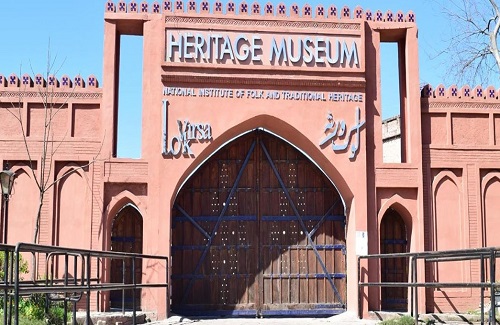
The ancient archaeological sites, like the world heritage site of Buddhist stupas of Takht-i-Bahi in Mardan and Lord Bhudda besides others 30,000 rare antiquities, statutes, artifacts and muzzleloader guns at Peshawar Museum, stand as silent witnesses to the spiritual and historical evolution that had shaped the beliefs and lifestyle of the people the over time.

“I was overwhelmed after seeing the ancient dresses of Waziristan tribes, primitive cooking plates, jewelry and muzzleloader guns mostly used by British army, besides swords of freedom fighters and punch marked coins at Peshawar Museum, the lone museum of Ghandara art in world,” said Attaullah Khan, an archeology lover of Swat.

The tourist said that preservation of Lord Bhudda’s life story in the forms of panels and statues has impressed him the most.

Bakhtzada said that architectural marvels scattered across the KP provide tangible glimpses into its storied past. From the formidable forts of Peshawar, such as the Bala Hisar Fort, to the ornate mosques like the Mahabat Khan Mosque, the region’s architecture bears testimony to the influences that have shaped its aesthetic identity.

“As we traverse the historical timeline, it becomes evident that the KP’s cultural diversity is not static; it is a living, breathing entity that continues to evolve. The resilience of its people, the interplay of various influences, and the seamless integration of traditions define the kaleidoscope that is Khyber Pakhtunkhwa’s cultural heritage,” he said.

In essence, exploring the historical perspective of KP’s cultural diversity is akin to unraveling a captivating narrative woven by the hands of time. It is a journey that transcends epochs, celebrating the resilience, adaptability, and richness of a region where history and culture intertwine in a dance that echoes through the ages.

The province is renowned for its vibrant blend of traditions, languages, and customs, creating a unique cultural tapestry that has evolved over centuries. One of the key elements of this tapestry is the Pashtun culture, which forms the predominant ethnic group in the region.

The province has been a crossroads for various ancient civilizations, including the Persians, Greeks, Mauryans, and Central Asians. This historical confluence has left an indelible mark on the region’s architecture, art, and folklore.

The architectural marvels such as the Buddhist stupas in Taxila and the remnants of ancient civilizations in Peshawar contribute to the rich historical fabric of Khyber Pakhtunkhwa’s tapestry, making it a treasure trove for enthusiasts of cultural exploration and heritage appreciation.

The bustling bazaars of Peshawar, including Qissa Khawani where international merchants had stayed and exchanged tale of stories at night, with their ancient charm of Qehwa (green tea) and chappli kabab, offer a sensory experience that encapsulates the rich history of the region. Shinwari emphasizes the unique intersection of traditional craftsmanship and modern life.

Graffiti murals on ancient walls and contemporary art installations tell a dynamic story of Peshawar being a home of artisans. Young artists are not just preserving history; they are interpreting it through a modern lens, contributing new threads to the evolving tapestry of the region.

Khyber Pakhtunkhwa Minister for Information and Tourism, Feroz Jamal Kakakhel said that the government was making efforts to promote culture and tourism of the province. Besides painting exhibitions and art displays, he said snow events were planned in Swat, Abbbottabad and Chitral districts to promote adventure tourism and sports for bringing people of various cultures closer.

APP/ash-fam/taj (APP Feature Service)

Time to save maize farmers from market exploitation

0

ISLAMABAD, Dec 31 (APP): Amidst impending food security issues, the maize farmers across the country are worried about sufficient return for their crop after facing serious pricing issues.

In absence of proper support price mechanism and strict implementation of policies like in case of wheat and cotton, whenever there is a bumper maize crop, the farmers fall prey to middlemen and hoarders.

As most of the farmers cannot hold their crop, they have to sell this – one of the most essential food crops – on throwaway prices suffering losses or hardly managing to meet their ends.

Maize is among the major crops that can play an important role in catering domestic food requirements and helping trim the import bill of edible oil. But, when its growers do not get proper price, they get disappointed and shift to other crops in next season.

“Maize is called ‘Gold Crop’ due to its diversified consumption. It is used as human food, animal feed and a vital product for industries. Many Asian and African countries use it as a vital food component to avert food insecurity,” remarked Muhammad Ashiq Khan, a member of Farmers’ Association Gojra.
He said various companies like Rafhan Maize Products produce dozens of items from maize that are used in our industrial, pharmaceutical and food sectors. “It is also used in confectionery, bakery, dairy, beverages, snacks and savory products and as feed for animals and poultry birds.”

But, during the current season its farmers are in real trouble due to less price as presently the crop is sold at Rs.1,500 to Rs.2,000 per maund (40 kg), Ashiq Khan said. “This situation has disappointed farmers who are needed to be steered out of this situation.”

Farmers believe that this price does not make them meet their ends after they had purchased its seed on much higher price and spent money on other inputs. Heaps of maize could be seen all around the Punjab province with farmers in a fix to manage their crop at such lesser rate.

“Maize is an important food crop cultivated twice a year. But in absence of support price, its growers are forced to sell it at Rs.1,800 to Rs. 2,500 per maund,” said Dr Fahad Rasul, Associate Professor of Agronomy, University of Agriculture Faisalabad. “This is disappointing for farmers. On this rate they cannot secure money to cultivate next crop and would surely switch to other crops.”

He said at a time when the country was spending huge money on soybean import, maize could be utilized to fulfill this requirement of poultry feed industry. “Non-availability of hybrid maize seed is another issue for many growers as shopkeepers sell maize seed at much higher price than the original price printed on seed bag.”
For example, Dr Fahad said retail price of one maize seed variety was Rs.15,000 per bag but it was being sold for Rs 20,000 in black market. “As it is an exhausting crop and farmers spend more on its cultivation and saving it from insect attack, so they need a proper return.”

He mentioned to a recent “fall-army-worm” attack on maize crop – a new insect that stops maize plant’s growth by eating its leaves. Then there is ‘earworm’ insect that is equally damaging. “In such a situation, we sincerely need to support our farmers to get a reasonable rate for their crop.”

There is a common dilemma in our country that whenever there is a bumper crop of maize or cotton or sugarcane, the farmers are left on mercy of brokers, commission agents, hoarders and mill owners.
They are forced to sell their commodity on lesser rate, suffer loss and then shift to other crops creating shortage of the same crop next season. This vicious circle must be seriously addressed ensuring consistency in crops cultivation, pricing and their proper disposal.

“Maize is our third most important crop and validly contributes to averting food crises,” said Ahsan Malhi, Principal Scientist, Maize Department, Ayub Research Institute, Faisalabad.

“It provides around 6.9 million calories food energy per hector, much higher as compared to 3.7 million and 4.9 million calories food energy of wheat and rice respectively.”

He said previously about 75% maize produce was consumed in villages as staple food and 25% by the milling sector. But, presently, its 60% is used in poultry and animal feed sector and 30% is consumed by wet milling sector. “People now consume only six percent maize as food and remaining four percent of this crop is used as seed.”

Ahsan Malhi advised farmers to use 10 to 15 kilograms seed per acre and prefer to cultivate hybrid maize varieties including YH-1898, FH-1046, FH-1036, FH-949, MMRI Yellow, Pearl White, Malka-2016, Gohar-19, Simmyt-Pak, Sahiwal Gold that are resistant to harsh climate and disease attack and give maximum production.

Seeing the miserable condition of maize farmers this time again, the policy makers should seriously evolve a comprehensive strategy on seed production, support price, procurement and effective dissemination of the crop. This would not only keep the farmers going with diverse crops growing but also meeting the maize related food needs indigenously.

APP/iah/maz (APP Feature Service)

Six injured as 2 buses collide

0
KILLED
MUZAFFARGARH, Dec 31 (APP):At least six persons sustained injuries as two buses collided due to dense fog near Loharwala Stop on Khangarh Alipur Road early Sunday morning.
Upon receiving information about the accident, Rescue 1122 personnel rushed to the spot and provided first aid to the injured.
The victims were identified as Muhammad Ali, Sumaira Bibi, Abrar, Muhammad Idrees, Muhammad Afzal and Rabia Bibi.

Special Assistant to Prime Minister for Human Rights and Women Empowerment, Mushaal Hussein Mullick, chairing first consultative session of Kashmir Advisory Committee

0
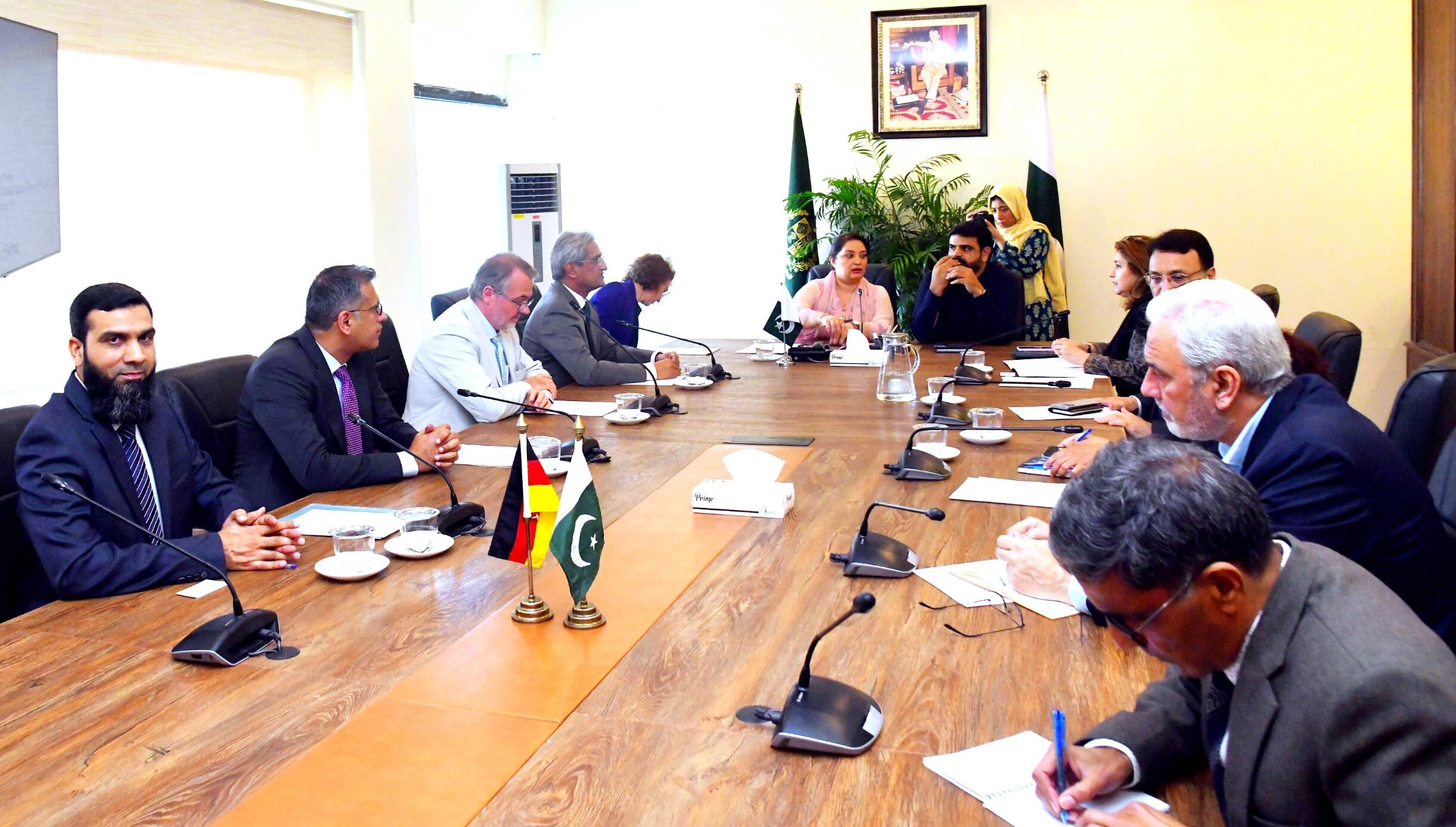
Special Assistant to Prime Minister for Human Rights and Women Empowerment, Mushaal Hussein Mullick, chairing first consultative session of Kashmir Advisory Committee
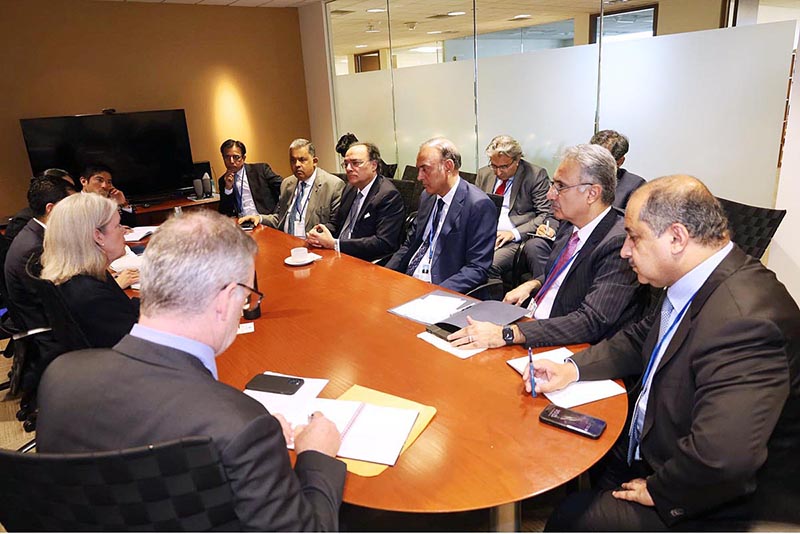
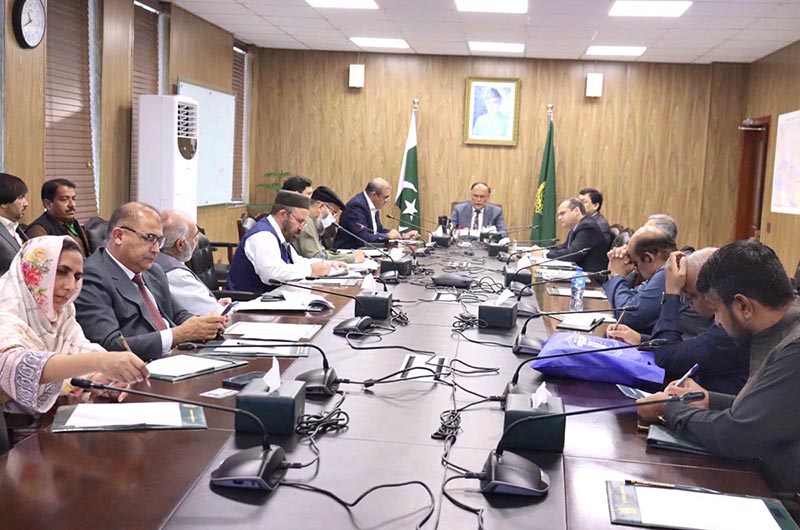
APP28-301223 ISLAMABAD: December 30 - Special Assistant to Prime Minister for Human Rights and Women Empowerment, Mushaal Hussein Mullick, chairing first consultative session of Kashmir Advisory Committee. APP/ZID
Special Assistant to Prime Minister for Human Rights and Women Empowerment, Mushaal Hussein Mullick, chairing first consultative session of Kashmir Advisory Committee
APP28-301223
ISLAMABAD: December 30 – 
Special Assistant to Prime Minister for Human Rights and Women Empowerment, Mushaal Hussein Mullick, chairing first consultative session of Kashmir Advisory Committee
APP29-301223
ISLAMABAD: December 30 – Special Assistant to Prime Minister for Human Rights and Women Empowerment, Mushaal Hussein Mullick, chairing first consultative session of Kashmir Advisory Committee. APP/ZID

South Africa files case at UN’s top court accusing Israel of ‘genocidal acts’ in Gaza; court confirms

0

UNITED NATIONS, Dec 30 (APP): South Africa has filed a case at the International Court of Justice (ICJ) accusing Israel of engaging in “genocidal acts” in Gaza, and asking the court to order the Israeli government to halt its attacks.

In a press release, the Hague-based ICJ, which is UN’s highest court, confirmed the application concerning alleged violations of Israel’s obligations under the Genocide Convention.

Meanwhile, Israel has strongly rejected the allegation, calling it “baseless”.

Since a cross-border attack by Hamas on October 7, Israel’s deadly bombardments of Gaza have left at least 21,000 people dead, three-quarters of them women and children, while thousands more are feared trapped under rubble, according to the enclave’s health ministry.

The application filed “concerning alleged violations by Israel of its obligations under the Convention on the Prevention and Punishment of the Crime of Genocide in relation to Palestinians in the Gaza Strip,” the ICJ said in the press release.

“Acts and omissions by Israel … are genocidal in character, as they are committed with the requisite specific intent … to destroy Palestinians in Gaza as a part of the broader Palestinian national, racial and ethnical group,” read the statement.

It added: “The conduct of Israel – through its State organs, State agents, and other persons and entities acting on its instructions or under its direction, control or influence – in relation to Palestinians in Gaza, is in violation of its obligations under the Genocide Convention,” the statement added, citing the application.

South Africa also accused Israel of “failing to prevent genocide” and “prosecuting the direct and public incitement to genocide” in the application.

“Israel has engaged in, is engaging in and risks further engaging in genocidal acts against the Palestinian people in Gaza,” it added.

South Africa also requested the ICJ to “indicate provisional measures in order to protect against further, severe and irreparable harm to the rights of the Palestinian people under the Genocide Convention and to ensure Israel’s compliance with its obligations under the Genocide Convention not to engage in genocide, and to prevent and to punish genocide.”

The Israeli onslaught has left Gaza in ruins, with 60% of the enclave’s infrastructure damaged or destroyed, and nearly 2 million residents displaced amid acute shortages of food, clean water, and medicines.

ECP files review plea against PHC decision on PTI ‘bat’ symbol

0
ecp

PESHAWAR, Dec 30 (APP): The Election Commission of Pakistan (ECP) on Saturday filed a review petition at the Peshawar High Court (PHC) against its single bench ruling on Pakistan Tehreek-e-Insaf’s (PTI) electoral ‘bat’ symbol.

In its petition, the ECP has requested the court to review the PTI’s intra-party elections and its decision related to the election symbol.

On December 26, the high court announced the verdict on PTI’s petition challenging the ECP’s verdict, which had declared the party’s intra-party polls “illegal” and stripped it of using the ‘bat’ symbol.

While announcing a reserved verdict, the PHC suspended the ECP’s order and restored the party’s ‘bat’ symbol till a final decision on the petition. The court also stated that a double bench will hear the matter after winter vacations.

The Election Commission, in its petition, requested the court to fix the plea before a division bench in the larger interest of the public. It said that the ECP is charged with the duty to conduct elections honestly, justly fairly and by law.