Home Blog Page 10487

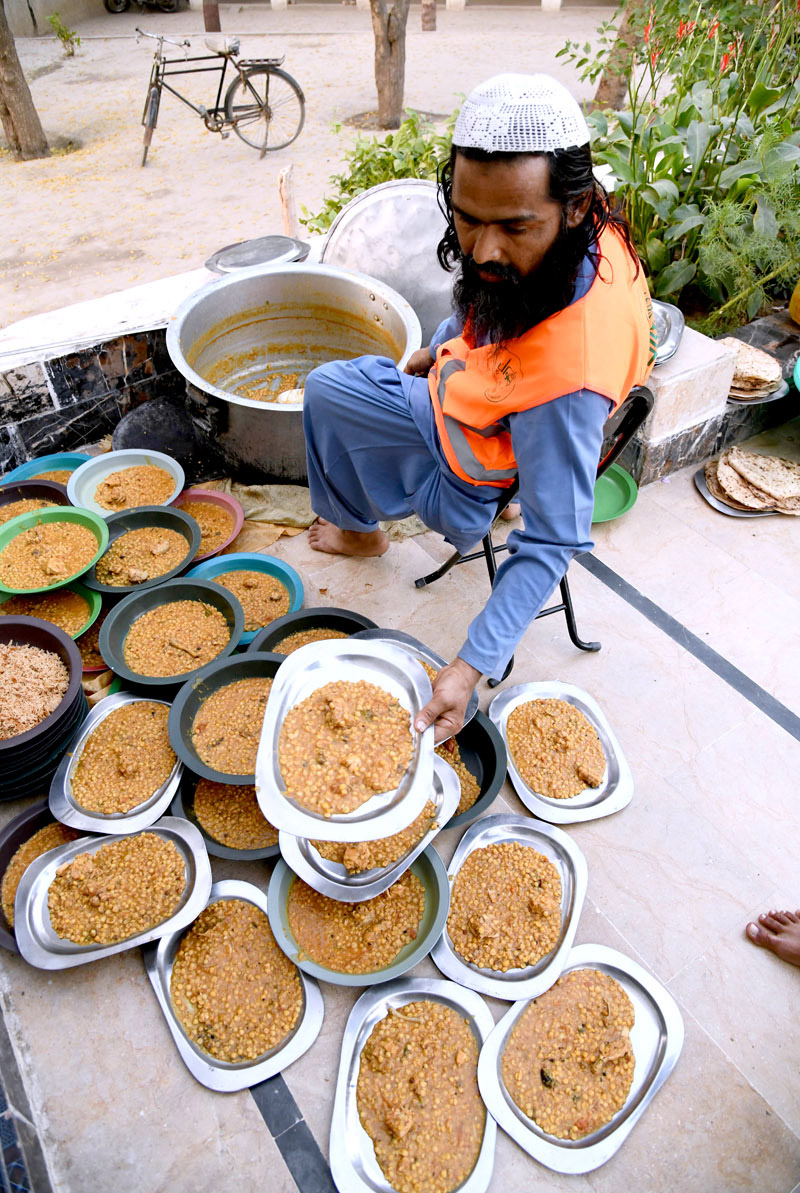
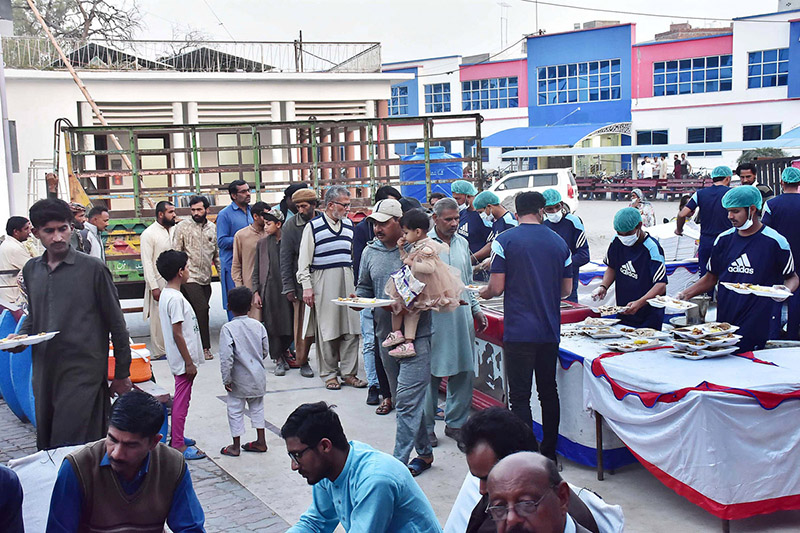
Volunteers distributing food for Iftar among fasting people at Allama Iqbal memorial teaching hospital

0
Volunteers distributing food for Iftar among fasting people at Allama Iqbal memorial teaching hospital
APP48-200324 SIALKOT: March 20 - Volunteers distributing food for Iftar among fasting people at Allama Iqbal memorial teaching hospital. APP/MUT/ABB
Volunteers distributing food for Iftar among fasting people at Allama Iqbal memorial teaching hospital
APP48-200324
SIALKOT: March 20 – .

A woman is buying pottery from road side vendor

0
A woman is buying pottery from road side vendor
APP47-200324 SIALKOT: March 20 - A woman is buying pottery from road side vendor. APP/MUT/ABB
A woman is buying pottery from road side vendor
APP47-200324
SIALKOT: March 20 –

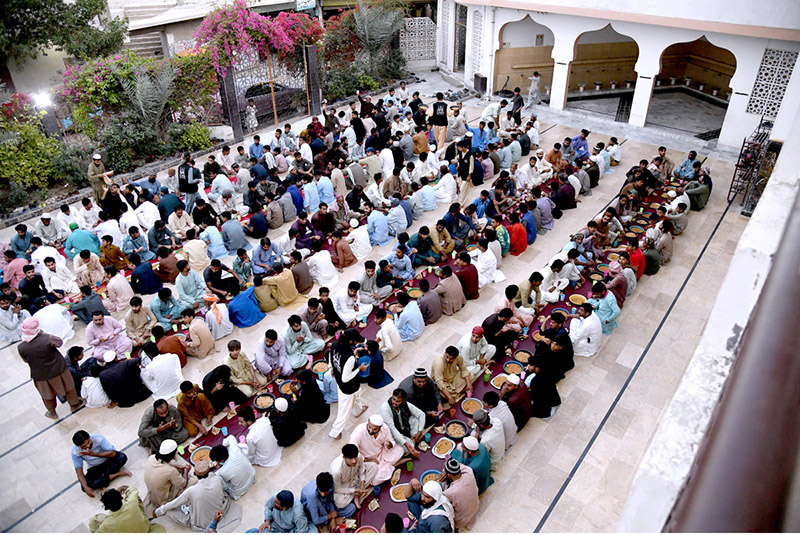
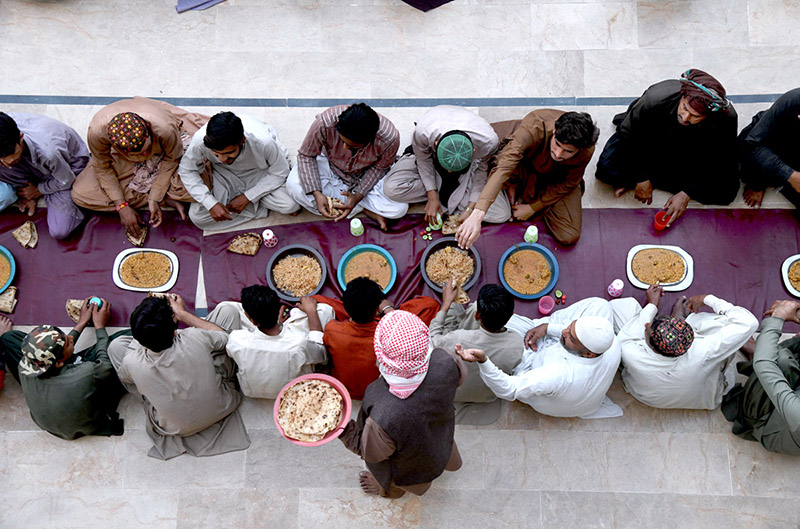
A large number of people breaking fast (Iftar) in the holy month of Ramzan ul Mubarak at a local Masjid

0
A large number of people breaking fast (Iftar) in the holy month of Ramzan ul Mubarak at a local Masjid
APP44-200324 LARKANA: March 20 - A large number of people breaking fast (Iftar) in the holy month of Ramzan ul Mubarak at a local Masjid. APP/NAS/ABB
A large number of people breaking fast (Iftar) in the holy month of Ramzan ul Mubarak at a local Masjid
APP44-200324
LARKANA: March 20 
A large number of people breaking fast (Iftar) in the holy month of Ramzan ul Mubarak at a local Masjid
APP45-200324
LARKANA: March 20 – A large number of people breaking fast (Iftar) in the holy month of Ramzan ul Mubarak at a local Masjid. APP/NAS/ABB
A large number of people breaking fast (Iftar) in the holy month of Ramzan ul Mubarak at a local Masjid
APP46-200324
LARKANA: March 20 – Volunteer arranging Iftari for people to break their fasting during the Holy Fasting Month of Ramzan at a local Masjid. APP/NAS/ABB

PHC bars EC from proceeding against KP CM in disqualification case

0
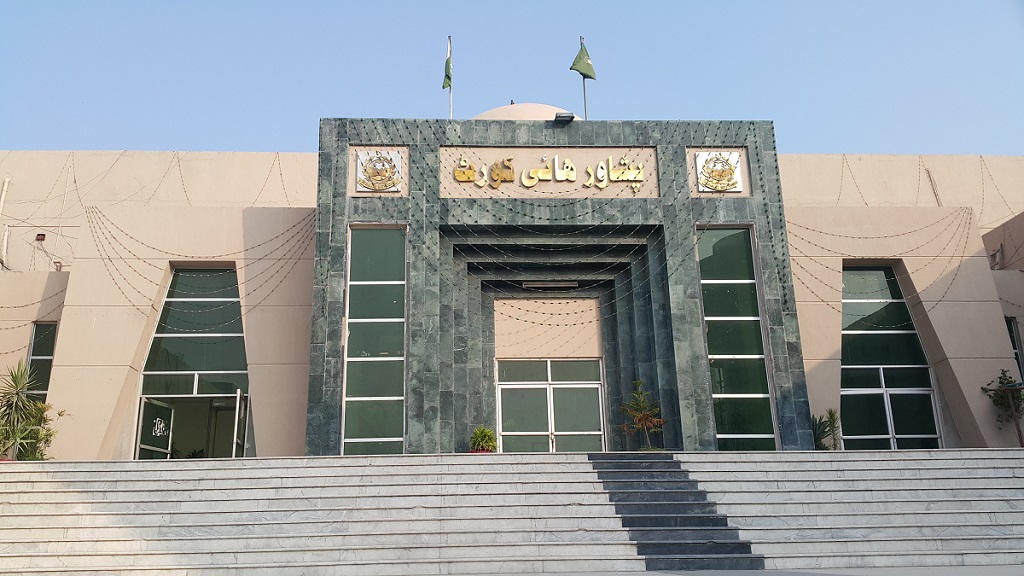
PHC

PESHAWAR, Mar 20 (APP): A two- member bench of the Peshawar High Court (PHC) on Wednesday barred the Election Commission from proceeding against Khyber Pakhtunkhwa Chief Minister Ali Amin Gandapur in the disqualification case.

The EC had summoned KP CM on March 26 on a complaint of his disqualification due to non-disclosure of assets and Ali Amin had moved PHC against the EC’s notice.

Justice Ejaz Anwar and Justice Waqar Ahmed of Peshawar High Court heard the petition of Ali Amin Gandapur.

The counsels of Ali Amin, Sikandar Shah Advocate and Alam Khan Adanzai Advocate told the court that the EC had no authority to take action now as Gandapur had also taken oath as elected representative.

They argued there was an opportunity to object at the time of nomination papers, but no objection was raised at that time.

Justice Ejaz Anwar remarked that nothing had happened yet rather a notice was served.

Justice Ijaz Anwar remarked that now the decision of the Supreme Court has also given a verdict that no institution has the authority to declare anyone as “Sadiq” and “Amin”, to which the lawyers replied that the decision of the apex court also supports Ali Amin.

The court issued a restraining order on the notice of the Election Commission and sought it’s reply on next hearing.

APP/adi
DG PSQCA vows to limit Trans Fat content in all foods for public health

0
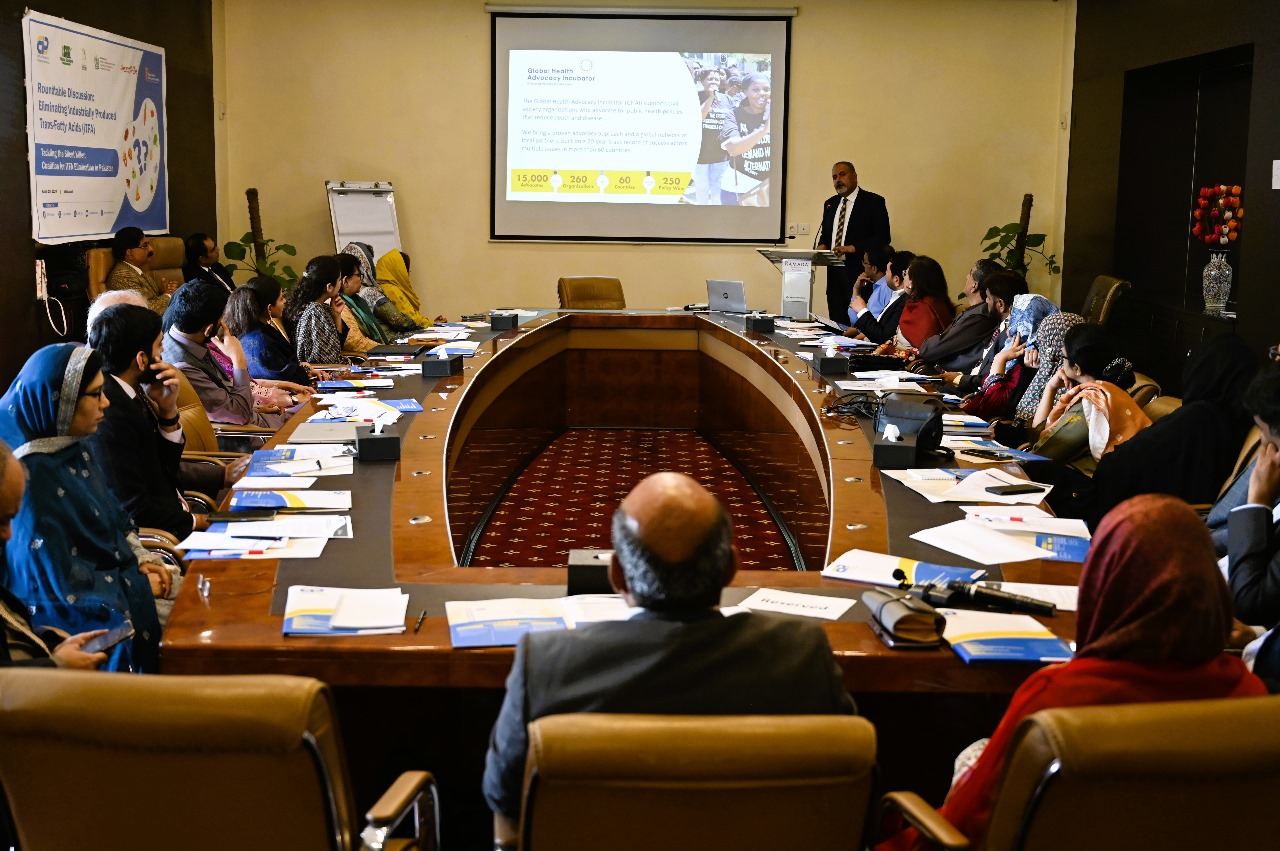
ISLAMABAD, Mar 20 (APP):The Centre for Peace and Development Initiatives (CPDI) with the support of Global Health Advocacy Incubator (GHAI) convened a roundtable discussion aimed at tackling the health risks linked to the consumption of industrially produced trans fatty acids (iTFAs) in Pakistan, where Director General of the Pakistan Standards & Quality Control Authority (PSQCA), Ismat Gul Khattak reiterated the commitment to formulate 2%  mandatory limit of iTFA across all foods to combat non-communicable diseases effectively..
The gathering addressed the urgent need for evidence-based mandatory policies to safeguard public health and mitigate the detrimental effects of excessive iTFAs consumption, a news release said.
During the roundtable, it was also discussed the imperative for Pakistan to adopt stringent mandatory limits of iTFAs in all food supplies to no more than 2% of total fats as recommended by WHO. Such a policy, if effectively implemented, holds the potential to save numerous lives and alleviate the strain on healthcare infrastructure.
National Coordinator, Nutrition and NFA, Ministry of National Health Services, Regulations and Coordination, Dr. Khawaja Masuood Ahmed emphasized the urgency of action. Key measures proposed included formulating a 2% iTFA limit in all foods and then banning partially hydrogenated oils (PHOs) to adopt the hybrid approach which best fit to Pakistan scenario. He also emphasized on fostering collaboration with the Pakistan Standards & Quality Control Authority (PSQCA).
Country Coordinator of GHAI, Munawar Hussain highlighted the necessity of adopting global best practices in iTFA regulation. Despite substantial progress globally, Pakistan remains in the less restrictive category in the WHO scorecard. Sixty-one countries have adopted the best practice policies, either to limit iTFA consumption or banned PHOs to save lives, or adopted hybrid approach where both policies were passed he further added. He shared the case studies from regional and other countries who adopted best practice policies and emphasized on urgent steps to prioritize public health and bridge this gap.
While moderating the discussion, Syed Raza Ali, Project Coordinator, CPDI explained that Pakistan ranked 2nd highest in the WHO-EMRO region in iTFA consumption followed by Egypt. This alarming statistic correlates with a surge in multiple Non-Communicable Diseases (NCDs) and cardiovascular diseases (CVDs), imposing significant economic burdens on both individuals and the nation as a whole.
Dr. Saba Amjad, CEO of Heartfile, shared iTFA consumption trends in Pakistan and said that though there is some progress but yet iTFA is widely found in various food items.
The discussion concluded with an open session during which all stakeholders, including all food authorities, ministries of health and Science and Technology, and civil society working on similar issues, emphasized the immediate need for Pakistan to adopt best-practice policies, limiting iTFA content to less than 2% of fat in all food products. Strengthening enforcement mechanisms and adherence to standards are imperative to improve food governance and safeguard the population against the adverse health effects of iTFA consumption.

Speakers raise concerns over India’s misuse of its judiciary to suppress voices in Kashmir

0
UNHRC
ISLAMABAD, March 20 (APP):In a seminar held on the sidelines of the 55th session of the United Nations Human Rights Council (UNHRC), speakers hailing from various backgrounds expressed grave concerns over India’s misuse of its judiciary to suppress political dissent in the disputed territory of Jammu and Kashmir.
The seminar hosted by the Community Human Rights and Advocacy Center, was addressed by noted international law experts including advocate Ahmer Bilal Sofi,  Barrister Tanvir, Altaf Hussain Wani Ronald Brones,  while Muzammil Thakur moderated the penal, a press release said received from Geneva.
While shedding light on the denial of fair trials to Kashmiri prisoners, the panalists raised serious doubts about the impartiality of the Indian judiciary. Referring to Article 10 of the Universal Declaration of Human Rights, UDHR and Geneva Convention, the speakers said, “As per these international covenants, every prisoner is entitled to an impartial and public hearing when his or her rights are at stake.”
They asserted that the right to a fair trial, recognized as a fundamental human right internationally, forms an essential pillar of justice and democracy. Underlining the dire situation faced by Kashmiri prisoners languishing in various jails in and out side of the Kashmir, the speakers lamented the denial of fair trials to political activists, human rights defenders, and civil society activists in Kashmir. They denounced the Indian government for arresting Hurriyat leaders, rights defenders and civil society activists and subjecting them to prolong imprisonment without adequate opportunities to defend themselves in a court of law.
They also raised concerns about the conduct of judges in Indian courts, saying that some of them act more like prosecuting or police officers than impartial arbiters of justice.  Referring to the Indian judiciary’s biased approach towards Kashmiris, the speakers said that while hearing the case of Kashmiri prisoners, Indian courts had failed to maintain the required level of neutrality to ensure justice.
The reopening of decades-old cases against Kashmiri leaders, they said there was an evidence of the politicization of the courts. “The judiciary appeared to be compliant with the current government’s agenda that seeks to crush every kind of dissent in the region”, they said.
Urging the international community to take effective notice of the situation in Kashmir, the speakers emphasized that it was imperative for the global community to exert pressure on the Indian government to stop the weaponization of the judiciary against Kashmiris.
They observed that the weaponization of the judicial system against Kashmiris had not only eroded the independence of the Indian judiciary but also cast a dark shadow over the entire Indian justice system.

LESCO detects 402 power pilferers in 24 hours

0
LAHORE, Mar 20 (APP):The Lahore Electric Supply Company (LESCO) has detected a total of 402 connections from where the customers were pilfering electricity in all its circles of five districts (Lahore, Sheikhupura, Nankana Sahib, Kasur and Okara) on the 188th day of grand anti-power theft campaign.
A LESCO spokesman told the media here Wednesday that the company also submitted FIR applications against electricity thieves, out of which 208 FIRs have been registered in respective police stations.
On the 188th consecutive day of the anti-power theft campaign, the spokesman added, large commercial consumers were also found involved in electricity theft and all of them were also disconnected and charged with detection units. Among the seized connections 11 were commercial, 04 agricultural, 02 industrial and 385 domestic, and all these connections were disconnected and charged with a total of 417,574 units as detection bill amounting to Rs 9.791 million.
Apprising the media about some major power pilferers, he explained that LESCO charged Rs 150,000 detection bill to an electricity pilferer in Shafiqabad area; Rs 88,000 detection bill to a power pilferer in Shahdara Town; Rs 85,000 detection bill to another electricity thief also in Tibbi City area; and Rs 75,000 fine in the form of detection bill to a customer stealing electricity in Factory area.
During the 188 days of the grand anti-theft campaign, the spokesman mentioned, the LESCO detected pilferage on 65,556 power connections and 63,906 FIRs have been registered against electricity thieves in the relevant police stations, while 20,058 accused have so far been arrested by the police. The LESCO has so far charged a total of 83,105,428 detection units worth Rs 3,153,023,816 to all the power pilferers.

Court acquits PTI founder in two more cases

0
Court
ISLAMABAD, Mar 20 (APP):A local court on Wednesday acquitted PTI’s founder Imran Khanb in two more cases pertaining to long march and vandalizing the public property.
Judicial Magistrate Sohaib Bilal Islamabad accepted the acquittal plea of PTI founder Imran Khan and others in the said cases.
The court said that the founder PTI and others are accused of inciting people for violence during the long march. If the public was incited by the accused, then the prosecution will have to prove it, it said.
The court said that no proof have been submitted to it against the accused, the record was insufficient to run a case against them. Subsequently, the accused are acquitted in two cases registered in Bara Kahu police station.
It should be noted that the court of Judicial Magistrate Shaista Kundi has also acquitted founder PTI in two other cases pertaining to the violence.

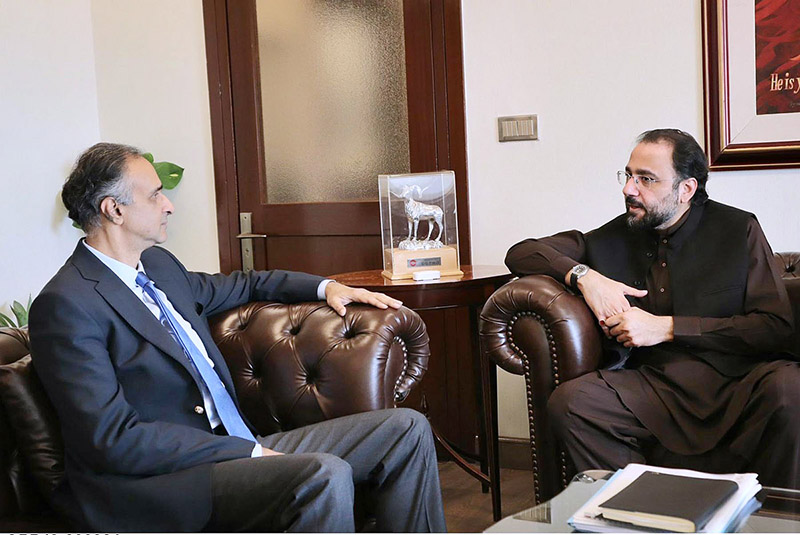
Ambassador of Japan to Pakistan Wada Mitsuhiro calls on Federal Minister for Overseas Pakistanis and Human Resource Development, Chaudhry Salik Hussain and exchanged views on strengthening bilateral relations

0
Ambassador of Japan to Pakistan Wada Mitsuhiro calls on Federal Minister for Overseas Pakistanis and Human Resource Development, Chaudhry Salik Hussain and exchanged views on strengthening bilateral relations
APP43-200324 ISLAMABAD: March 20 - Federal Secretary for Petroleum, Momin Agha calls on Federal Minister for Overseas Pakistanis and Human Resource Development, Chaudhry Salik Hussain. APP/ABB
Ambassador of Japan to Pakistan Wada Mitsuhiro calls on Federal Minister for Overseas Pakistanis and Human Resource Development, Chaudhry Salik Hussain and exchanged views on strengthening bilateral relations
APP41-200324
ISLAMABADAmbassador of Japan to Pakistan Wada Mitsuhiro calls on Federal Minister for Overseas Pakistanis and Human Resource Development, Chaudhry Salik Hussain and exchanged views on strengthening bilateral relations

Ambassador of Japan to Pakistan Wada Mitsuhiro calls on Federal Minister for Overseas Pakistanis and Human Resource Development, Chaudhry Salik Hussain and exchanged views on strengthening bilateral relations

APP43-200324
ISLAMABAD

COMSTECH organizes ground breaking ceremony to establish Halal Authentication Laboratory in Uganda

0
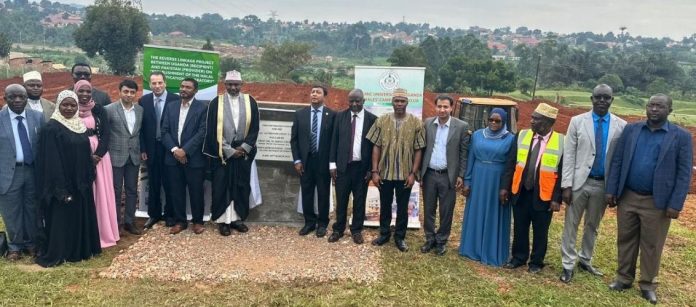
ISLAMABAD, Mar 20 (APP):COMSTECH has organized a ground breaking ceremony for the establishment of Halal Authentication Laboratory at Islamic University in Uganda.
The ceremony for the reverse linkage project between Uganda and Pakistan on “Establishing of the Halal Authentication Laboratory”, was held at the Islamic University in Uganda (IUIU).
Coordinator General, COMSTECH, Prof. Dr. Muhammad Iqbal Choudhary was the chief guest in the ceremony, said a news release.
The ceremony was attended by Prof. Ismail Simbwa Gyagenda, Rector, IUIU, H.E. Dr. Issahaq Umar Iddrisu, The Islamic Development Bank (IsDB) Manager, Regional Hub Kampala, Uganda, Dr. Shk Ramadhan Mubajje, Mufti of Uganda, Mr. Sameh Hussein, Lead Technical Cooperation Specialist (IsDB), Prof. Dr. Syed Ghulam Musharraf, and Dr. Shakil Ahmed Technical Leads, ICCBS, University of Karachi, Pakistan.
The ceremony agenda included discussions regarding the project, it’s implementation strategy and timeline, training of human resources, along with composition of the project steering committee.
The guests visited the site of construction of the laboratory where Prof. Dr. Muhammad Iqbal Choudhary, Coordinator General COMSTECH, laid the foundation stone of the laboratory.
COMSTECH has played a pivotal role in developing the project in support of the Islamic Development Bank and International Center for Chemical and Biological Sciences (ICCBS). This is a part of the COMSTECH Africa initiative in science and technology. Under this initiative, COMSTECH has also helped in the launching of a master degree program in ICT in The Gambia, a citrus processing unit in Nigeria, faculty of engineering in Chad and training of eye surgeons from 10 west African countries.
The construction of the Halal Authentication Laboratory has begun and is expected to be completed by August, 2024.