Home Blog Page 10351

1008 flats and 500 houses ready for workers in Islamabad zone 5

0
ISLAMABAD, Mar 31 (APP): The Workers Welfare Fund (WWF) is an attached department of the Ministry of Overseas Pakistanis and Human Resource Development has completed labor complex at Zone-V including 1008 flats and 500 houses ready for registered workers of twin cities Islamabad and Rawalpindi.
An official source told APP that they are trying day and night to solve all the problems of the workers. Labor complexes in Peshawar Khyber Pakhtunkhwa and Islamabad are the link of this chain.
It may be noted that Workers Welfare Labor Colony Phase-I consists of 1476 kanals of land including 1008 flats and 500 houses all the flats and houses will be allotted to industrial workers. A mosque, industrial home, community center, and utility store have been built in the colony.
To a question, the official said that one million people were to be sent abroad under various agreements this year, which target has been completed. Similarly, remittances have also increased significantly

PM reiterates resolve for social, economic uplift of all minorities

0

LAHORE, March 31 (APP): Prime Minister Muhammad Shehbaz Sharif on Sunday reaffirmed the resolve to work for the social uplift and integration of all the minorities in Pakistan.

“I extend my heartful greetings to the Christian community of Pakistan and around the world, on the occasion of Easter,” the prime minister said in a message.

He said much more than festivity and celebration, Easter was an occasion to reinforce and reflect on the values of love, tolerance and forgiveness as espoused by Prophet Isa (AS) and was a reminder to emulate these in their daily lives to bring harmony and peace in today’s strife and conflict-ridden world.

On this auspicious occasion, the prime minister also lauded the immense contributions of the Christian community in struggle for the creation of Pakistan and its socio-economic development and firmly believed that they would continue to play their proactive role in the progress and stability of Pakistan.

“While we celebrate diversity of faiths as a source of strength and enrichment in our nation, let us join hands towards building a society that is tolerant and cohesive and together defeat the forces of discord that are trying to cause harm to the fabric of our society,” PM Office Media Wing, in a press release, quoted the prime minister as saying.

He also wished all the Christian community a happy and peaceful Easter.


CWAs to boost overseas employment opportunities for Pakistanis abroad

0

ISLAMABAD, Mar 31 (APP): The Ministry of Overseas Pakistanis and Human Resource Development (OP&HRD) has given the task to the Community Welfare Attaches (CWAs) stationed abroad to strategically enhance job opportunities for Pakistanis in the international market.

An official source told APP that currently, there were 21 CWAs posted abroad by the Government of Pakistan. The main aim of this task was to evaluate and improve the progress of CWAs in identifying and exploring targeted demand for employment prospects for Pakistani nationals through engagements with foreign employers.

This involved the formulation, signing, and execution of Letters of Intent (LOIs) and agreements with foreign companies, critical in amplifying the export of Pakistani manpower.

It has emphasized the crucial need for close collaboration between CWAs and the Ministry of Overseas Pakistani and Human Resource Development, particularly in sharing information related to employment demands abroad and the necessary skills required for those jobs. This step will facilitate the design of training programs specifically tailored to the skills demanded by foreign companies, ensuring that Pakistani workers are well-equipped and aligned with global standards.

While underscoring the significance of this initiative, highlighted its dual impact, not only in enhancing employment opportunities for Pakistanis abroad but also in contributing to the economic growth of the nation.

Furthermore, he stressed the essential role of CWAs in catering to the needs and resolving issues faced by overseas Pakistanis during their stay abroad. This comprehensive approach is designed to ensure the well-being and seamless integration of Pakistani expatriates in their respective host countries.

The Ministry of Overseas Pakistani and Human Resource Development reiterates its commitment to spearheading initiatives that fortify global employment prospects for Pakistanis.

This strategic meeting signifies a significant stride towards realizing this vision and underscores the Ministry’s dedication to the welfare and prosperity of overseas Pakistanis.

President felicitates Christian community on Easter

0

ISLAMABAD, Mar 31 (APP): President Asif Ali Zardari on Sunday felicitated the Christian community on observance of Easter. The president said that the Constitution of Pakistan guaranteed constitutional rights to all religious communities.

The president, in a message, said that all the communities enjoyed religious, political, social and economic rights in Pakistan.

“The Christian community is a precious asset for Pakistan,” he said, adding that Easter was an occasion that brought a message of hope, affection and prosperity, President Secretariat Press Wing said in a press release.

Appreciating the Christian community’s contributions for the national progress, he further observed that the Christian community had always played their role in the progress and prosperity of the country.

The president reaffirmed that Pakistan was committed to protection of the rights of all communities and would ensure all steps for their prosperity. For the country’s progress and prosperity, entire nation including minorities would have to collectively work together, he added.

Modernizing hosiery industry to boost exports

0

By Iftikhar Ahmed

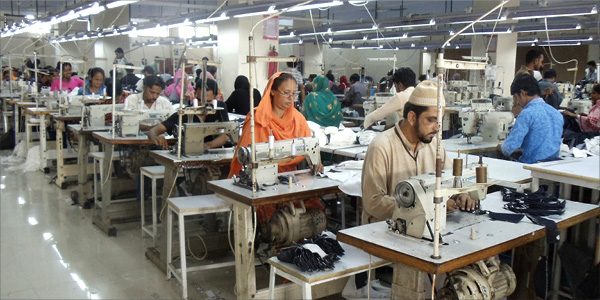
FAISALABAD, Mar 31 (APP): As Pakistan’s industrial sector witnessed an overall decline in recent years, reorganizing and modernizing this sector would be an uphill task for the new government.

With two seasoned politicians in the driving seats as President of Pakistan and the Prime Minister of Pakistan, the business community hopes for revolutionary steps to make local industry compatible with international standards for capturing more markets.

Due to the volatile situation in the country during the past half decade and rising input expenditures, many small industrialists were reluctant to invest more in the textile sector, especially the hosiery industry.

Businessmen are continuing with old and obsolete machinery although it costs them much than the latest technology making their products incompatible with goods being sold in the international market.

“Most of our machinery is old and tromped, causing heavy energy wastage besides other inefficiencies in our overall production process,” remarked Mian Abdur Rasheed, a veteran industrialist. “As they use old motors, their energy cost jumps up due to wastage of energy. Even then they prefer to pay high cost in energy bills.”

When asked about the reasons behind this tendency, he said that these industrialists witnessed uncertain situations in recent years and were reluctant to invest more to replace their old motors.

“Therefore, we expect the new government to direct its departments to focus on these issues and provide owners free consultation to improve their efficiency and control energy wastage,” he stated.

“Although individually these are small units, yet collectively they are contributing a sizable share in local economy employing thousands of workers,” he said adding, “Therefore, they should be facilitated and guided to benefit from modern technologies to enhance their profitability.”

As the hosiery sector can be segregated into local and export units, Jinnah Colony Faisalabad, Islam Nagar, Gulistan Colony, Haji Abad, Guru Nanak Pura have emerged as a hub of small hosiery units for local consumption while the major export units are housed in Millat Town, Jaranwala-Khurrianwala Industrial Belt, Value-Added City, Allama Iqbal Industrial Estate and Small Industrial Estate near Nalka Kohala.

When contacted different local hosiery owners, their problems felt identical as also faced by the overall industrial sector like the high cost of doing business and non-availability of cheaper raw materials like fine counts of yarn consumed by hosiery units.

“We think the uncertainty prevailed in the country in the recent past and high energy tariff were the major causes to hamper the growth of the hosiery industry to a desired level,” remarked the spokesman of Pakistan Hosiery Manufacturers Association (PHMA) North Zone.

He said hosiery is a value-added sector playing a major role in enhancing national exports and earning precious foreign exchange for the country. But, prices of electricity, gas and oil products constrain them from growing and re-investment to install state-of-the-art units.

“High mark-up rate and nonavailability of raw material are other issues confronting this sector and needed to be addressed on war footing to save this industry,” he added.

Since Pakistan’s major export portion is related to the textile sector, its hosiery is an integral part of the value-added sector. But, simply taking the instance of Faisalabad – a home to the hosiery industry – our value added sector could not grow as desired.

“Pakistan is bestowed with valuable natural resources and a unique geo-political situation. However, we lack sustainable and industry supported policies,” said Khawaja Muhammad Amjad, a member of Pakistan Hosiery Manufacturing Association (PHMA). “The government must play its role to introduce business friendly policies in industrial and agriculture sector – the main raw material producing sector for industries.”

He proposed the use of modern technology as well as less taxation, cheaper energy and inputs, and ease of doing business for enhancing overall production and revenue. “We can achieve sustainable growth by introducing favorable policies and thereon emerge as major players in the world markets.”

Vice Chairman of Pakistan Textile Exporters Association, Muhammad Idrees suggested to working on lean manufacturing processes and advancement in sustainable textiles. “We must take diverse steps in productivity, efficiency, eco-friendly quality control systems and social ethics.”

Technical experts believe in a broader collaboration among stakeholders like technical institutions, industrialists and policymakers for the revival of industry.

“Such a collaboration among institutes like Pakistan National Federation of Trade Unions (NTUF) with academia, community, industry and government can make an impact through knowledge-based textiles,” underscored Engineer Prof. Dr Yasir Nawab Dean Faculty of School of Engineering and Technology at National Textile University.

“We have launched a skill efficiency and proficiency program for training of industries professionals,” he said. “We are looking towards industrialists for technology transfer and up-scaling their ability to boost our economy through exporting value-added products to international markets.”

These experts recommended that the new government should realign its policies to transform Pakistan from a net-importing to a net-exporting country and cited that although it is a tough decision yet an imperative for the revival of our industrial sector.
They believed in incentivizing the industrial sector for sustainable growth, enhancing exports, generating more revenue for debt retirement, creating much-needed job opportunities for the burgeoning population, and above all achieving the ultimate target of a stable national economy.

Pakistanis – a tolerant, compassionate nation

0

By Fakhar e Alam

PESHAWAR, Mar 31 (APP): Despite engineered waves of extremism or sectarian and communal divides maliciously propagated by its arch enemies, Pakistanis still adhere to its noble norms creating a society living in different regions and speaking different languages.

From the shores of Karachi and Gwadar to plains in Punjab and Sindh and hilly terrains of Khyber Pakhtunkhwa, Kashmir and Gilgit-Baltistan, Pakistanis are woven into congenial brotherhood despite a few trying to malign the motherland through planted extremism.

The holy month of Ramazan is a true manifestation of this sentiment wherein people like Iqbal Khan, a 28-year-old electrician, with a smile and exudes the high spirit of sharing edibles is seen seeking solace by dolling out dates and pakora among fasting Muslims as well as non-Muslims before Aftar at Peshawar cantonment.

In traditional Peshawari attire, the motivated electrician has been distributing packets of dates, chicken pakora, rice and other edibles among fasting Muslims as well as Sikhs, Christians and others coming his way.

Demonstration of this act of generosity, love and affection for people is seen all around Pakistan during this sacred month as thousands of Pakistanis enjoy inner satisfaction from this act like Iqbal Khan.

“The soothing moment of distributing Aftar items reminds me of my late father like whom I also enjoy this practice like a true Muslim and Pakistani,” remarked Iqbal Khan. “I strongly believe in brotherhood, interfaith harmony and tolerance in society.”

“This act of winning others’ hearts and minds brings us closer and develops a tolerant society based on warmth, empathy and mutual coexistence,” he added.

Professor Dr Abdul Ghafoor, former Director Sheikh Zayad Islamic Centre Peshawar sees this coherence as a fruit of religion Islam that laid great emphasis on peace, tolerance and interfaith harmony in the Charter of Madina.

“This historic charter provides religious freedom to Muslims and followers of other religions for creating a progressive, prosperous and tolerant society,” he stated.

He said Father of the Nation, Quaid e Azam Muhammad Ali Jinnah’s historic address on August 11, 1947 to members of the Constituent Assembly and our 1973 Constitution also enshrine tolerance, unity and mutual coexistence.

“The Quaid had envisioned a country where people irrespective of their religion, caste, creed and ethnicity could live freely with dignity in an environment of mutual coexistence and peace,” he said.

He said a tolerant society ensures social inclusion besides providing all citizens equal opportunities to grow in line with Paigham-e-Pakistan’s Fatwa signed by religious scholars of all schools of thought.

“This fatwa provides an umbrella to protect the country from all forms of terrorism, extremism, hatred and violence against fellow Pakistanis,” he said. “This is our national narrative and also rules out self-proclaimed acts of violent extremism in the name of religion as such nefarious acts are prohibited by our Shariah and weaken our country.”

Former Chairman Political Science Department, Peshawar University, Dr A H Hilali explained there is misconception in some circles about our society as many of our critics misconceive ideological differences and religious extremism.

“This misconception occasionally tarnishes our image although Pakistanis being a responsible and peace loving nation had shown great maturity, acumen and tolerance even after the Army Public School’s horrific attack on December 16, 2014,” Hilali said.

He also mentioned different terrorist attacks on our security forces and said, Pakistan has been successfully fighting a war against terrorism for over two decades and its nation had rendered matchless sacrifices in this fight.

He said Pakistan always desired cordial relations with its neighbors but both its Eastern and western neighbors had been hostile perpetrating extremist acts against its solidarity and sovereignty.

Haron Sarbdayal, the founding member of the Pakistan Council of World Religion said that all prophets had promoted tolerance, forgiveness and peace in their teachings, actions and deeds.

He said the opening of Kartarpur corridor by Pakistan’s Government was a historic development signifying that Pakistan was a peace loving and tolerant country where non-Muslims including Sikh and Hindus were enjoying complete religious freedom.

He said Kartapur corridor, was first proposed in early 1999 by then Prime Minister Nawaz Sharif and Indian Prime Minister Atal Bihari Vajpayee. However, it was completed in 2019, enabling Sikh pilgrims to celebrate 550th birth anniversary of Guru Nanak Sahib.

“This initiative not only connected the Sikh community on both sides of the border but also opened a new chapter of peace, tolerance and religious freedom,” he said. “What we need is to promote both acceptance and tolerance as it could be more effective in nailing enemies’ propaganda for falsely highlighting Pakistan as an intolerant nation.”

Sarbdayal pleaded that the misconception of an intolerant society could also be reversed by enhancing interaction, debate and dialogue among religious leaders in media and social circles besides the establishment of interfaith harmony desks at universities and colleges to equip our youth to thwart this malicious campaign.

Pakistanis are a tolerant society but unfortunately, this message could not be properly conveyed the world over to discourage elements from spreading chaos and hatred. Therefore a holistic approach including meaningful dialogue among different stakeholders, a positive approach of media, revisiting educational curricula and speedy justice were imperative to nail the propaganda against Pakistan.

Undeterred resolve – only way to end economic woes

0


By Muhammad Ashraf Wani

ISLAMABAD, Mar 31 (APP): Given its location, landscape, environment, weather, shores and fertile land, Pakistan had always been the most potential and business-friendly destination offering volumes of dividends to investors and businessmen.

Although fluctuating policies of the past landed this potential state into serious economic crunch with putting it back on track becoming a gigantic task, yet it can be vibrant again if consistent, holistic and result oriented approach is adopted.
Even today, the numbers of brotherly countries are waiting for a nod to invest billions of dollars in different sectors of Pakistan economy and the newly formed government has already tightened belts for a tough ride ahead.

Prime Minister Shehbaz Sharif and his team is also aware that they would be confronting a myriad of daunting economic hurdles, ranging from soaring inflationary pressures and staggering external debt burden to diminished exchange reserves and fluctuating currency values.

As the economic panorama, shrouded in uncertainty and volatility, necessitates adept navigation and resolute action to guide nation towards stability, the government diligently articulated its resolve to fight out this challenge.

At the head PML-N led new coalition government, Prime Minister Shehbaz Sharif soon after assuming office, issued directives to pertinent authorities for formulating proposals to reduce government expenditures and undertaking a comprehensive overhaul of country’s economic framework.

Responding to this exigency, the new government employs immediate measures for bolstering revenues and curbing escalating fiscal deficit with the Prime Minister also mandating commencement of digitization and automation process within the Federal Board of Revenue (FBR).

“Reducing inflationary burden on people is one of the most pressing challenges for the government. It would have to go for immediate solutions to ease inflationary burden,” said Dr Usman Chohan, Advisor on Economic Affairs at Centre for Aerospace and Security Studies (CASS).

He said the situation would be more exigent in an environment where on one hand the people would be expecting to bring down inflation while International Monetary Fund (IMF), in a likely follow-up program, pressurizing the government to extract more from public in terms of revenue collecting and electricity price initiatives.
Identifying global economic slowdown as a significant contributor to Pakistan’s financial woes, with inflation, energy costs and purchasing power constraints exacerbating the situation, Dr Usman proposes a roadmap for economic recovery.

“Mobilization of government-to-government (G2G) investments from friendly nations through the Strategic Investment Facilitation Cell (SIFC) can be very important,” he pleaded and underscored the inevitability of domestic stability, particularly in monetary affairs, to reignite local investment.

“Then, we must provide overseas Pakistanis a conducive and secure investment climate, thereby stimulating economic activity,” he further commented. Given the situation on ground, economic experts stress urgency of implementing concrete measures to foster a business-friendly environment conducive to economic growth and job creation.

“There would be need for a GDP growth rate of 7 to 8 percent to generate approximately three million jobs annually,” said Nadeem-ul-Haq, Vice Chancellor, Pakistan Institute of Development Economics (PIDE). “The daunting figures of excessive debt, coupled with stagnant industrial development and low GDP, accentuate the complexity of challenges at hand.”

In a Podcast he emphasized the imperative of nurturing an environment conducive to corporate growth that in turn, catalyzes economic expansion. In this scenario, what direly needed is foreign investment as well as expansion in local investment base to put economy back on track to achieve desired growth rate, employment generation, boosting exports and earning foreign exchange.

Fully cognizant of the challenges and potential opportunities Pakistan can offer to investors, Federal Minister for Finance and Revenue, Muhammad Aurangzeb has also outlined key priorities for revitalizing the economy. Emphasizing significance of digital transformation and documentation, he stressed the need for modernizing tax system to ensure transparency and efficiency. This involves also digitizing Federal Board of Revenue (FBR) to streamline tax collection processes.

Additionally, plans are underway to expand the tax base by incorporating sectors such as wholesale/retail, real estate and agriculture. Aurangzeb highlighted that digitalization is not an end in itself but a means to foster economic growth and equitable tax systems.
While the road ahead may be arduous, concerted efforts to harness the economic potential of Pakistanis, both domestically and abroad, alongside fresh agreement with International Monetary Fund and the support of friendly nations, offer a glimmer of hope in navigating through these turbulent economic waters.

As the country also suffered a lot in recent past due to rumors of default and anti-state politicking, there is also need for curbing the menaces like rumor mongering, malicious propaganda against state as well as bring anti-sate actors to justice.

The avenues are there and so are the opportunities and what we need is to put our house in order first with strict implementation of laws and zero tolerance against exploiters. Peaceful environment and proper law and order would also be imperative to embark on a journey focused straight to our destination of progress and prosperity – where we proceed unhindered and daring every challenge coming its way.


CPEC – A business-friendly regime for sustainable growth

0

By Abdul Shakoor Khan

QUETTA, Mar 31 (APP):: With Pak-China Economic Corridor (CPEC) entering second phase, the local people expect rise of pro-business regime with hopes of making the multi-billion CPEC, a vehicle for sustainable development.

Now even the local people and among those who once used to resist this project, start thinking it as a game changing project that once completed would definitely have dividends for the local people.

Even the past critic and now an MPA from the port city of Gawadar, Hidayat-ur-Rehman also hope for making CPEC project, a vehicle for reinvigorating province’s economy.
Overall economic recession coupled with other issues affected the pace of the project that caused rise of Rights movement led by an ordinary fisherman Hidayat-ur-Rehman who rose to fame and finally got elected MPA from Gwadar.

“The local people, fearing to becoming minority resisted the project while those at the helm of affairs believed once completed, the local population will be main beneficiary of the project,” Hadayat-ur-Rehman remarked. “The present government has given us a promising hope that CPEC will improve life of common Balochistan inhabitants.”
Getting fame from rigid stance on CPEC and elected MPA from Gwadar, Hidayat-ur-Rehman when questioned on his approach, replied, “I am not against CPEC but the discrimination. When a project worth billions is launched in Gwadar, it should also benefit local people.”

“I have no objection, if Chinese government, its companies and our government continues with CPEC. The only demand I present is to ensure that rights of local people are not compromised,” he argued. “If local population is deprived of basic civic amenities like education, health, drinking water, uninterrupted power, vocational training and jobs, then why people of Gwadar will not raise voice for their rights.”
Launched back in 2006, China-Pakistan Economic Corridor is a flagship project of the Belt and Road Initiative (BRI) that has significantly impacted Pakistan over past one and half decade. It is a framework of regional connectivity which will not only benefit China and Pakistan but Iran, Afghanistan, Central Asian Republic and the region.

Since onset, the multi-billion dollar CPEC project witnessed ups and down due to internally changing political scenario as well as external interference and hatching of conspiracies by hostile forces to derail the project and make it controversial.
“The China-Pakistan Economic Corridor (CPEC) represents a watershed moment for Balochistan, offering unprecedented opportunities for development and integration into global economy,” Chief Minister Balochistan Mir Sarfaraz Bugti informed APP.

“Balochistan’s role in CPEC, particularly through the development of Gwadar Port, is central to our vision for province’s future,” the Chief Minister said. “This project is not just about infrastructure; it’s about opening doors to international trade, creating jobs and fostering economic activities to transform socio-economic landscape of Balochistan.”

Terming uplift of Gwadar as top priority of his government, Chief Minister Bugti said, “we are committed to ensuring that CPEC becomes a vehicle for sustainable development, ameliorate lot of our people and respect for our natural and cultural heritage.”

“The challenges we face are significant, but opportunities presented by CPEC give us reasons for optimism,” CM Balochistan Bugti remarked. “Our administration is dedicated to making Balochistan a model of inclusive development, where every citizen can benefit from the province’s natural wealth and strategic position,” the Chief Minister said. “We are engaging with local community, civil society and our partners in China to ensure that development under CPEC is equitable and sustainable.”

Meanwhile, officials of Ministry of Planning Development and Special Initiatives also expressed belief that CPEC would prove to be a journey towards economic regionalization in this globalized world. It is also a hope of better future of our people and those in this region.

Chairman Standing Committee on Petroleum Senator Mohammad Abdul Qadir was also optimistic about the success of CPEC projects and will of the government for its early completion. “PML-N is known for pro-development and business friendly initiatives and hence they own CPEC. I foresee CPEC flourishing and becoming center of attention in coming days,” the Senator said and stressed setting up industrial zones.

“Establishing industrial zones is important and the government is keenly working on their development,” Abdul Qadir said. “With functioning of foreign industries, the local industry will also flourish making the government save billions of rupees in terms of transportation.”

He also underlined the need for provision of power, water and security to make the CPEC a success. The escalation of pace on CPEC projects, making locals beneficiary of project’s outcome and enhancement of co-operation by win-win model will definitely result in well-connected, integrated region of shared destiny, harmony and development.

The journey is complex, but our resolve is unwavering. Together, we, with the support of our Chinese friends and hard work of our people, can lay a foundation for a vibrant and economically strong Balochistan.

If the new set up diligently pursue commitments of the government made to its international partners and forge ahead on a journey to progress, then the days will not be far off that Balochistan stands tall and proud on the world stage.

US approves bombs, jets for Israel amid threat of offensive in Gaza’s Rafah city

0

WASHINGTON, Mar 30 (APP): US President Joe Biden has secretly authorized billions of dollars in new bombs and fighter jets for Israel in recent days, according to a report in The Washington Post.

Israel’s war on Gaza continues to rage with widespread destruction, displacement and death throughout the besieged enclave. Tel Aviv has vowed to take its offensive to the southern city of Rafah where some 1.5 million displaced Palestinians have sought refuge despite warning of the humanitarian fallout that would ensue.

Pentagon and State Department officials said the new arms packages include more than 1800 bombs, the Post reported. According to the report, these are 2000-pound devices that can demolish entire city blocks and are rarely used in populated areas. Israel, however, has used them extensively in Gaza.

Some Democrats, including allies of President Biden, say the US government has a responsibility to withhold weapons in the absence of an Israeli commitment to limit civilian casualties during a planned operation in Rafah, and ease restrictions on humanitarian aid into the Gaza Strip, which is on the brink of famine.

“The Biden administration needs to use their leverage effectively and, in my view, they should receive these basic commitments before greenlighting more bombs for Gaza,” Senator Chris Van Hollen, a Democrat, said. “We need to back up what we say with what we do.”

Last week, the State Department also authorized the transfer of 25 F-35 fighter jets and engines to Israel. Earlier reports said the US had quietly made more than 100 weapons sales to Israel since the onslaught on Gaza began on October 7.

The arms supplies go against the US call for a ceasefire in Gaza. The Israeli regime has also cut off fuel, electricity, food, and water to the more than two million Palestinians living there. Israel has killed more than 32,500 Palestinians and injured nearly 75,000 others in Gaza since the October day.

Navigating Carbon Market pathway to Pakistan’s sustainable development

0
Navigating Carbon
ISLAMABAD, Mar 30 (APP): The concept of carbon trading is not just a buzzword in the global environmental discourse; it is a critical mechanism for countries like Pakistan to address the challenges posed by climate change while sustaining economic growth.
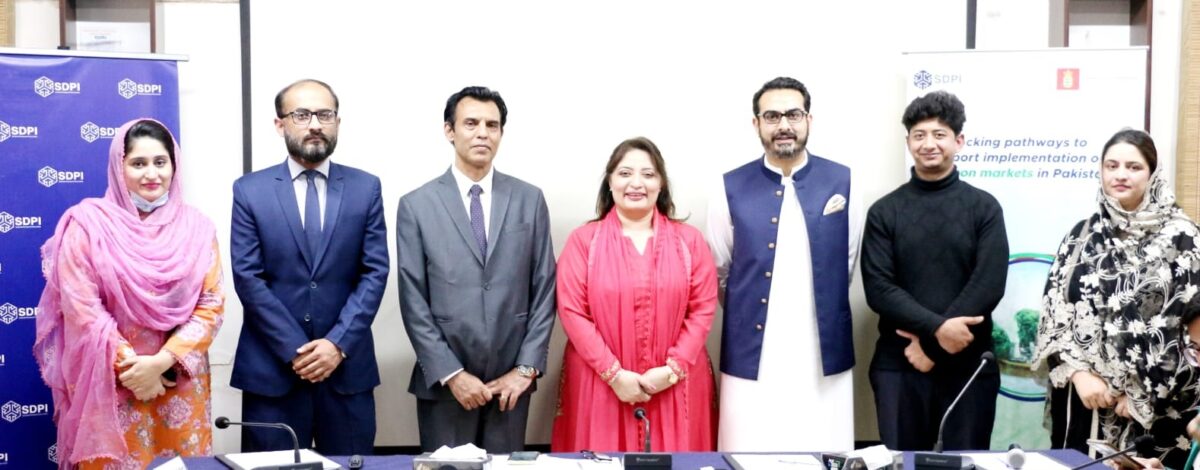
A training workshop on understanding carbon market mechanisms, held in collaboration with the Embassy of Denmark and the Sustainable Development Policy Institute (SDPI), signifies a pivotal step towards integrating Pakistan into the global carbon economy.
Dr. Abid Qaiyum Suleri, Executive Director SDPI, emphasized the novelty of carbon marketing within Pakistan’s climate change dialogue. The unsuccessful attempt to implement a carbon tax in 2010 and ongoing negotiations with the International Monetary Fund (IMF) highlight the complexities and the urgent need for effective policy instruments in this domain.
The primary goal of carbon trading is to incentivize the reduction of greenhouse gas emissions, thereby mitigating the impact of carbon dioxide on the environment. Dr. Suleri poignantly noted that our very existence, ecology, food security, and livelihoods hinge on our collective efforts to preserve the environment. The transition to renewable energy, while technologically feasible, faces significant hurdles in terms of infrastructure development, necessitating a phased approach.
The United States’ implementation of an emissions trading system, with its cap-and-trade policies, serves as an illustrative model. It sets a precedent for establishing emission quotas and allows industries with surplus allowances to sell them, creating a market-driven approach to environmental conservation.
Pakistan’s journey towards establishing a robust carbon market is underway, with policies under review and discussions at the Climate Change Council. The private sector’s existing mechanisms provide a foundation upon which to build. The integration of such market-based approaches into Pakistan’s policy framework can catalyze sustainable development, ensuring that the nation’s exports remain competitive in the face of the European Union’s Carbon Border Adjustment Mechanism (CBAM).
Member National Assembly and founding chair of the Parliamentary Climate Change Caucus, Former Convener SDGs Taskforce, and SAPM, Romina Khurshid Alam presented participation certificates and appreciated for taking up a much-needed initiative in a convincing manner. She said the country is facing serious climate catastrophes that have been triggered due to global GHG emissions leading to a climate crisis. The nation needs to keep itself abreast of the modern trends in carbon trading and markets so that it can both mitigate its carbon emissions and support its adaptation endeavors. She added that the agenda of SGDs and climate change is vital for the macro-economic as well as sociopolitical stability of the country.
Muhammad Fawad Hayat, Deputy General Manager of the National Disaster Risk Management Fund (NDRMF), highlights the critical role of carbon markets as a mechanism to mitigate emissions. Carbon credits, which represent a ton of carbon dioxide, can be multiplied to account for methane—a gas 21 times more potent than CO2 in terms of global warming potential. With Pakistan ranking as the seventh-largest methane producer, the country’s GHG emissions profile is more significant than it appears.
The urgency to address these environmental challenges is evident. Pakistan has set nationally determined contributions (NDCs) targets under the UNFCCC’s Conference of the Parties platform, aiming for various sector-based goals by 2023. However, Hayat points out that without correcting current practices, Pakistan risks failing to meet these targets and sustaining its development trajectory. The solution may lie in the carbon market mechanism. By participating in carbon trading, Pakistan can not only contribute to global emission reduction efforts but also unlock financial benefits. This mechanism can generate revenue, improve the fiscal situation, and ultimately help protect the country’s environment and citizens.
Ubaid ur Rehman Zia, Senior Research Associate, SDPI presented a need assessment before the participants. He underscored that social media platforms had emerged as new forums to influence policy decisions and guide public opinion which could be utilized positively in the realm of creating awareness of the carbon market and trading mechanisms.